
Simplified Manufacturing
Modern drones are smaller and no longer require air strips to take off from. These smaller drones allow for easier manufacturing.
The relatively cheaper price of 3D printers meant that parts for these drones could be manufactured right at the front line. These drones don't require high-tech parts, batteries with long life, nor high quality camera lenses, as most would be single-use drones.
In this area, the US Department of Defence is well ahead the curve by launching the Replicator programme, where each branch of the US military is expected to be able to deploy its field manufacturing capability to build drones in a high-attrition battlefield.
The Replicator programme which has its root in the US Marine Corp solution in 2017 saw the USMC Ripper Lab initiative of having 3D printer drone manufacturing capability.
Relay Drone and Mother Drone
The use of relay drones and mother drones further expanded the operational range of these drones. Relay drones function to extend the range of the signals from the drone operators to the target, allowing the drones to strike deeper into enemy territory.
Mother drones, on the other hand, carry smaller single-use drones that would be launched to hit identified targets. The usage of mother drones shorten the time needed to deploy additional drones that would overwhelm an enemy target. As such, this allow the single-use drones to be equiped with weaker batteries.
Though there is no mention where the mother drone concept comes from, it is possible that the drones may have roots in the gaming world, specifically the Protoss carrier from the world of Starcraft. In 2020, YouTube channel Engineering IRL posted a video showing a rendering of an airship marked with the words Amazon flying over and releasing drones.
Artificial Intelligence (AI)-Enhanced Drone
Drones rely on signals between the drones and the operators to their targets. Like any other devices that rely on radio signals, broad-spectrum jammers can disrupt the signals, 'killing' the drones on the last legs of their termination flight. The Ukrainians have received AI-enhanced (artificial intelligence) drones that has AI pilot that would take over the controls of the drone immediately after the drone's signals are disrupted. The Russians are also said to have enhanced their Iranian-designed Shaheed drones with AI.
The Advent of Ground-based Drones and Unmanned Submersible Vehicle
The idea that drones refer specifically to flying drones is a relic from the past. The war in Ukraine has given prominence to two other type of drones; ground-based drones and unmanned submersible vehicles (USV).
Unmanned Ground-Based Vehicle (UGV)
As mentioned earlier, the modern day drone owes its concept to the World War 2 era Goliath, which was a ground-based wired remote control bomb. While most modern day ground-based remote control vehicles are purpose-built to deactivate bombs, militaries still dream for a mobile platform deployable to the battlefield, allowing the operators to safe from harm.
At most, these ground-based devices are limited to carry explosive devices that intend to explode upon reaching their target. One known example during the 2014 Syrian war was a Proton Saga modified and turned into an unmanned improvised explosive device.
Both sides of the conflict are currently deploying armed drones equipped with machineguns. The operational capability of these ground drones are currently limited by the number of ammunition that these platforms can carry. The shift towards using ground-based drones carry a significant meaning especially to the Russians as it denotes an acknowledgement that its current tactics of using human wave may starting to bite into its ability to replenish its ranks. One Russian website, albeit an anti-Kremlin website, claimed that despite doubling the signing bonus by the Russian Ministry of Defence, the payout amount did not double, hinting a drop in the number of willing recruits
Perhaps the most important development with the UGV occurred in mid-December 2024. A Ukrainian National Guard unit successfully assaulted a Russian-held positions in Kharkiv using only UGV supported by FPV drones.
USV
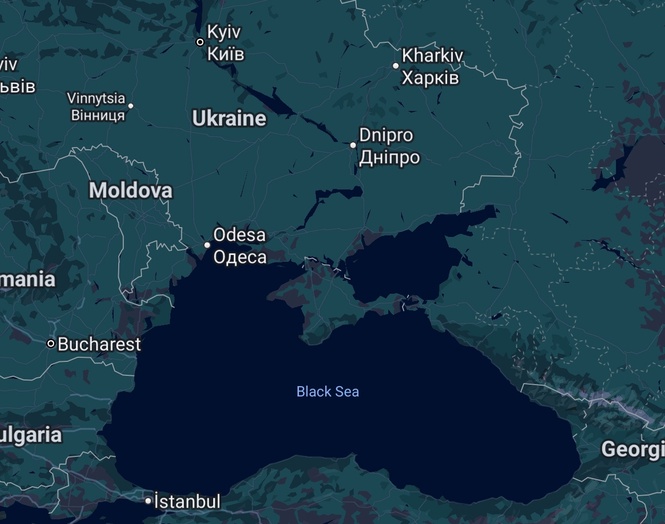
So far in this war, it is noted that only the Ukrainians had deployed USV in any meaningful way as the Russian Navy had largely prevented the Ukrainian Navy from being able to operate in the Black Sea in any meaningfulway. Despite the Russian Navy managing to prevent the Ukrainian Navy from operating in the theatre very early in the war, the early success have been marred by the Ukrainian's determined vengeance.
The Ukrainians have successfully deployed USVs in concert with anti-ship missiles and have taken the fight back against the Russian Navy. The Ukrainians have sunk at least three Russian Navy ships, a Tarantul class corvette the Ivanovet, a 22160 class patrol ship the Sergei Kotov and a Ropucha class landing ship Caesar Kunikov. The heavy losses suffered by the Russian Navy Black Sea fleet saw them having to pull back from Sevestapol Naval base, becoming the first modern day Navy that suffered significant losses to USV attacks.
The Yemeni Houthi took a leaf out of this book and implemented the same to blockade Israeli trades going through the Gulf of Aden.
To continue to Part 3
Danny Liew is a content creator under the Newswav Creator programme, where you get to express yourself, be a citizen journalist, and at the same time monetize your content & reach millions of users on Newswav. Log in to creator.newswav.com and become a Newswav Creator now!
The User Content (as defined on Newswav Terms of Use) above including the views expressed and media (pictures, videos, citations etc) were submitted & posted by the author. Newswav is solely an aggregation platform that hosts the User Content. If you have any questions about the content, copyright or other issues of the work, please contact Newswav.