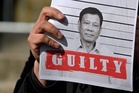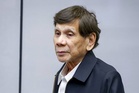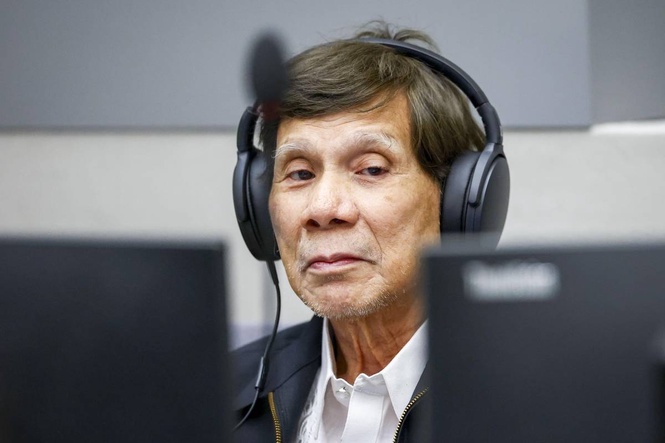
FORMER president Rodrigo Duterte’s defense team acknowledged there were illegal killings during his administration’s antidrug campaign, but said these did not constitute international crimes that he will stand trial for before the International Criminal Court (ICC) on Nov. 30.
In a 77-page pretrial filing made public on Wednesday, Duterte’s lawyers argued that the prosecution had failed to establish the legal requirements for crimes against humanity, maintaining that any unlawful killings should instead be prosecuted as ordinary criminal offenses in Philippine courts.
“Killings undoubtedly occurred, but they were not crimes against humanity,” the defense said in the filing dated Nov. 25.
The document provides the first comprehensive account of how Duterte’s lawyers intend to challenge the prosecution’s case at trial, covering not only the legal basis of the charges but also the alleged death squad, the credibility of witnesses, the interpretation of Duterte’s public statements and his ability to participate in the proceedings.
The defense said it was not contesting the existence of unlawful killings by police during antidrug operations. It maintained, however, that establishing individual murders would not be enough to prove that they were part of a widespread or systematic attack against a civilian population, as required under Article 7 of the Rome Statute.
“Elevating the 85 charged murders and two attempted murders in this case to crimes against humanity faces significant legal obstacles,” the lawyers said.
Duterte faces three counts of crimes against humanity involving 85 alleged murders and two attempted murders committed between Nov. 1, 2011 and March 16, 2019, when he was mayor of Davao City and later president.
The prosecution alleges that Duterte was responsible for a campaign of killings targeting people suspected of involvement in illegal drugs, first in Davao City and later nationwide during his presidency from 2016 to 2022.
The defense contended that the prosecution’s own description of the alleged policy as targeting people suspected of involvement in drugs and other crimes weakened its argument that the killings constituted an attack against a civilian population.
It argued that alleged criminality did not constitute a distinct civilian group under the Rome Statute, unlike categories defined by characteristics such as political affiliation.
The lawyers also questioned the prosecution’s characterization of the entire Philippine population, estimated at about 100 million during the charged period, as the civilian population allegedly targeted.
They said the prosecution’s figures of at least hundreds of killings in Davao City and thousands nationwide were too vague to establish a widespread attack.
The defense further challenged the reliability of the prosecution’s statistics, arguing that the figures included homicides whose perpetrators and motives remained unknown.
It cited United Nations figures showing that the country’s homicide rate was about 5.16 per 100,000 people in 2018 and 4.3 in 2019.
The lawyers said the 85 murders charged in Duterte’s case could not be treated as a statistically representative sample from which the prosecution could establish the existence of a nationwide campaign.
No death squad or state policy
The defense also rejected the prosecution’s characterization of the alleged Davao Death Squad (DDS) as an organized group responsible for killings under Duterte’s direction.
It described the term as a media label that existed before Duterte became Davao City mayor, arguing that it did not refer to an identifiable organization with established membership and a command structure.
It likewise disputed the prosecution’s reference to a supposed national network of perpetrators, saying the term was created for purposes of the ICC case.
The lawyers maintained that prosecutors had presented no orders, directives or meeting minutes establishing a state policy to attack the civilian population.
They also cited Duterte’s record in government, including the establishment of drug rehabilitation facilities, universal health care, free tuition at state universities and other social programs, as inconsistent with the allegation that he pursued a policy of attacking civilians.
The defense said more than 1.2 million people had surrendered for treatment and rehabilitation during the antidrug campaign.
It also challenged the prosecution’s interpretation of the word “neutralization” in the Philippine National Police’s Command Memorandum Circular 16-2016, issued on July 1, 2016, which laid down the guidelines for the campaign.
The lawyers argued that the term had long been used in police and military doctrine to mean incapacitating a suspect and did not necessarily mean killing.
Duterte’s speeches and public statements, which prosecutors have cited to establish his alleged role in the killings, were also challenged.
The defense argued that his language should be understood within its Philippine linguistic and cultural setting, particularly the Visayan and Cebuano expressions he frequently used.
It said statements such as “Papatayin kita (I will kill you)” should not automatically be interpreted as literal threats to commit murder, citing local speech patterns, humor and what it described as a tradition of paternalistic cursing.
The lawyers accused prosecutors of selectively quoting Duterte’s speeches while disregarding their surrounding context and the circumstances in which they were delivered.
Questions how ICC case was built
A substantial portion of the filing also challenged the credibility of the evidence and the circumstances surrounding the investigation that led to the charges.
The defense alleged that Duterte’s political opponents played central roles in bringing the allegations before the ICC, pointing to communications involving lawyer Jude Sabio, former senator Antonio Trillanes IV and former Justice secretary Leila de Lima.
It argued that the ICC case gained momentum after the political alliance between President Ferdinand Marcos Jr. and Vice President Sara Duterte collapsed in 2024.
The lawyers also questioned the timing of Duterte’s arrest in March 2025, two months before the midterm elections.
More seriously, the defense alleged that witnesses had been threatened, coached or offered inducements to provide testimony against the former president.
It accused individuals linked to Duterte’s political opponents, including Philippine government actors, of influencing witnesses and claimed that the prosecution failed to properly investigate reports of such interference.
The lawyers also questioned the reliability of testimonies from alleged participants in the killings, arguing that some individuals who claimed to have carried out the murders were now free and protected.
However, significant portions of the filing dealing with alleged witness interference were redacted in the public version, leaving some of the identities, communications and specific circumstances undisclosed.
The allegations have yet to be established through the proceedings.
The lawyers said they would not invoke the affirmative defenses under Articles 31 and 32 of the Rome Statute, which provide grounds for excluding criminal responsibility, including mental incapacity, duress and other circumstances.
Instead, they intend to argue that the alleged acts do not meet the legal definition of crimes against humanity and that, even if the prosecution establishes that such crimes occurred, Duterte cannot be held individually responsible for them.
They maintained that the killings should be investigated and prosecuted in the Philippines as ordinary criminal offenses, particularly murder.
The defense also cited the civilian-led Philippine Truth and Reconciliation Commission, launched in May 2026 to investigate killings linked to the antidrug campaign, as another avenue for addressing the allegations domestically.
The lawyers argued that Philippine courts and justice institutions were capable of handling the cases, questioning the need for international prosecution.
The filing was signed by lead defense counsel Peter Haynes and submitted to Trial Chamber III, composed of Presiding Judge Joanna Korner, and Judges Keebong Paek and Nicolas Guillou.
Duterte, 81, remains detained at the ICC detention facility in The Hague, Netherlands. His trial is scheduled to open on Nov. 30, when the prosecution is expected to begin presenting its case.
Awaiting justice
A pastor held an outstretched hand over Llore Pasco’s head on Thursday, offering a blessing for her journey to The Hague and a prayer for accountability for the man she is going to see — ex-president Duterte.
The 72-year-old masseuse and mother of two sons killed in the former president’s bloody drug war is one of a handful of relatives who will be present at the ICC when he goes on trial Monday for the crime against humanity of murder.
At a gathering in Manila before her flight, Pasco said she only wanted the former president to “answer for what he has done.”
“I’m a bit scared, but on the other hand, we are thankful that we will be able to see him in person, because that is proof that he is fit to stand trial,” she said.
“I will be waiting to hear how he will reply to the questions thrown at him,” Pasco added, saying she was carrying “the trust and hope of the mothers of EJK (extrajudicial killings) victims” with her.
Outspoken family members like Pasco have been repeatedly harassed by Duterte supporters in the Philippines, where Agence France-Presse (AFP) fact-checkers have tracked hundreds of posts promoting misinformation ahead of the trial. WITH AFP