WITH the Philippines becoming an upper middle-income country this year, the Department of Social Welfare and Development (DSWD) is stepping up efforts to improve the lives of Filipinos, especially those living in poverty.
Despite the poverty rate in the Philippines reaching single digits at 9.7 percent, the DSWD, under the administration of its secretary, Rex Gatchalian, is ramping up its pro-poor initiatives, including the 4PS (Pantawid Pamilyang Pilipino Program), the Walang Gutom program, and the AICS (Assistance to Individuals in Crisis Situations).
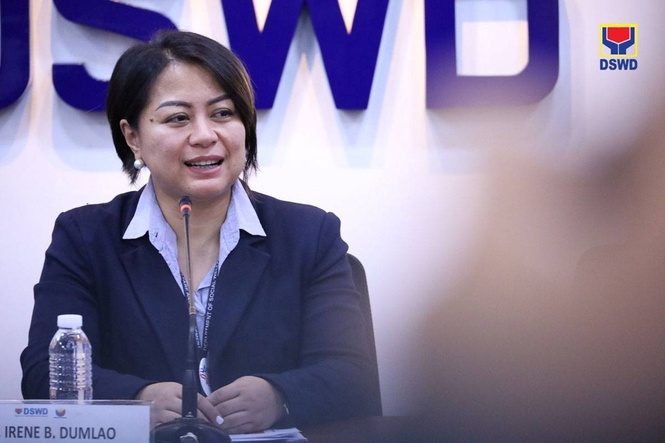
In an interview with The Manila Times, DSWD Assistant Secretary for Disaster Response Operations Group and Agency Spokesman Irene Dumlao said the agency is working with stakeholders to ensure that social protection measures will protect families and allow them to move up from poverty.
"But at the same time, it empowers them to protect the gains that our programs and services have already accomplished and likewise protect them from disasters, from economic disruptions and other shocks that might bring them back to the poverty track," Dumlao said.
Dumlao said some 600,000 households now benefit from the Walang Gutom Program (WGP), and the aim is to increase the number to 750,000 households by the end of 2026.
The effectiveness of the program reflects in the second-quarter survey of Social Weather Stations (SWS), where only 20.3 percent are experiencing involuntary hunger, down from 23.2 percent last March.
Dumlao also said that 4PS will remain important even if the country is now under UMIC status. "Poverty is multidimensional. Every family faces different problems, so there should be programs that would continue to invest in education and health such as the 4Ps program," she said.
With external shocks such as the war in the Middle East, the DSWD also launched programs that would help not only the poor but the middle class as well, such as the UPLIFT (Unified Package for Livelihoods, Industry, Food and Transport) program.
As of September 14, 5.78 million Filipinos have received UPLIFT assistance, comprising beneficiaries of the 4Ps and the WGP, as well as poor and near-poor households and, for the first time, low-income members of the Social Security System (SSS).
Dumlao said that including households who are SSS members is important since they want to implement social security nets to cushion the impact of economic disruptions.
The recently-signed law that enhances the Universal Access to Quality Tertiary Education (UAQTE) act or the Free College Tuition program will allow DSWD to work with the Commission on Higher Education (ChED) and the Technical Education and Skills Development Authority (Tesda) to prioritize 4Ps beneficiaries to have access to tertiary education, she said.
Critics maintain that giving dole-outs promotes a "mendicant mentality", but Dumlao stresses that the aid given by the DSWD should be considered as "social safety nets" for economic shocks.
"We need to cushion the impact of these shocks so that they won't become poor or increase the number of poor Filipinos in the country," Dumlao said.
The DSWD complements the social safety nets with social assistance and development programs, since it adheres to the policy that government should continue to invest in human capital.
"We provide them information, we provide them the necessary skills, and then we provide them also with social assistance so that their level of well-being is improved and we're able to sustain that as well," Dumlao said.
She also recognized that the middle class, or those who pay their taxes on time, should also be given social protection due to economic shocks, which is why they are now included in the UPLIFT program as well as receiving help through AICS.
"Such social safety nets really recognize that anyone can be in crisis situations and it's important that we cushion the impact of such a crisis to immediately help these families and individuals and support them in their immediate recovery," Dumlao said.
The DSWD is also improving its frontline services, such as increasing the number of satellite offices and digitizing AICS through partnerships with several drugstores, where regular clients can avail themselves of their medicines through the DSWD guarantee letter.
As the country progresses into UMIC, Dumlao said the agency's role will remain clear: It will continue to implement its social protection programs that would help families graduate from poverty but also sustain the gains they have reached.
"We will continue to build on their capacities so that they'd be able to withstand any shocks like disasters and economic disruptions that would push these vulnerable families back into poverty," Dumlao said.