

China just did something almost unimaginable in today’s hyper-capitalist world — it banned private schools from making profits off children aged 6 to 15. In a country with more than 45 million students enrolled in private education, Beijing declared that education is not a business and children are not products to be monetised. The move sent shockwaves through China’s massive private education industry and stunned investors who had poured billions into the sector. While much of the world continues turning education into a trillion-dollar industry, China moved in the opposite direction with one brutal message: compulsory education should never exist for profit.
China has officially banned “for-profit” private schools from operating within its nine-year compulsory education system, covering primary and junior high school students. The revised “Law on the Promotion of Non-government Education” (中华人民共和国民办教育促进法 in Chinese; also known as the Law on the Promotion of Private Schools of China) was passed on 7 November 2016 during a session of the National People’s Congress (NPC) Standing Committee after its third reading. The law came into effect on 1 September 2017. While private schools are still allowed to exist, the new law draws a much clearer line between “for-profit” and “non-profit” institutions.
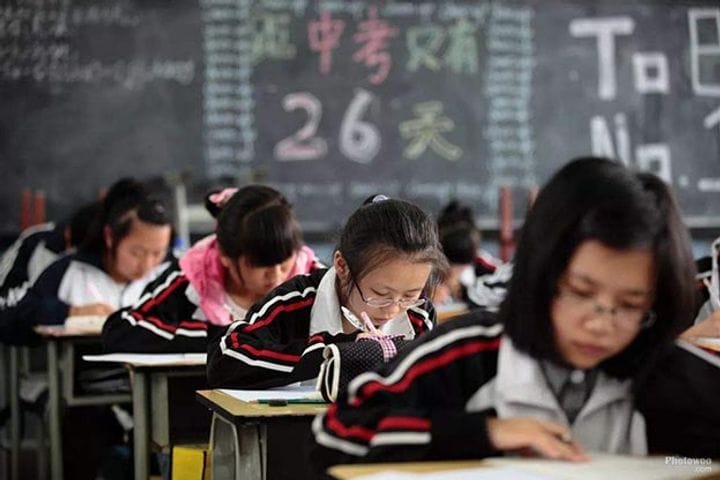
China’s compulsory education system includes six years of primary school and three years of junior high school, beginning from around age six. The system is free nationwide and funded by the central government. Zhu Zhiwen, then-Vice Minister of Education (current Vice Minister is Ren Youqun), stated that compulsory education is a public service that must be provided by the government. He argued that “profit-led private schools are unsuitable for the free education program.”
Despite the ban, China did not outlaw private education entirely. Zhu stressed that non-profit private schools can still provide diversified and market-oriented educational services as long as they comply with the law. The new regulations also continue to allow “for-profit” private schools at other education levels, including pre-school, senior high school, higher education, and non-academic training institutions. This means international schools and private education businesses can still operate profitably outside the compulsory education sector.
Under the revised law, “non-profit” schools are not allowed to distribute profits to investors or organisers. Any surplus generated must be reinvested back into school operations and development. In contrast, investors in “for-profit” private schools are permitted to make profits, provided they follow relevant business laws and regulations. The law also introduced separate support measures for both types of institutions.
Non-profit private schools will receive similar preferential treatment as public schools in areas such as land use, taxation, and government fiscal support. Tuition fee standards for non-profit schools will be set by provincial governments, while for-profit schools are allowed to determine fees based on market demand (see: "Non-profit" private schools will enjoy the same preferential policies… - one of the items listed on the 6th paragraph). Existing private schools that choose to register as non-profit institutions may continue operating under their current structure and could receive compensation for previous investments. Meanwhile, schools seeking for-profit status must undergo financial settlements, clarify ownership structures, pay taxes, and re-register under the new system.
The law also introduced stricter governance and accountability measures for private schools. All private schools must protect employees’ legal rights, including salaries, welfare, pensions, and social insurance contributions. Schools are required to establish supervisory mechanisms, set up boards or councils, and hire third-party agencies to inspect their educational environment. Institutions caught issuing fake degrees or certificates will face punishment.
One controversial article in the revised law states that Communist Party groups in private schools must carry out Party activities in accordance with the Party Constitution and strengthen Party-building efforts within schools (see: 二、本次修改的亮点是什么?一是进一步加强民办学校党的建设。…). Local governments are also encouraged to provide student loans and scholarships to protect the rights and interests of private school students.
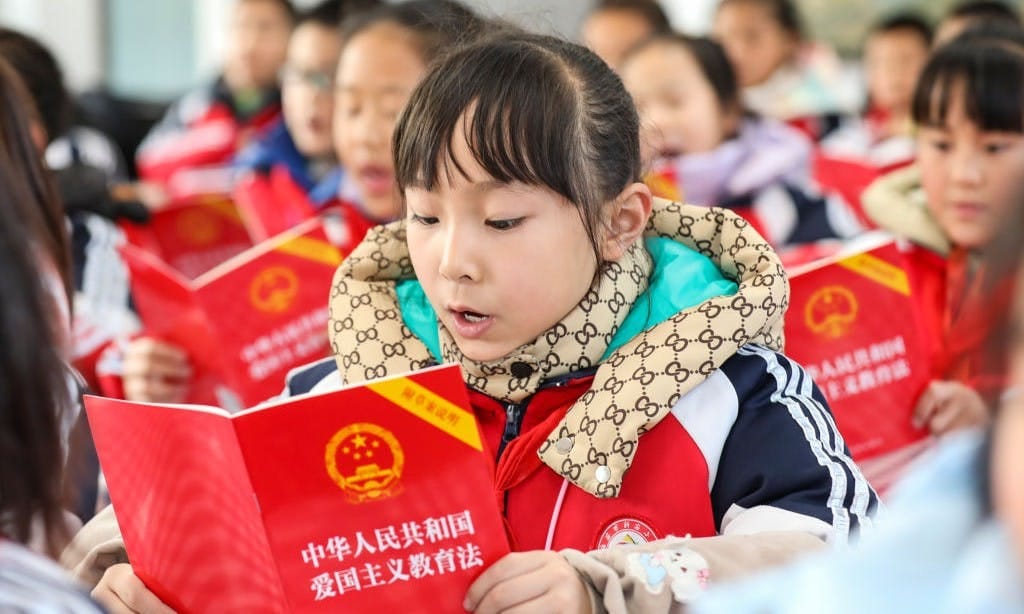
Analysts Kevin Prest and Xiaoxiao Liu believe the legal changes are aimed at preventing schools from profiting off tuition fees paid by children eligible for compulsory education (see: Analysis by Kevin Prest and Xiaoxiao Liu…). The move is expected to affect some international schools that enrol local Chinese students in dual-curriculum programs, as many of these schools operate as private institutions. However, many well-known international schools have already stated that they plan to continue operating as non-profit organisations.
The amendment may reduce opportunities for foreign institutions, including British education groups, to partner with Chinese organisations in establishing compulsory-level private schools. In fact, according to an article by The Guardian in 2023, several international private schools have closed including Dulwich College International’s preschool in Shenzhen.
China’s decision to draw a firm line between profit and compulsory education marks a significant shift in how one of the world’s largest education systems is structured and regulated. While the reform reshapes the private education landscape, its long-term impact will depend on how effectively the new rules are implemented across different regions and school types.
As China continues to refine its approach, the balance between public responsibility and private participation in education will remain a key issue. For now, the message from Beijing is clear: when it comes to compulsory education, profit will no longer take precedence over public service.
Aaron Colt (aaronafter@hotmail.com) is a content creator under the Newswav Creator programme, where you get to express yourself, be a citizen journalist, and at the same time monetize your content & reach millions of users on Newswav. Log in to creator.newswav.com and become a Newswav Creator now!
The User Content (as defined on Newswav Terms of Use) above including the views expressed and media (pictures, videos, citations etc) were submitted & posted by the author. Newswav is solely an aggregation platform that hosts the User Content. If you have any questions about the content, copyright or other issues of the work, please contact creator@newswav.com.



