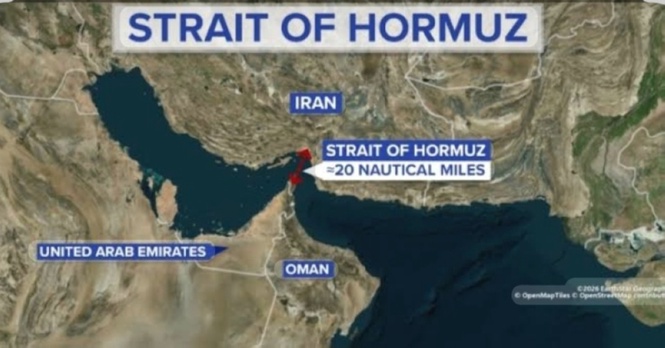
EIGHT of the world’s leading maritime trade associations have issued a joint open letter opposing the introduction of compulsory transit charges or service fees in the Strait of Hormuz, warning that such measures threaten to weaken international maritime law and destabilize global supply chains.
In their joint appeal to the International Maritime Organization (IMO) and the wider United Nations (UN), coalitions representing global shipowners and operators cautioned that introducing compulsory transit charges or service fees through the strait would represent a significant departure from established international practice.
The signatory groups include the Asian Shipowners' Association (ASA), Bimco, Cruise Lines International Association (CLIA), European Community Shipowners' Associations (ECSA), International Chamber of Shipping (ICS), International Association of Dry Cargo Shipowners (Intercargo), International Association of Independent Tanker Owners (Intertanko), and the World Shipping Council (WSC).
The coalition cautions that compromising transit passage rights "would establish a precedent that could undermine the internationally recognized legal framework governing straits used for international navigation and transit passage." The associations state that "once such a precedent is established, it becomes increasingly difficult to resist similar measures elsewhere, creating uncertainty for international shipping and global commerce."
The statement outlines the direct economic impacts on global trade. The coalition stresses that "any additional costs imposed on maritime transport inevitably flow through international supply chains." The associations warn that "these consequences extend beyond shipping costs, contributing to higher energy prices, higher inflation, and higher economic uncertainty." The groups add that "ultimately, these impacts will carry a human cost, affecting livelihoods around the world."
The letter calls for the protection of freedom of navigation as the foundation of international maritime governance, urging diplomats to keep transit rights separate from geopolitical talks. "As discussions regarding regional security and conflict resolution take place, we must ensure that internationally recognized rights of navigation are not compromised or used as part of broader political negotiations," the letter states.
The signatory organizations conclude with a commitment to international law, stating they "stand ready to work with the International Maritime Organization and the wider United Nations to ensure that long-established legal principles governing international straits, that are protected under international law, most notably through the United Nations Convention on the Law of the Sea (Unclos), are not weakened or altered."