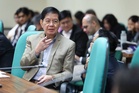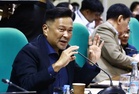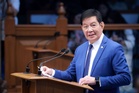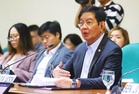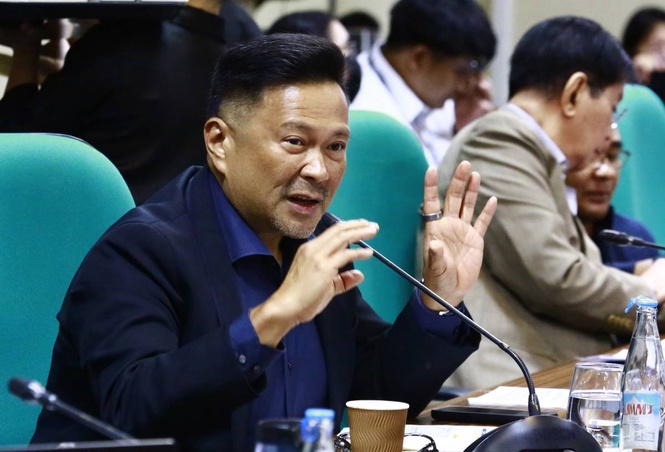
MANILA, Philippines — Senate Finance Committee Chairman JV Ejercito is pushing for a “back to basics” approach in the proposed 2027 national budget, emphasizing the need to prioritize essential services and programs that directly address the needs of ordinary Filipinos.
In his sponsorship speech for House Bill No. 10858, or the proposed 2027 General Appropriations Act (GAA), on Monday, Ejercito said the government must focus its limited resources on fundamental public needs, particularly healthcare, food security, education, employment, and public safety.
“Health, food, education, jobs, and security. These are the priorities we want to focus on as we craft and deliberate on the 2027 National Budget. Back to basics,” Ejercito said.
“Before we focus on complicated matters, we should focus on using our limited resources to ensure that the basic needs of our people are met,” he added.
Ejercito said that providing basic services must go hand in hand with economic recovery, saying the government should accelerate infrastructure development to generate employment, stimulate economic activity, and support long-term growth.
“We cannot sustain the delivery of basic services without a strong economy. And no one will appreciate economic growth if it does not translate into better basic services,” he said.
As author and principal sponsor of the Universal Health Care (UHC) Act, Ejercito underscored the importance of investing in the country's healthcare system.
Under the Senate version of the proposed 2027 budget, a total of P378.6 billion was allocated for the Department of Health (DOH) and its attached agencies and corporations.
Of this amount, P5.4 billion was earmarked for the Health Facilities Enhancement Program (HFEP), which supports the construction and improvement of hospitals and other health facilities, as well as the acquisition of medical equipment.
Ejercito said strengthening provincial and locally funded hospitals would help bring specialized medical services closer to communities, reduce the need for patients to travel to Metro Manila for treatment, and ease congestion in major referral hospitals.
The Senate also increased PhilHealth subsidies by P19.8 billion, bringing the total allocation to P94.2 billion. The funding will support indirect contributors, expand health benefit packages, and strengthen the implementation of the Zero Balance Billing (ZBB) program.
He also assured the public that the reduction in the Medical Assistance Program (MAP) allocation should not be a cause for concern, explaining that a substantial portion of its funding had been realigned directly to hospitals to make assistance more accessible to patients.
“Our goal is simple: to ease the worries of every patient. They should no longer have to think about where to get money to pay for their medical treatment. Their only concern should be getting well,” he said.
“This will also reduce the need for patients to line up and go from one government office to another just to request guarantee letters to cover their hospital bills," he added.