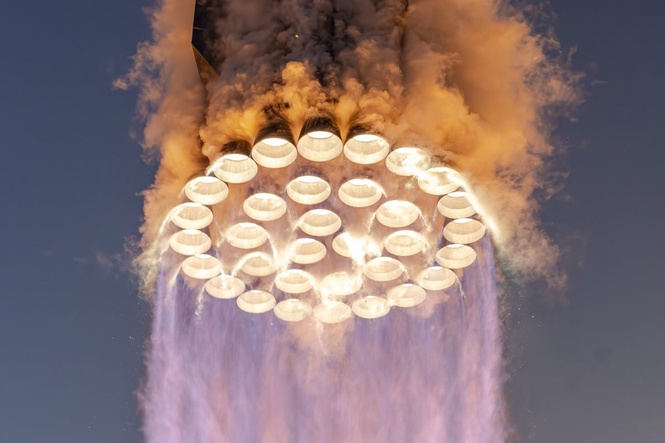
SpaceX is preparing for what is the most critical test of its Starship rocket to date.
The world’s biggest rocket is scheduled to take part in Nasa’s Artemis III mission next year, but after 13 flight tests it is yet to make it to orbit.
Achieving this feat will “unlock the future” of space travel, according to SpaceX, with rapidly reusable Starships capable of carrying people and cargo across the solar system.
“Starship is designed to change how humanity accesses and utilises outer space,” SpaceX’s mission notes state.
“The outcome will be a spacecraft that will ultimately deploy hundreds of thousands of satellites, return humans to the Moon to build a permanent presence, and eventually send megatons of cargo and millions of people to space to make life multiplanetary.”
For SpaceX CEO Elon Musk, the success of Starship is crucial to completing multi-billion dollar contracts with Nasa, as well as achieving his long-stated goal of one day making it to Mars.
How to watch Starship launch
Starship Flight 14 is scheduled to launch from SpaceX’s Starbase facility in southern Texas on Monday, 28 September, at 7:15am local time (1:15pm BST).
A 75-minute launch window will close at 8:30am CT, with backup windows in place for the following days.

A live stream of the launch will be available on SpaceX’s website, as well as the company’s X profile.
As with all Starship flight tests, the launch time is subject to delays due to bad weather, technical setbacks, or regulatory issues.
What’s at stake for SpaceX and Elon Musk
After years of development, this will be the first time that Starship is used in an actual mission to deliver a payload to orbit.
Onboard will be 26 Starlink V3 satellites, which will expand the capacity and user speeds of the space-based internet constellation.
Three of the satellites will also be equipped with cameras to monitor Starship as it prepares for what will be the most critical part of the flight test.
Once in orbit, the second-stage Starship rocket will aim to complete six orbits around the planet at an altitude of approcimately 275km.
The 10-hour flight will culminate in a splashdown in the Pacific Ocean to the west of Chile. If successful, it will be only the second time that Starship’s second stage has successfully returned to Earth.
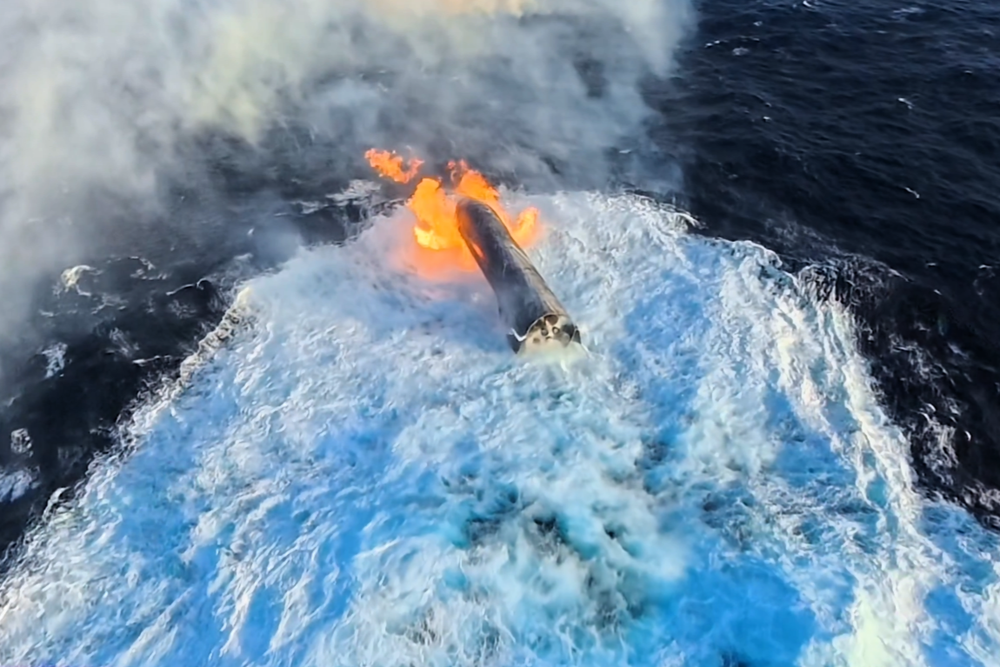
Reaching orbit will be a major milestone for Starship, but it also comes with significant risks.
The suborbital trajectories of previous flight tests were designed so that if the rocket malfunctioned at any point, it would still fall to Earth in an area where it posed no risk to people or infrastructure on the ground.
If SpaceX loses contact with Starship during Flight 14, it could lose control of the giant rocket and its safe return to Earth would no longer be guaranteed.
“For the first 13 Starship flight tests, we’ve intentionally placed the upper stage on a passively safe suborbital trajectory,” SpaceX said in its mission notes for Flight 14.
“These trajectories are considered ‘passively safe’ because even if control over the spacecraft was completely lost, it was already on a path to reenter the atmosphere and splash down in a pre-determined location.”
If all goes to plan, Starship Flight 14 will mark a monumental leap towards making life multi-planetary.
But any major failures will not only set back the rocket’s development, it could delay Nasa’s plan to return humans to the Moon this decade – and Musk’s hopes of making it to Mars.
Read MoreSpaceX prepares Starship for first ever orbital launch
Strange signal detected from planet outside solar system for first time