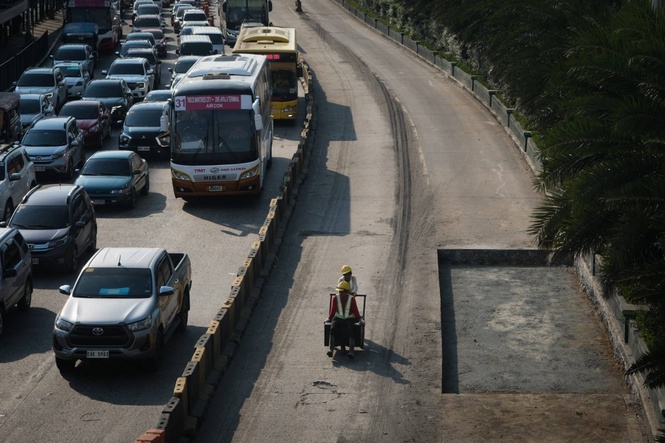
MANILA, Philippines — Caloocan 2nd District Rep. Edgar Erice on Friday has called for a congressional inquiry into the premature deterioration of portions of the recently rehabilitated Epifanio de los Santos Avenue (EDSA), including reports of potholes and other pavement defects just months after rehabilitation.
Erice’s proposed resolution seeks to determine whether deficiencies in planning, design, materials, construction methods, drainage, quality control, contract management or maintenance contributed to the early deterioration.
Phase 1, covering Roxas Boulevard to Orense Street, was completed in April 2026 at a reported cost of P1.183 billion, while Phase 2, covering Orense Street in Makati City to Monumento in Caloocan City, is being undertaken under a P4.009-billion contract.
The proposed inquiry comes amid reports of potholes and other pavement defects recurring on recently rehabilitated portions of EDSA, particularly after periods of heavy monsoon rainfall.
Erice said the House should examine pavement assessment and design, asphalt mix and material specifications, pavement preparation, compaction, construction methodology, drainage and post-construction monitoring to determine the causes of the defects.
The inquiry would also review project plans, engineering studies, procurement and contract documents, material testing and laboratory reports, inspection and quality-control records, payment records, variation orders, warranties and defects-liability provisions.
Particular attention would be given to drainage and water infiltration, including whether drainage facilities, subsurface conditions, road elevations and pavement design are adequate to address increasingly severe rainfall events in Metro Manila.
Erice also wants a comprehensive, geotagged condition assessment of affected Phase 1 sections, documenting defects, dates of occurrence, repair history, identified causes and corrective-work costs.
He said the investigation should draw lessons for Phase 2 and future major infrastructure projects, including stronger independent testing, third-party quality audits, performance warranties, defects-liability provisions and more rigorous acceptance procedures.
The proposed inquiry ultimately seeks to strengthen infrastructure standards and accountability mechanisms and ensure that government-funded projects are built to scientifically sound, climate-resilient and verifiable standards.