NATO Secretary General Mark Rutte called on Russia to stop issuing nuclear threats after Moscow sent a letter to the alliance saying it is prepared to deploy its nuclear arsenal if its territory comes under attack.
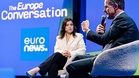
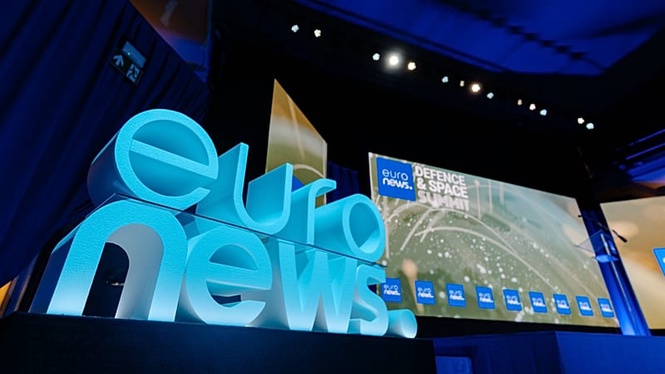
"We are a defensive alliance. Stop the nuclear threats. This is absolutely not called for and not helpful," Rutte told the Euronews Defence and Space Summit on Wednesday.
"And particularly stop the war in Ukraine, which is an unprovoked war of aggression against Ukraine. So we have been clear in our reaction, which was short and concise."
Rutte also said NATO does not face an "imminent threat" from Russia, despite a rise in hybrid attacks across the continent, some of which have been attributed to Moscow.
"If there is a (Russian) buildup, we will see it, and we will deal with it if anything happens," Rutte said. "We have prepared and trained for this."
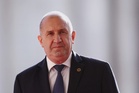
Earlier on Wednesday, Bulgarian Prime Minister Rumen Radev raised the alarm about the possibility of a Russian nuclear attack and urged European leaders to engage in diplomacy to avert "the worst-case scenario".
"There is a nuclear card," Radev said.
"We need to have this into account. We cannot close our eyes (to the fact) that there are nuclear weapons on our continent, there are nuclear weapons in the arsenal of Russia. And this is part of the game calculation."
By contrast, the European Commissioner for Defence, Andrius Kubilius, rejected the push for greater diplomatic engagement with Russia, warning that past attempts had failed.
"Russians are standing with their position very clear: Ukraine needs to surrender - that is their diplomatic position," Kubilius told the summit.
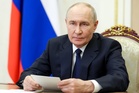
"(President Vladimir) Putin needs to understand that in the end he won't achieve anything with this war," he added, "and Putin needs to feel that war is coming to Russia itself."
Kubilius also said Europe's response to Russian hybrid attacks should be "as painful" for Moscow, warning that President Vladimir Putin is seeking to occupy "the hearts and the minds" of Europe's population.
"If we are hit by Russian hybrid attacks, our answers should be as painful as that attack," Kubilius said. "How can that pain be created? It's up to us."
Meanwhile, Andrew Puzder, the US ambassador to the EU, slammed the push to embed "Made in Europe" provisions in rearmament initiatives, warning it risks alienating NATO allies and hampering collective security.
"When lives are on the line, capability and availability should determine the solution, not geography," Puzder said in his address.
"We cannot afford to create internal impediments."
Puzder pitched "Made in NATO" as an alternative approach that would allow greater access for US defence companies, which risk losing out on lucrative contracts under the more restrictive "Made in Europe" vision advocated by France.
"We're stronger when we work together," he said. "We must succeed together."
On Wednesday morning, Belgian Defence Minister Theo Francken issued a stark warning to his European peers: Europe will face "a dark winter" with the multiplication of hybrid threats.
Francken also urged Europe that "everything needs to go faster" when it comes to scaling up air defences to protect the continent from Russia’s air attacks, including to fight jet-powered drones "that come at 600 kilometres per hour".
"We need air defence, air defence, air defence," Francken said, adding that Europe needed more stocks, more production, and a larger industrial base.
"Everything needs to go faster."