Europe’s travel industry was in the spotlight today at the Euronews Travel & Tourism Summit 2026 at the Albert Hall in Brussels.
Throughout the day, Euronews was live from the Belgian capital with interviews, panels and debates exploring how tourism is responding to a year marked by geopolitical disruption, airspace closures and extreme weather.
Below are the updates and highlights from the Euronews Travel & Tourism Summit 2026 in Brussels
Michelin Guide offers curation of human-centred hotel stays amid digital algorithms noise
The Michelin Guide’s expanded role beyond restaurants is helping travellers sort through digital noise with a human-centred curation of stays that doesn’t rely solely on new technologies.
At the closing panel of the Euronews Travel & Tourism Summit 2026, Marie-France Perrel, Head of Business Development, Hotels at Michelin Guide, said the hotel selection for the Michelin Keys “is based on real humans travelling the world deciding whether or not a property should be a part of the collection based on the five criteria”.
Amid algorithms and endless digital reviews at play, Perrel said that the role of hotel guide is “essential” amid all the online chatter.

Hotels can receive one, two or three keys based on their quality and consistency, architecture and interior design, personality and character, value for money, as well as what the property adds to its locale.
She also highlighted a growing trend of food and travel being seen as one experience. Data from the Michelin Guide found that in 2026, users looking to book a hotel also searched for dining spots nearby.
Perrel also highlighted the changes in luxury travel trends, with a shift towards travellers seeking a sense of place and properties that offer a connection to their surroundings. Luxury travel is now an “ecosystem,” she said, adding that it’s also a “broad spectrum,” with the Guide also offering insights into the wide world of hospitality.
Direct links to Europe and easier visa set to boost Central Asian and European travel
Kyrgyzstan’s Ambassador Extraordinary and Plenipotentiary to Belgium has revealed that the Central Asian country is planning direct air links to Europe, with routes potentially launching as early as 2027.
Aidit Erkin, Kyrgyzstan’s envoy, said that transport connectivity is an “extremely important” priority, alongside strengthening cooperation and partnerships with Europe. Currently, travellers in Kyrgyzstan connect to Europe with Turkish Airlines-operated flights via Istanbul.
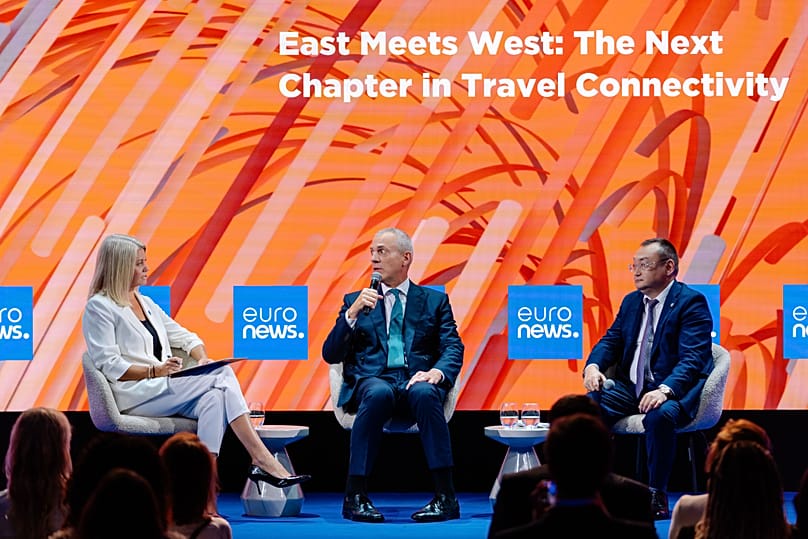
However, now that all Kyrgyzstan-certified carriers have been removed from the EU’s Air Safety List in June, Erkin announced during the Euronews Travel & Tourism Summit 2026 that work is underway for “direct flights from Kyrgyzstan to Europe”, with routes on the horizon to launch next year.
Joining Erkin on the panel was Florian Sengstschmid, Chief Executive Officer of the Azerbaijan Tourism Board. He highlighted a growing demand for travel between Azerbaijan and Europe, saying that policymakers should consider ways to facilitate that demand.
Sengstschmid pointed to visas as a “bottleneck” in Central Asian-European connectivity. Meanwhile, Erkin added that the Kyrgyz President is promoting a common “Silk Road visa” that would unlock access to all Central Asian countries for travellers with a single visa.
EXPO 2027 Belgrade poised as tourism catalyst for Belgrade and Western Balkans
Amid preparations for Expo 2027, Dušan Borovčanin, advisor at EXPO 2027 Belgrade, sees the event as a catalyst for tourism and development for Serbia’s capital and beyond, across the wider Western Balkans. Belgrade won the right to host over competing proposals like Spain, the US, Argentina and Thailand.
Speaking at the Euronews Travel & Tourism Summit 2026, Borovčanin highlighted that Belgrade’s hosting of the event marks the first time it's being hosted in the region. As well as instilling a sense of “national pride” for Serbians, Borovčanin added that Expo 2027 will be an opportunity to showcase the country’s development over the past 20 years.
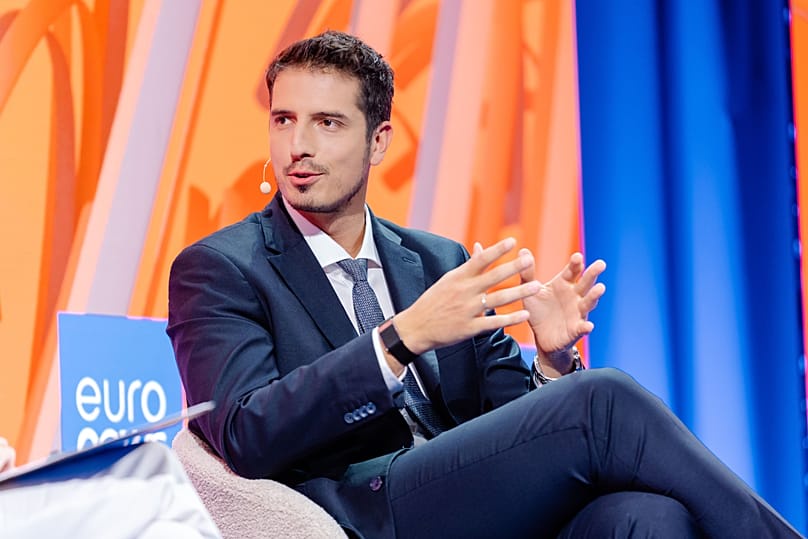
“We want this to be a catalyst for the further development of our region in economic terms,” he said. “But also in terms of the national branding and national pride, and I think that is the reason why countries are also signing up and participating.”
He added that 141 official participants are confirmed, and that there is a need “to shed light on the entire region”.
Dubrovnik is open to everyone – but under certain circumstances
Mayor of Dubrovnik Mato Franković has highlighted the success of his city in being able to find a “new balance” between welcoming large tourist numbers and protecting the quality of life for residents and the local charm.
During his one-to-one discussion in Brussels, he revealed that when he took office as mayor in 2017, Dubrovnik was written off as a city that was dying amid the sheer strain of tourist influxes. In response, Dubrovnik launched the "Respect the City" initiative to tackle unsustainable cruise ship arrivals, as well as manage day and overnight visitor flows.
While taking into account that the regulations may have taken a toll on the "magic" of visiting his native Dubrovnik, he argued that it has ultimately been for the better, preventing visitors from long queues and busy crowds, especially in the city's Old Town.
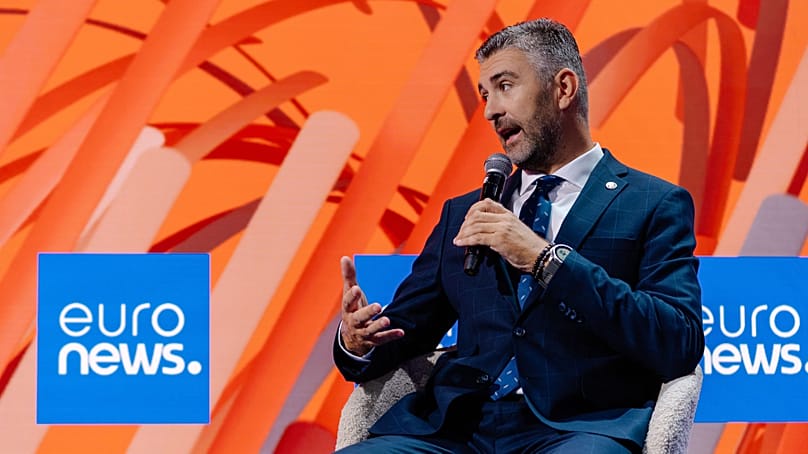
Despite the measure, Franković highlighted that the city received 35% more guests compared to 2017, but emphasised that the distribution of visitor numbers throughout the day is “crucial”. He added that Dubrovnik is “a world city, it's a historical world site, and it should be open for everyone. But, under certain circumstances”.
‘We have to put our money where our mouth is’
Members of the European Parliament must work to ensure that under-the-radar destinations are able to grow their tourism sectors, while hotspots need "room to breathe”, according to Daniel Attard MEP, S&D.
Speaking during the panel “Managing visitor flows and shaping tomorrow’s destinations”, he said that there is no use in encouraging travellers to venture beyond the beaten path, especially if there are no means to be able to connect them to those destinations.
As such, “we have to put the money where our mouth is at the European level”, he said, adding that “we have to create better connections, invest in new connections”, as well as bolster aviation services.
Attard was joined by Ourania Georgoutsakou, Managing Director of Airlines for Europe (A4E), who added that air connectivity is equally as important. She also noted that the trend over the past few years has seen the shoulder season extend and steadily grow by upwards of 30%.
“People are choosing to go longer and that kind of collaboration with the local hospitality sector, with the authorities, allows an offering of an extended season, which is an important way of going forward,” she said.
While when it comes to destinations experimenting with tourist taxes to manage demand, Marta Machado, Deputy Director General of HOTREC - Hotels, Restaurants, Bars & Cafés in Europe, highlighted the need for better data, especially on the continent's short-term holiday homes to enact better decisions "on the management of the completion capacity of the visitor flows".
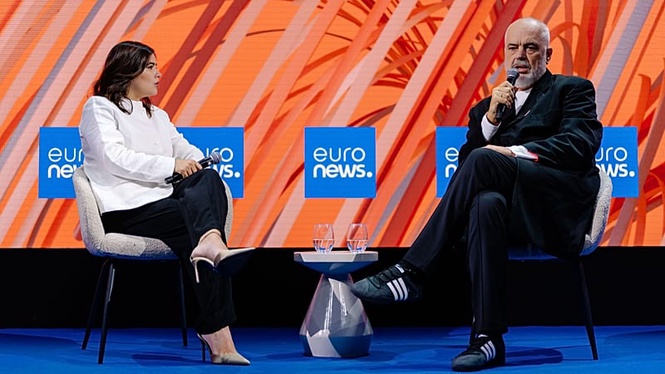
Edi Rama speaks exclusively to Euronews
Speaking exclusively to Maria Tadeo at the Euronews Travel & Tourism Summit, Albanian Prime Minister Edi Rama explained that his country is making significant leaps and strides in the tourism world.
He explained that Albania used to be the “most isolated country in Europe and the North Korea of Europe” and that, after it had emerged, it was “confronted with very, very disturbing stereotypes”.
Rama added that the country plans to target the world in terms of tourism. He admitted that the country’s infrastructure is somewhat lacking, but that it’s improving significantly.
He claimed that it has an airport that is “the fastest growing airport of Europe”, and there are plans in place to open a new airport in Vlorë, and another seasonal hub in the country’s south.
“We have a fourth up in the mountains, but it’s not yet working as we wish,” he added.
‘The South Caucasus is completely underrated’: Azerbaijan calls for more visitors
Azerbaijan is looking to expand its tourism offer beyond Baku, with the country’s tourism chief highlighting its natural diversity, cultural heritage and growing connectivity as it seeks to attract more international visitors.
Speaking to moderator Jane Witherspoon, Florian Sengstschmid, CEO of the Azerbaijan Tourism Board, said the wider South Caucasus region remains largely overlooked by international travellers.
“The South Caucasus is completely underrated,” he said, adding that Azerbaijan had “much more to come and much more to offer”.
He urged visitors to venture beyond the capital and explore the country’s Silk Road heritage, ancient villages, UNESCO sites and mountain landscapes.
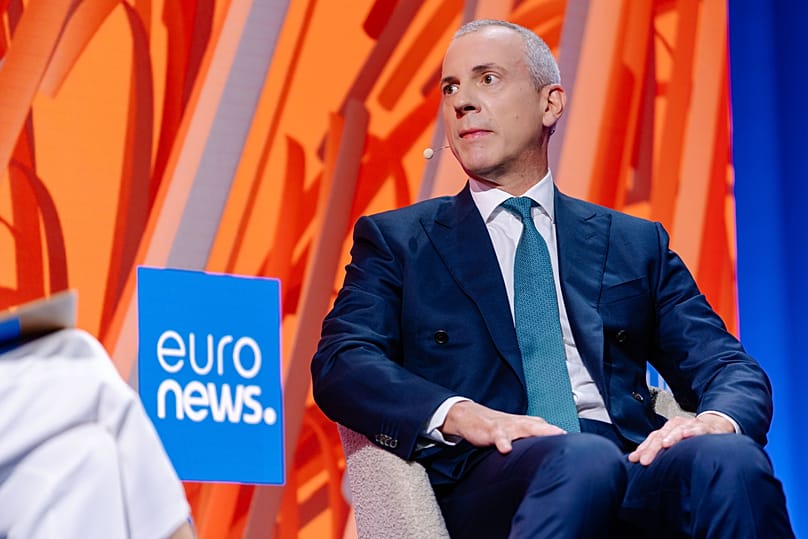
“It really is to travel beyond Baku, to travel along the Silk Road through side valleys, ancient heritage villages, UNESCO World Heritage sites,” he said.
Azerbaijan is also working to improve international connectivity, with Brussels set to gain four weekly flights to Baku from May 2027.
Schmid said tourism development should also benefit local communities, pointing to villages where investment had helped create businesses and revive traditional crafts.
But he said growth should not simply be measured by visitor numbers.
“Is it all about the numbers? No, it’s not all about the numbers,” Sengstschmid said.
“It’s about how you really increase the length of stay. How do you make people enjoy more of the country during their journey?”
His ambition, he added, was for “a few more travellers, but a higher impact”.
Romania invites travellers to explore beyond Bucharest
Dan-Adrian Pop, Romania’s Secretary of State at the Ministry of Economy, Digitalisation, Entrepreneurship and Tourism, spoke to moderator Evi Kiorri about one of the most exciting emerging destinations in Europe.
Despite Romania’s proximity to Ukraine and the ongoing conflict, Pop urged visitors to come and see the nation for themselves.
“Overall, I would say that we are safe as any other European country. The whole country is very well protected, and from internal security for the citizens and for the travellers, I think we are one of the safest countries in Europe,” he said.
Bucharest as a destination has long been popular with European travellers, but Pop explained that Romania has so much more to offer than just the charms of its capital.
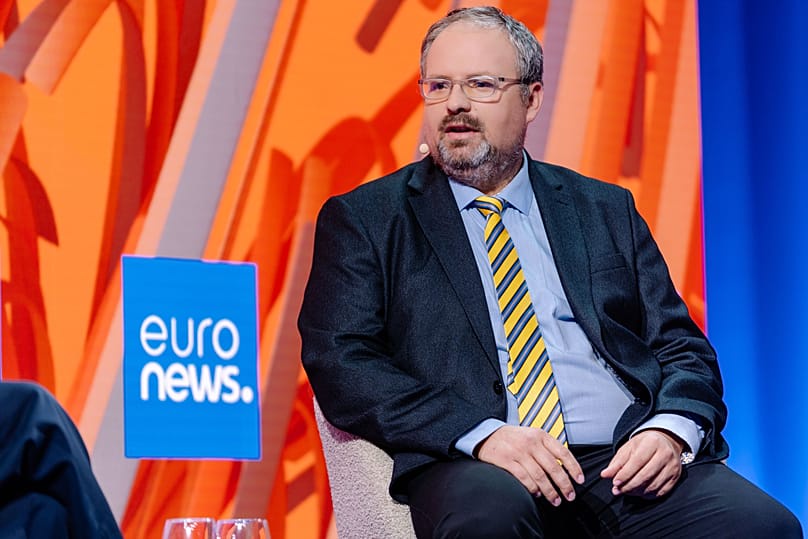
“We focus very much on rural tourism, spa tourism, and adventure and active tourism,” he said.
“They have a lot of options to be out in nature and close to the citizens, to the people who live there, who know the places, and who guide them through this experience.”
He also praised the vast amount of walking routes in the country, some “1,000 kilometres from north to south, through the Carpathian Mountains”.
While he admitted that infrastructure is lacking in some places, and the summer season isn’t as long as in other European nations, there’s still plenty to experience thanks, in part, to the country’s citizens.
“The people of Romania are one of our most valuable promoters, and they know the destinations, the local destinations that would fit for their friends. They are the first ones to invite their friends all over the world to Romania,” Pop said.
Cruise industry targeting younger travellers and greener future
Gianni Onorato, CEO of MSC Cruises, speaking to Hannah Brown as part of The Big Question, has said the sector is attracting a younger generation of travellers, while diversification and new technology could help it tackle concerns around overtourism and environmental impact.
The cruise executive also said the profile of passengers had changed significantly during his 40 years in the industry.
“While now there is a much younger demographic. The average age is 35 to 54. A lot of families, a lot of young people, and this is very good because this can ensure the future of this industry,” he said.
He also pushed back against the perception that cruise passengers simply arrive in a destination, spend little money and leave again, pointing to the industry's wider economic contribution.
“Cruises contribute to the European economy by €65 billion a year and with 445,000 permanent jobs,” he said.
View this post on Instagram
He argued that cruise operators could also help spread tourism beyond Europe's busiest destinations by working with local authorities and promoting lesser-known ports.
“We are looking very much to diversify our destinations,” he said, highlighting the Greek island of Syros, close to the more famous Santorini and Mykonos.
“Syros is becoming more and more on the map of tourism, and we are very happy about it because it is also helping to respond to the [overtourism problem],” he added.
The executive also pointed to the potential for cruises to support tourism outside the traditional summer season, noting that ships can move between destinations as weather conditions change.
On sustainability, he said the industry was making progress but still had work to do. He said MSC had reduced its emissions by almost 42 per cent against its 2008 baseline, putting it “almost five years ahead of the checkpoint for 2030”.
But he said the availability of cleaner fuels remained a major challenge.
“The target is there. There is only one issue: the fuel availability. So that needs to be produced at large scale,” he said.
Looking ahead, he predicted that cruise holidays would continue to attract new audiences, including solo travellers and multigenerational families.
“More and more we will have a younger audience. By the way, we will have new segments: solo travellers. It’s a new segment, very important,” he said.
Onorato also suggested the industry could increasingly move away from measuring success simply by passenger numbers.
“I believe tourism in general will be much less measured on the quantity, on the volumes, but much more on the quality of the emotions that we are able to give to the travellers and also the quality of the contribution, not only economically, that we can give to the locals and local community,” he said.
Sustainability in focus
Sustainability, affordability and accessibility can work together, but tourism needs to balance environmental, social and economic considerations, panellists told the Euronews Travel & Tourism Summit.
Speaking to moderator Mike Starling, Andreea Stăjcu, Deputy Head of Unit, Head of Tourism Sector, DG MOVE at the European Commission, said travellers themselves were increasingly demanding more sustainable options.
“The travellers really want to travel in a sustainable way,” she said, pointing to cycling and night trains as examples.
MEP and former Croatian tourism minister Nikolina Brnjac said sustainability could not be reduced to environmental measures alone.
“It is achievable, but only if we approach it in three pillars: social, environmental and economical,” she said, adding that better rail and public transport connections were needed to reach rural and peripheral areas.
View this post on Instagram
Managing visitor numbers was another key theme. “We must not be afraid of the numbers,” Brnjac said.
“It’s bad management of the tourist flows.”
István Ujhelyi, former MEP and UN Tourism official, similarly stressed that tourism growth cannot simply be stopped.
“You can’t stop this growing,” he said, noting that international tourist numbers had risen from 25 million in 1950 to more than 1.5 billion last year.
Sven Wiltink of Radisson Hotel Group said sustainability needed to become part of the industry’s core business, rather than an optional extra.
“Sustainability is not a bolt-on element,” he said.
RelatedCentral Europe as 'one destination'
Olivér Csendes, President, Hungarian Tourism Agency and Sandrine Buffenoir, Director, Netherlands, Belgium & Luxembourg, Atout France, sat down with moderator Mared Gwyn-Jones to talk about looking at Central Europe as one destination and the inextricable link between nature and tourism.
Oliver Cndish, representing the Hungarian Tourism Agency, said tourism should be used to promote Central Europe as a single, interconnected destination rather than being constrained by national borders.
“I would love to see more international collaborations where we position the way we live and our regions, basically as one destination,” he said.
“We don’t have to limit our thinking and the creation of experience spaces to national borders,” he added.
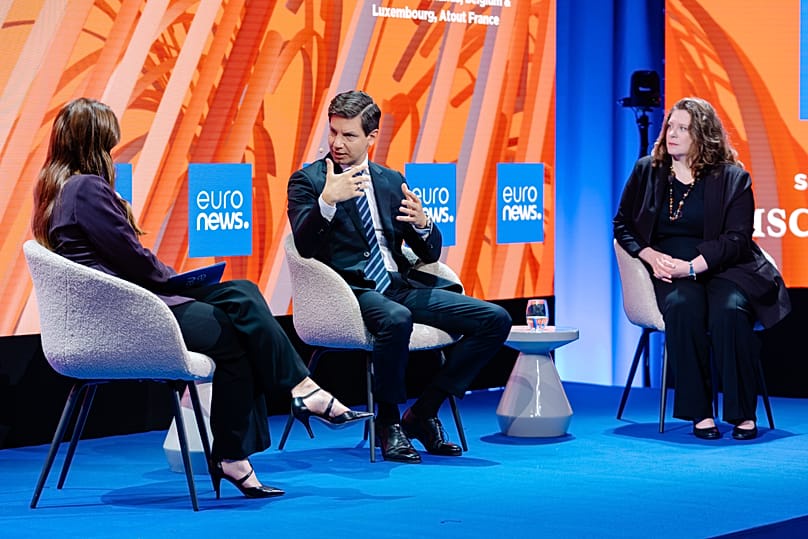
Cndish pointed to the relatively short distances between European countries as an opportunity to create multi-country experiences - part of the popular “trip-maxxing” trend, which has gained traction this year especially.
“If you look at it from the US or Asian perspective, the distances are very small in Europe. You can travel 100 kilometres, and you have already touched two or three Central European capitals,” he said.
He also highlighted the Danube as an example of an attraction that could be promoted across borders.
“We have treasures like the Danube, that’s found in a lot of countries in Europe, and has always been a connection, connecting cultures,” he said. “So why not use this as an active part of the experience that people will have, enriching their lives and the way they see and experience Europe.”
Cndish also praised cooperation within the EU, saying: “I believe Europe is doing an amazing job collaborating.”
He pointed to the European data space for tourism as one example, saying it could help countries work together on issues including visitor flows and extreme weather.
“Think about all the discussions we had about visitor flow, protecting visitors, warning them in case there is a danger, whether it’s wildfire, whether it’s whatever different extreme weather conditions. This is only possible if we have the right data at the right places,” he said.
He also stressed the importance of protecting the natural environment, saying: “There is no tourism without nature.”
View this post on Instagram
“Tourism needs to be a force for good and needs to also support the resilience of the living areas,” he added.
Atout France’s Benelux director Sandrine Buffeno also highlighted tourism’s role in bringing Europeans together.
“Tourism is a key aspect of connection between all European people. It’s a key factor in knowing each other better, in working together better, living with each other,” she said.
“It’s a classroom to learn about each other,” she added.
'Climate change the biggest threat to tourism'
Eduardo Santander, the CEO of the European Travel Commission, sat down with moderator Mared Gwyn-Jones to speak about the impact of the threat of climate change on global tourism and the role of Europe as a destination.
The CEO explained that “climate change is the biggest threat to tourism right now, by far.”
He was speaking following a summer of record heat and related travel chaos across the continent.
“We see that trains cannot run sometimes because the rails are expanded because of the heat. We saw this at the cruise lines on the European rivers - they couldn’t run because it was too dry,” Santander said.
“We have to prepare for that in a much more coordinated and comprehensive way,” he added.
“We see resilience becoming one of the engines of European tourism. We have to become even more resilient to whatever is next.”
Santander explained that, due to the impact of climate change, travel and tourism is getting less affordable.
“Travelling is becoming much more expensive, and you all have travelled this summer, I guess, and you notice it in your pockets.”
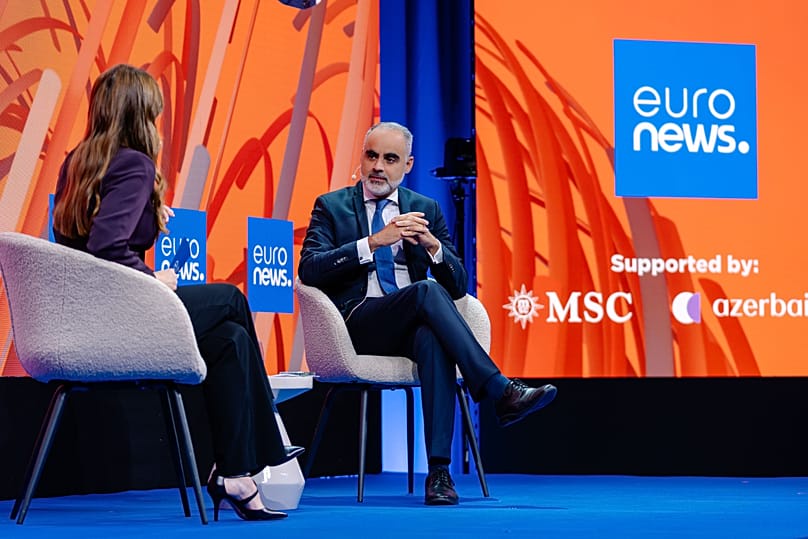
He also spoke about the trend for “coolcations”, which have gained plenty of traction this year, especially: “We see a lot of people from southern European destinations looking for what we call ‘cool locations’ — places that are cooler in summer and where you can enjoy the weather in a more predictable way.”
Santander also emphasised the economic importance of tourism, which makes up some 10% of the European economy, a figure that rises to between 15% and 20% of some nation’s GDP.
He also sang the praises of Europe as a tourism destination.
“Europe is becoming the playground, some people call it. It’s becoming a museum, an attraction park,” he said, asking, “what’s wrong with that?”
“An attraction park or a museum is a perfect place to be. Normally it’s well organised, well managed, they have a nice restaurant, they have clean toilets, so there’s nothing wrong.”
US Global Entry for Belgians by end of 2026?
Bill White, the Ambassador of the United States of America to the Kingdom of Belgium, sat down with summit host Jane Witherspoon to speak about the special relationship between the two nations.
While the Ambassador praised Belgium for having so much more to offer than “waffles, chocolate and beer”, he did criticise the lines at the airport in Brussels, saying they “suck”.
“They’re really bad. One of the things we have to do in our transatlantic alliance and relationship is to recognise that if we want people to come to Belgium, we have to fix this problem. It must get better immediately,” he added.
View this post on Instagram
Nevertheless, White announced that he has received approval from President Donald Trump to allow Belgian citizens to apply for the US Global Entry programme, which is designed to speed up entry at US airports. Global Entry is a DHS programme for pre-approved international travellers.
In practical terms, he explained, that means: “you’ll register, you pay your fee, get vetted, and then you fly to the United States, and you look at the kiosk at JFK or wherever it is, you smile, don’t smile, you get ‘whoop!’ right through, and then you go get your bags and spend money”.
He urged Belgian citizens to “write to your congressman or your parliament person, let’s go, get the paperwork done, because when you travel, it’ll be seamless. One, two, three.”
View this post on Instagram