

In Malaysia, dogs are a cultural and religious taboo, particularly for Malaysian Muslims. This was highlighted in 2014 when Syed Azmi Alhabsi organized an event called "I Want to Touch a Dog" to promote compassion toward dogs. The event sparked backlash, with Syed Azmi receiving over 3,000 messages within a week—many of them hateful and some threatening physical harm. Authorities condemned the event as "an offense to Islam," leading Syed Azmi to publicly apologize, stating, “With a sincere heart, my intention to organize this program was because of Allah and not to distort the faith, change religious laws, make fun of ulama (learned men), or encourage liberalism.”
But why are dogs considered haram or impure for Malaysian Muslims? This view stems from the Shafi'i school of jurisprudence in Sunni Islam, which teaches that dogs are impure or unclean, regardless of breed. According to Islamic rulings followed in Malaysia, if a Muslim touches a dog, they must perform a ritual cleansing, washing the affected area seven times—the first with dirt and the remaining six with water. This practice is based on a hadith stating, "Cleanse your vase which the dog licked by washing it seven times, and the first is with earth (soil)." Failure to perform this cleansing renders a Muslim’s prayers invalid. These rules also extend to dishes, clothes, and other items that come into contact with dogs.
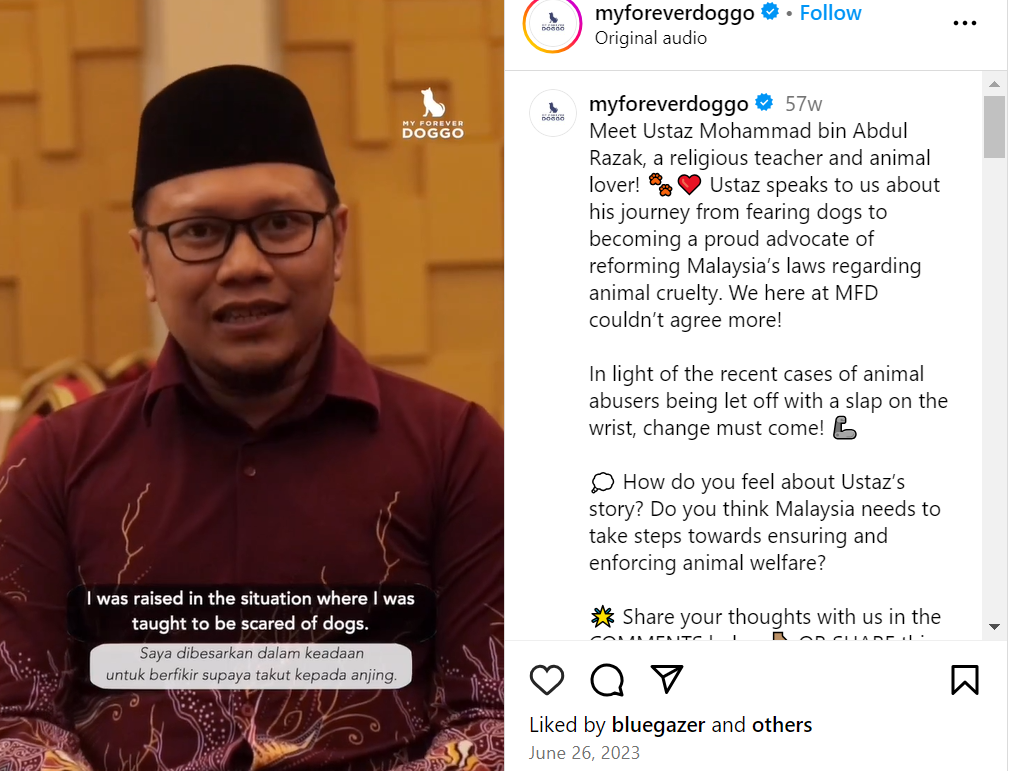
In 2017, JAKIM (the Malaysian Islamic Development Department) reinforced this perspective, advising Muslims against touching or petting dogs, as it contradicts the Shafi'i teachings and cultural norms observed in Malaysia. However, recent years have seen a gradual shift in attitudes. In June 2023, Ustaz Mohammad Abdul Razak, a religious teacher from Negeri Sembilan, spoke out about the ignorance that often leads to cruelty toward dogs. Although he’s had personal experiences of being chased by dogs, he feels deep compassion for them. "As a religious person and an ustaz, I feel responsible for educating the public to truly understand homeless animals, especially dogs," he explained. "They are victims of discrimination and cruelty by uninformed people.”
In an interview with MyForeverDoggo (oddly enough, the video has been removed at the time of writing - but you can read the article regarding it here), an online platform focused on finding homes for stray dogs, Ustaz Mohammad highlighted persistent abuse cases, such as poisoning, beating, and burning stray dogs, which continue despite advocacy efforts. He emphasized the need for stronger legal enforcement to deter such abuse, as perpetrators often face no consequences. Ustaz Mohammad suggested that issuing new fatwas—Islamic legal rulings—could support this cause. He stated, “Beyond advocacy and education, if we see a persistent issue, it might indicate the need to reassess certain fatwas.” For context, a fatwa is a ruling on Islamic law issued by a recognized authority.
Ustaz Mohammad expressed optimism that Malaysians' attitudes toward dogs are evolving. He observed that more Malays and Muslims are now involved in dog rescue and welfare efforts. "This reflects a return to fitrah, our innate nature of compassion, love, and humanity, as created by Allah," he said. "Islam teaches us to love, and that love should extend to all beings."
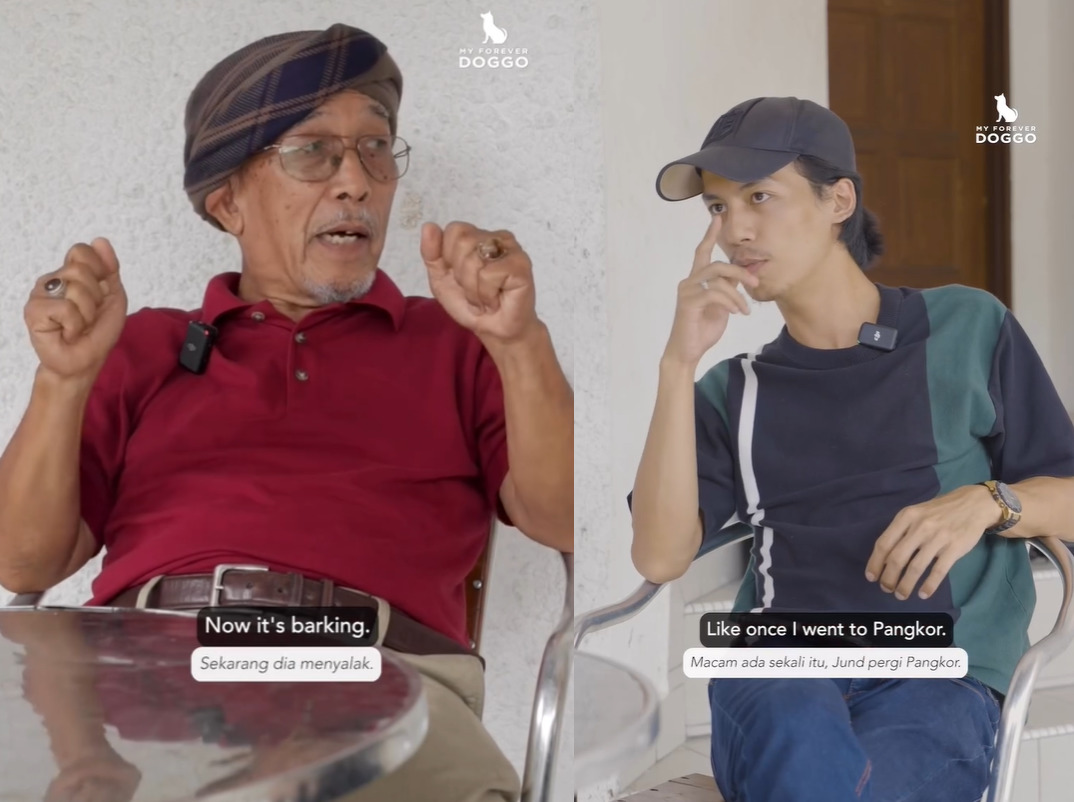
We’ve heard from a Muslim authority, but what about the perspective of everyday Muslims? Has their attitude toward dogs shifted as well? To explore this, let’s meet Haji Abu Hassan bin Muhammad Yusof and his son Muhammad Jundullah, a father-son duo grappling with the question of interacting with dogs—a look at the intersection of faith, culture, and compassion for animals. In a video, Haji Abu shares a story about his own dog, which once barked incessantly and leapt in front of a snake, seemingly sensing its owner’s love and loyalty. In that moment, the dog was even willing to risk its own life to protect him.
Muhammad Jundullah continues the conversation by asking his father if he raised them to be accepting of dogs. His father responds thoughtfully, saying, “Whatever we do that is good has value in the sight of Allah Taala (Allah The Most High)…even if it is a pig. If a pig is trapped and about to die, we must help. Why? Because that is its life—who created that life? Allah did. The pig is not at fault. It’s just that we have our do’s and don’ts.”
Muhammad Jundullah agrees and shares an experience he had while traveling in Pangkor. He recalls, “There was this dog that when it is very excited, it will chase. I don't know why but there is this person who is so angry. He hit the dog and threw a metal toward the dog. So we ran over and asked him why he hit the dog - the person then promptly replied that it is ‘haram’ to touch a dog. Hence, why he hit the dog to chase it away.”. Hearing this, Muhammad Jundullah explained to him that even if you touch a dog, at most you just need to wash your hands, but hitting it is certainly a sin.
This journey of understanding shows that compassion, kindness, and empathy are deeply embedded in Islamic teachings, even when navigating cultural and religious boundaries. Attitudes toward dogs may still be complex, but with voices like Ustaz Mohammad and families like Haji Abu and Muhammad Jundullah’s, there’s hope for a broader understanding and appreciation of all creatures. Their perspectives encourage a thoughtful balance between faith and compassion—reminding us that kindness transcends boundaries and beliefs. Perhaps, as we move forward, more people will be inspired to approach such sensitive topics with open hearts and minds, fostering a society that respects both tradition and compassion.

Submit content about #SpreadPositivity and stand a chance to win prizes worth up to RM13,000, including RM10,000 in cash bonuses! Find out how you can participate here.
Aaron Colt is a content creator under the Newswav Creator programme, where you get to express yourself, be a citizen journalist, and at the same time monetize your content & reach millions of users on Newswav. Log in to creator.newswav.com and become a Newswav Creator now!
The User Content (as defined on Newswav Terms of Use) above including the views expressed and media (pictures, videos, citations etc) were submitted & posted by the author. Newswav is solely an aggregation platform that hosts the User Content. If you have any questions about the content, copyright or other issues of the work, please contact Newswav.