Last week, the government launched its ‘Be Ready’ campaign, urging households to prepare for emergencies by stocking up on enough essential supplies to last three days in the event of a power cut, flooding, severe weather or other potential disruption.
Among the essentials on the government’s emergency preparedness checklist are bottled water, non-perishable food, torches, spare batteries, first aid kits, portable power banks, cash and, yes, an emergency radio.
Within days of the announcement, emergency wind-up radios were selling out as households rushed to get their hands on one. Robert Dyas has reported a 384 per cent rise in radio sales compared to this time last year, with power bank sales up 619 per cent.
According to Maplin’s managing director Ollie Marshall, , the retailer went from selling tens or low hundreds of radios a week to thousands, seeing sales increase by 92 per cent compared to the same period last month. Its Ionos almere wind-up emergency radio (£18.99, Maplin.com) sold out the day after the announcement.
It isn’t just wind-up radios either. Maplin reported a 284 per cent increase in torch sales, a 106 per cent rise in power bank sales and, even though they aren’t on the government’s emergency preparedness checklist, a 130 per cent increase in the sale of home security cameras.
Read more: Best home security cameras, reviewed
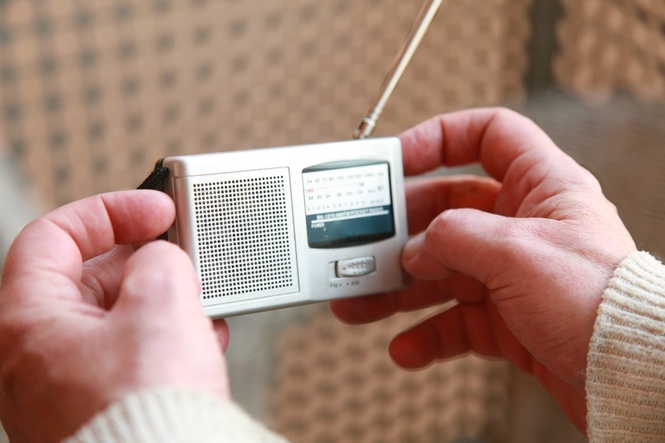
Intended to keep people informed during emergencies, wind-up radios can pick up news and emergency broadcasts when a power cut hits, even if you lose access to mains electricity.
But before you rush out and buy the first wind-up radio you see, it’s worth keeping in mind that not all emergency radios are made equal. Take a cursory glance at Amazon and you’ll find wind-up radios chock full of customer complaints. So, what should you really be looking for when buying an emergency radio? I asked the experts to find out.
You don’t actually need a wind-up radio
The first thing to do is to not actually limit yourself to a wind-up radio. According to Darren Rhodes, the founder of UK Prepper Hub, a platform dedicated to emergency preparedness, a battery-powered radio that runs on AA or AAA batteries is just as good as a wind-up radio – as long as you keep a supply of batteries with it, of course.
Easy to find in most shops, a couple of AA and AAA batteries are dependable. The same can’t be said for a hand-crank. “A wind-up radio's built-in rechargeable battery can be flat or worn out by the time you actually need it, especially if it's been sitting in a cupboard for a couple of years,” Rhodes explains. “A spare set of AA or AAA batteries kept next to it will last years in storage and means the radio works the moment you pick it up.”
Owen Watters, chief executive officer of British radio manufacturer Roberts, agrees that having several ways to power a radio is important. “Our main advice is not to rely on the wind-up feature alone. Look for a radio that gives you a few different ways to power it, so you've always got a backup,” he says.
The company's R9957S (£59.99, Robertsradio.com) – which is sold out but expected back in stock on 4 November – for example, can run on AA batteries, an internal rechargeable battery or a hand crank.
Some wind-up radios are also kitted out with solar panels and USB ports for charging your phone. Again, while they’re nice to have, they’re not to be relied on. Solar charging can help give a bump to your radio’s battery, but it’s unlikely to provide enough power on its own.
Read more: Best power banks, reviewed
A hand crank is unlikely to provide enough power to charge your phone either. “The crank is the backup, not the main event,” says Rhodes. “A few minutes of winding gets you a news bulletin, not an evening of listening.”
Make sure it can pick up UK radio stations
There’s no point in buying a radio if it can’t receive the right stations. For UK households, FM reception is the priority. It lets you tune into BBC Radio 4 and local BBC radio stations for news and emergency briefings.
And while DAB and DAB+ will give you access to even more stations, you might want to give it a miss. “It uses a lot more power than FM, so your batteries and your cranking arm run out much sooner,” Rhodes says.
I’d also be wary of some of the cheap, no-name brand radios on Amazon. Many of them advertise something called ‘NOAA weather alerts’, which sounds like a helpful little feature, except it won’t work in the UK.
NOAA is an American weather radio network that uses its own transmitters to broadcast emergency warnings. A radio with NOAA functionality can still pick up UK FM stations, but it won’t receive NOAA weather alerts – there aren’t any NOAA transmitters in the UK.
Test it before you need it
Lastly, don’t buy an emergency radio and shove it under the stairs in anticipation of a power cut. Just because a radio supports FM doesn't mean it'll pick up every station clearly, especially if you live in area with bad reception.
Watters recommends testing it at home, extending the aerial fully and checking which national and local stations you can actually receive. “We always suggest trying the radio out at home before you actually need it. It only takes a few minutes,” Watters advises.
The government also recommends writing down the frequencies of national and local radio stations you use for news, so you can find them quickly during an emergency. Keep that list with your radio, as well as a spare set of batteries, and you'll be well prepared.
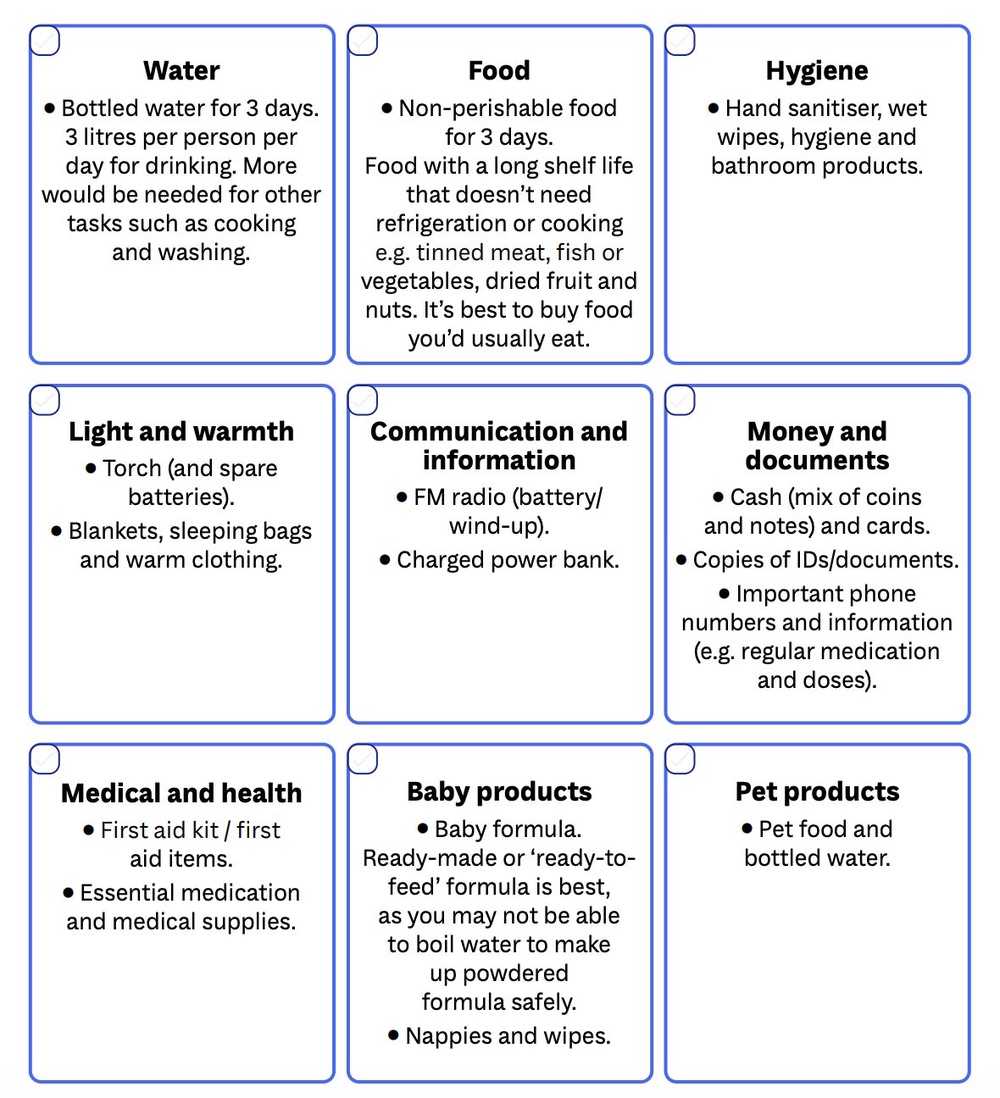
The ‘Be Ready’ checklist in full:
- Enough bottled water for three days. Each person needs about 3l for drinking a day, plus water needed for cooking and washing.
- Non-perishable food that doesn’t need cooking, including ready-to-eat tinned meat, fruit, vegetables (and a tin opener). How much you need to buy will vary based on your circumstances. Don’t forget food for pets.
- Hand sanitiser and wet wipes for hygiene purposes for when the water is off.
- Light and warmth – pack a torch and spare batteries as well as blankets, sleeping bags and warm clothing
- A portable power bank for charging your mobile phone.
- A battery-powered or wind-up radio to get updates during a power cut – a car radio can be used, however in severe weather it might be safer to stay inside.
- A first aid kit (or some first aid items) including items such as waterproof plasters, bandages, a thermometer, antiseptic, eyewash solution, sterile dressings and gloves, medical tape for dressings, and tweezers.
- Baby supplies such as nappies and baby formula – ready made or ‘ready-to-feed’ formula is best as you may not be able to boil water or sterilise bottles.
- Money and documents – cash in various forms, including notes, coins and cards. Copies of IDs and documents. Also write down any important phone numbers and information such as regular medication and doses.