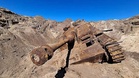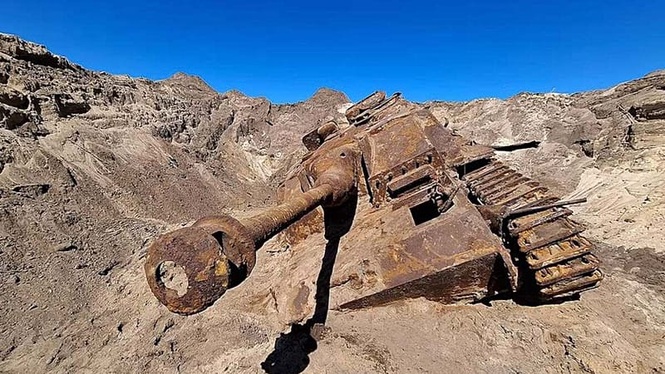
According to the German Federal Agency for Real Estate, finds of this kind usually yield only isolated remains or vehicle parts. In this case, however, workers came across an almost completely preserved assault gun, a rare relic from the final months of the Second World War in north-west Germany.
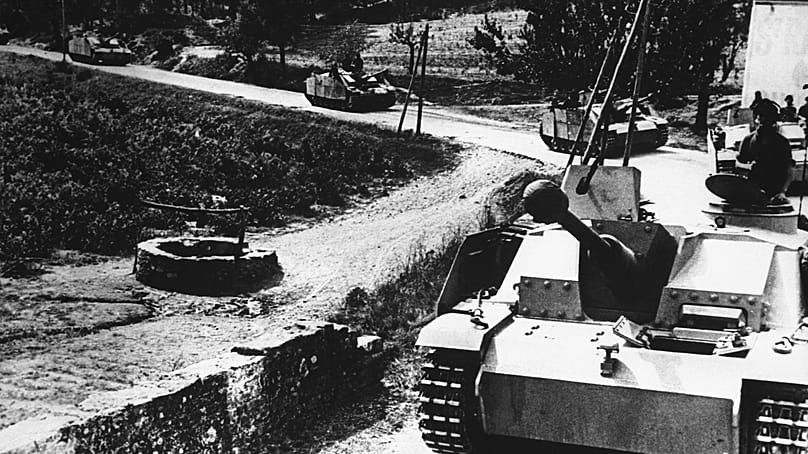
The vehicle discovered is a StuG III assault gun, one of the Wehrmacht's most-produced tracked vehicles. Unlike conventional tanks, the vehicle did not have a rotating turret. Instead, the gun was fixed pointing forwards, meaning the entire vehicle had to be moved to aim.
RelatedAt the time, defence group Rheinmetall built more than 9,300 of these vehicles, and the gun was very popular. Production continued until the final weeks of the war and only ended in April 1945. The assault guns were used primarily to destroy enemy tanks.
The vehicle that has now been found belonged to a brigade stationed in Nordholz that was deployed mainly in France. It has not yet been possible to determine conclusively whether this particular assault gun also saw action there. Experts believe the vehicle was in service for an extended period. This is suggested by at least 17 white markings on the gun barrel. According to the archaeologists, such markings were probably added for each enemy tank knocked out.
"Oppressively cramped"
The vehicle can be opened without difficulty, archaeologist Andreas Hüser told dpa: "The view inside is very impressive." The driver's seat has survived, as have the fittings for the gun. "It is genuinely oppressively cramped."
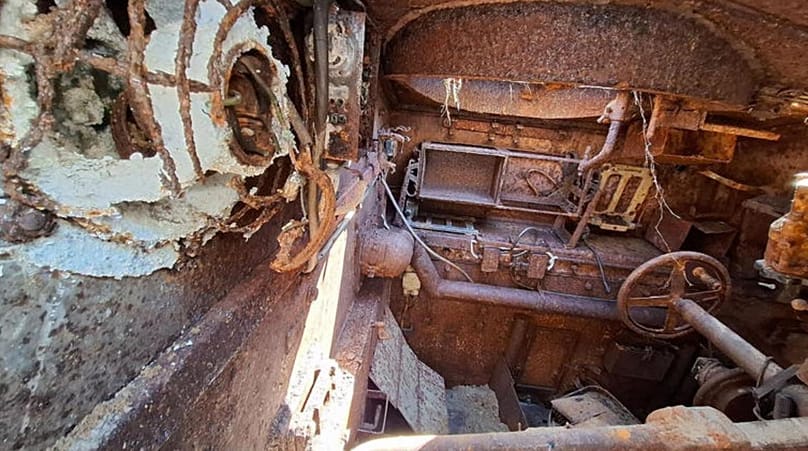
The crew of the assault gun consisted of four soldiers. While the driver sat in the front section of the vehicle, another soldier operated the gun. The commander coordinated the action and gave the order to fire, while a fourth man was responsible for reloading the weapon.
The archaeologists believe the assault gun was buried by the Allies shortly after the end of the war, together with other military equipment. The excavations also brought to light remnants of ammunition and small grenade fragments.
Because the vehicle lay on the edge of a slope in dry sand, it remained exceptionally well preserved. Traces of the original camouflage paint are still visible in several places, and parts of the running gear appear almost unscathed despite having lain in the ground for decades.
In August the assault gun is to be taken to Munster in the Lüneburg Heath, where specialists will stabilise and restore it. It is then due to be handed over to the Bundeswehr's Military History Museum in Dresden, where it will go on display to the public.
This text was translated with the help of artificial intelligence. Report a problem : [feedback-articles-en@euronews.com].