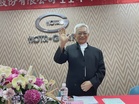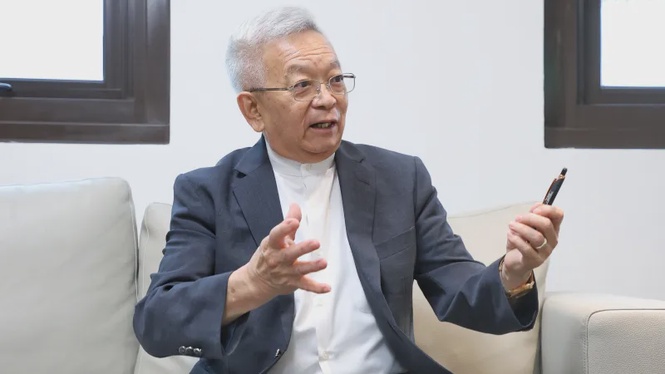
Taiwan's auto parts makers should stop competing for overseas buyers on their own and start introducing one another to their customers, says Shen Kuo-jung, president of the Hota Group, as the shift to electric vehicles and tighter US sourcing rules reshape the industry.
"Your customer is my customer," Shen told Storm Media in an exclusive interview, summing up his idea. Shen, who also chairs battery maker GUS Technology, argues that Taiwan has no shortage of skilled component makers. What it lacks, he says, is a way to turn scattered manufacturing strength into bigger market opportunities, and the problem has grown more urgent as electric vehicles spread, global purchasing habits change, and the United States demands more scrutiny of where products come from.
Global Sourcing Pushed Taiwan Suppliers Overseas
Hota Industrial Mfg. Co., the Taichung gear and shaft maker at the core of the group, has adjusted repeatedly as the global division of labor changed. Shen recalled that auto parts manufacturing once centered on mechanical systems such as engines and transmissions, where precision, transmission efficiency, and process capability defined a supplier's edge. As global automakers moved to worldwide sourcing, parts no longer had to be made in the carmaker's home country, and suppliers found themselves competing across borders.
"If you make it at home, it might cost 100. Buy it in Taiwan, maybe 70. In India, maybe 50. In China, maybe 40," Shen said, describing how carmakers hunt for cheaper sources. For automakers, that is how costs are controlled. For parts makers, it means constantly improving and finding a place in the global market.
Taiwan's own car market is too small to provide enough volume for many components, Shen noted, and even local assembly lines still rely on imports for some key parts. Suppliers that want to grow cannot look only at domestic carmakers; they have to win customers abroad. That is a long-term commitment rather than a single order, and lowering the cost of finding customers is the problem he hopes an industry alliance can solve.
Tesla's Early Visit Shows The Timing Trap Of EV Investment
Hota's early business revolved around engine and transmission parts for gasoline cars. As electric vehicles emerged, the company had to rethink market size, technical needs, and when to invest.
Shen recalled that Tesla came to Taiwan looking for suppliers in its early days, when electric vehicles were still a sliver of the market compared with combustion engine cars. For parts makers built around high-volume production, the question was whether the new market was big enough to justify the spending.
That experience captures a dilemma for traditional manufacturers. A company cannot overhaul its production lines just because a new technology is getting attention, but leaning too heavily on its existing market risks missing a structural shift. Shen does not believe the move away from gasoline cars dooms traditional parts makers. The key, he said, is upgrading equipment, adjusting processes, and finding new uses for existing technology, expanding step by step from what a company already does well rather than tearing everything down.
Shen Warns Against Fighting China On Scale
Competition in electric vehicles is fierce. Shen noted that China's EV industry holds advantages in scale, cost, and supply chain integration, so Taiwanese firms should think carefully before entering highly standardized markets won on volume. They are better off, he said, using the technology they already have to find the right products and niches.
That thinking lies behind the tie-up between Hota and GUS Technology, a Taoyuan maker of lithium battery cells. Hota brings experience in auto parts manufacturing and automation integration, while GUS works on battery technology and materials. Together they hope to explore electric vehicles, drones, and robots, extending existing technology into new markets and reducing reliance on demand from any single industry. Hota is also trying to break into the defense supply chain.
US Sourcing Rules Now Reach Materials And Factory Location
Supply chain shifts are also driving investment decisions. Facing changes in US tariff policy and customer demands about where products come from, Shen said, companies need to rethink where they produce rather than choosing sites purely on manufacturing cost.
Drawing on Hota's own assessment of US production, he said an overseas plant involves land, equipment, construction time, and capital, and companies must balance policy swings, customer needs, and returns. Even if conditions change later, suppliers need to understand customers' supply chain requirements early instead of waiting until orders or policies are settled before preparing capacity.
US requirements on supply chain origin have become a major factor in which orders companies take and where they produce, Shen said. Beyond the part itself, materials and other links in the chain can determine whether a product meets customer terms. For suppliers targeting the US, competing now means more than price and quality: it also covers sourcing, manufacturing location, and in-house research and development.
For Taiwanese firms with key technologies and tight control of materials and processes, that can open doors. For smaller suppliers, the money and management effort required to build overseas plants and reshuffle supply chains are a heavy burden.
A Rotary Club Model For Non Competing Suppliers
If alliances help pool resources, why are they so hard to build? Shen says it comes down to whether partners compete directly and whether they can trust each other.
Two companies that both make transmissions share similar core technology, he explained, and would worry about leaking trade secrets. Firms in different specialties, such as fuel tanks, drivetrains, car bodies, and chassis, have different products and are far more likely to complement one another.
Shen has proposed a Rotary Club style of exchange, in which companies from different fields meet regularly, share manufacturing problems, and call on one another for help when needed. Members would not have to reveal core technology. If a chassis maker hits a production bottleneck, for example, a company in another field with the right equipment, materials, or integration skills might offer a fix, saving time and the cost of searching for outside expertise.
Factory Tours Become Referral Opportunities
The other goal is to get more out of the international customers Taiwanese suppliers already have. Each company serves different buyers and markets, and Shen believes they could introduce one another where it makes sense.
When an overseas customer visits a plant to inspect equipment or assess capabilities, he said, the host could showcase its own products and also recommend Taiwanese companies in other fields that fit the customer's needs. The customer meets more suppliers in a single trip, and other firms gain access to international buyers.
Companies do not have to merge or give up their core technology, Shen said. They can keep their specialties while sharing appropriate market information and customer contacts.
A referral does not guarantee a deal. Orders still depend on quality, technical capability, price, and customer certification, and the model will only last if companies can define the scope of cooperation, protect core know-how, and make sure every member benefits. But for Taiwanese parts makers facing a small home market and high costs to win customers abroad, tapping one another's networks could open new sales channels and help turn the island's scattered manufacturing strengths into a more competitive force.