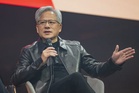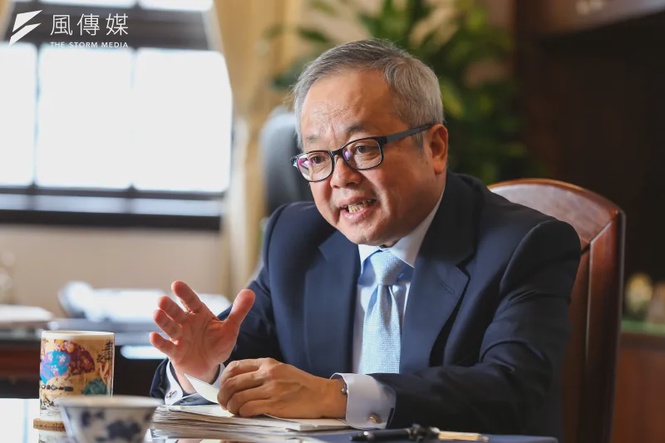
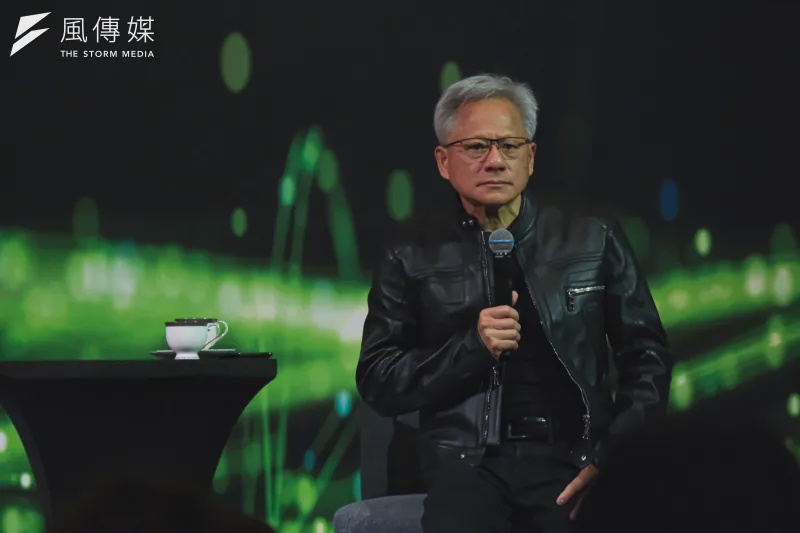
Jensen Huang's abrupt resignation as Nvidia's chief executive could do more than reshuffle chip orders among rivals: it could shrink the total pool of money flowing into artificial intelligence, and Taiwan's chip champion TSMC would not be spared, former Taiwan Vice Premier Shih Jun-ji warned in an exclusive interview with Storm Media.
Huang, the Taiwan-born co-founder who led Nvidia for 33 years, stepped down on November 12 amid a scandal over his reported affair with Alice Huang, a former executive at Singapore data center company Megaspeed whom US intelligence reportedly suspects of spying for China. (See Storm Media's full timeline of the case.)
Shih, an economist who served as vice premier from 2017 to 2019 under then Premier Lai Ching-te, now Taiwan's president, and who previously chaired the Financial Supervisory Commission and the Taiwan Stock Exchange, offered three observations. Taiwan may be losing an entrepreneur who carried its name around the world. The episode raises uncomfortable questions about race and power in the United States. And the biggest economic risk is that global AI investment could contract once Huang is gone.
Huang Was To Taiwan What Jack Ma Was To China
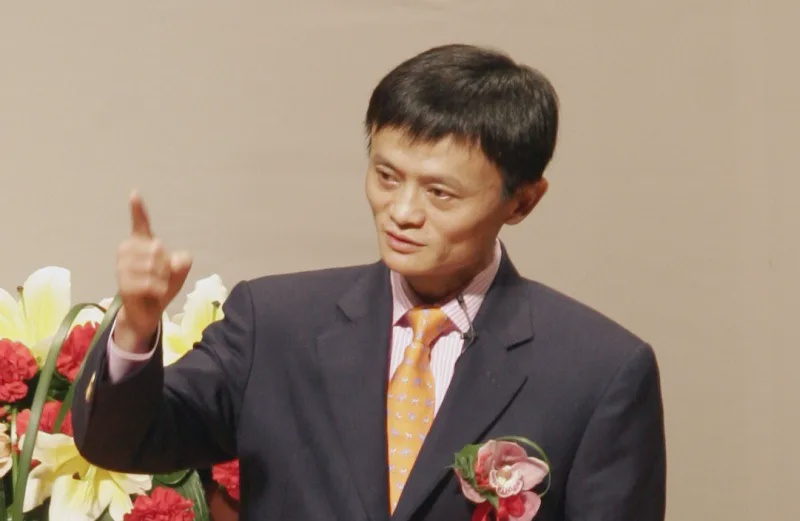
"Jensen Huang is to Taiwan what Jack Ma is to China," Shih said, comparing Huang's significance to that of the Alibaba founder.
"China has so many entrepreneurs, but in the past, when you mentioned China, people would easily think of Jack Ma," he said. Ma enjoyed enormous international recognition and drew a following even in Taiwan, but Beijing's regulatory crackdown on him and his companies damaged the entrepreneurial spirit and global image he represented. In Shih's view, the Chinese Communist Party effectively tore down its own Great Wall by cutting Ma down.
The damage to China's young people may run deeper than outsiders realize, he said. When they see a hugely successful founder still exposed to political interference, they start to doubt whether building a business or wealth is worth it. "They might think, if one day I build a business this successful, it could still be taken away, so I might as well just lie flat," Shih said, using the Chinese term for opting out of the rat race.
Huang's pull on young Taiwanese, Shih argued, is even stronger than Ma's ever was.
When Shih was in university, Taiwan's model entrepreneur was Wang Yung-ching, founder of the Formosa Plastics Group. Many engineering and business students hoped to work at Formosa Plastics, and some made becoming the next Wang Yung-ching their life goal. An entrepreneur's influence, Shih said, is not measured only in revenue, share price, or personal wealth, but in whether he becomes a model for the next generation. "The younger generation needs a role model, a goal to strive for," he said.
Huang, he said, is exactly that figure today. Nvidia was not founded in Taiwan, and Huang left the island as a child, yet he kept close ties. On every visit, his meetings with Taiwan's tech companies, his strolls through night markets, and his taste for local street food drew international media attention.
While promoting Nvidia's products and AI, Huang carried Taiwanese culture onto the world stage in a way government campaigns rarely can. "This is Taiwan's soft power," Shih said. Huang made Taiwanese people proud and convinced young people that someone from Taiwan could stand at the very top of the global tech industry. Producing another entrepreneur of Huang's international stature, Shih said, "might even be harder than Taiwan producing another Nobel Prize winner."
That is why Shih objects to parts of Taiwan's media that have covered Huang's private troubles with mockery, treating them like celebrity gossip. An entrepreneur's personal conduct can be scrutinized, he said, but society should also recognize what Huang has meant for Taiwan's global image, its industry, and its young people.
Shih Raises Questions Of Race And Power In America
Shih's second observation is more contentious: whether deep-rooted racial attitudes in American society shaped Huang's fate in the US tech industry.
"Americans have a very strong sense of white superiority," Shih said bluntly, arguing that the US has long-standing problems of race and power. AI has become one of America's proudest and most strategically important industries, he noted, yet the person standing at its summit was a Taiwanese American. He questioned whether America's traditional political and business establishment could fully accept an Asian entrepreneur dominating such a critical industry for the long term.
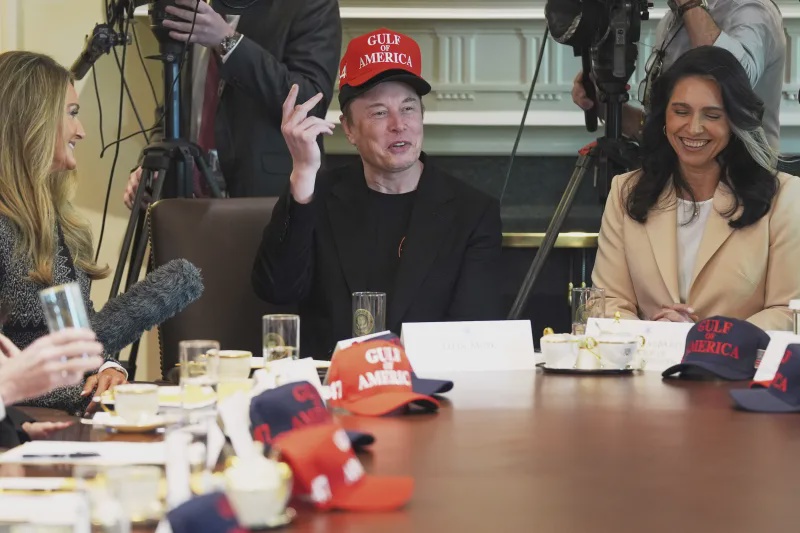
He contrasted Huang with Tesla CEO Elon Musk, saying that even though Musk has stirred plenty of controversy in American politics and business, the two men may not be treated the same way in US society.
Shih acknowledged, however, that he has no evidence of political maneuvering behind the scandal. "Whether there is some conspiracy in this, I don't know, and I don't necessarily need to guess," he said.
He did raise a question about rumors that the US Central Intelligence Agency (CIA) was involved in gathering information on Huang. If details of Huang's private activities in Taiwan, including where he stayed and whom he met, really came from intelligence agencies, Shih asked, where did that information originate? He wondered whether Taiwan might have become part of an American political or intelligence operation without fully understanding the consequences.
There is no evidence that Taiwan's government provided any such private information to the US side. Shih's real point, he said, is that while Taiwan depends heavily on the United States for technology cooperation, security guarantees, and strategic support, it must still make its own judgment about its interests. Huang's years of support for Taiwan's tech sector and the international profile he built are worth cherishing, and Taiwan cannot ignore the price it may pay for shifts in power inside the US.
Huang's $500 Billion Financing Engine Faces A New Boss
Beyond politics and race, Shih sees the biggest economic variable in whether Nvidia's AI financing model keeps running. One of Huang's most important skills in recent years, he said, was turning demand for Nvidia chips into a "perpetual motion machine."
Huang understood that no matter how powerful an AI chip is, demand will hit a ceiling if customers cannot afford to buy it. So Nvidia did more than design chips. It invested in AI companies, backed data center construction, and worked with major financial institutions on project finance, equipment leasing, and other capital arrangements to keep AI infrastructure expanding. Shih calls the model "circular financing."
In August 2026, Nvidia announced partnerships with Apollo, BlackRock, Blackstone, Brookfield, Goldman Sachs, and KKR aimed at gradually mobilizing more than US$500 billion in third-party capital for AI infrastructure worldwide.
The key to such arrangements, Shih said, is that they let customers who lack cash commit to huge AI infrastructure projects early. In other words, demand for AI chips no longer depends only on how much cash companies hold; it is also propped up by outside financing.
Shih is particularly focused on residual value guarantees in AI equipment financing. Because AI chips are upgraded so quickly, lenders must estimate what the hardware will still be worth in the future. If equipment depreciates faster than expected, the financing can create additional risk. These investment commitments and guarantees, Shih said, need to be reexamined for the contingent liabilities they may carry. The question is whether Huang's successor will be willing to keep shouldering those risks.
Under the leadership changes Nvidia announced on November 12, Chief Financial Officer Colette Kress became interim CEO while keeping her finance role, and the board began a formal search for a permanent chief executive.
Because Kress has long run Nvidia's finances and knows how these financing programs were designed, Shih said, existing policies could continue while she holds the reins. "But if she doesn't become the permanent CEO, will the new CEO agree with this approach? That is a very big variable."
If a new chief executive decides to reassess returns, reduce exposure to asset guarantees, or even cut back on funding support for AI customers, Shih said, the effects could reach far beyond Nvidia. Some AI data center and capital spending plans may already have assumed future access to financing. If that money fails to arrive, projects could be delayed or even canceled.
He worries that the market has already treated years of massive AI investment as guaranteed demand. If the supply of capital changes, he said, the US tech industry, the broader economy, and the stock market could all take a hit. That, in his view, is the most important economic risk of Huang's departure.
Why TSMC May Not Escape A Smaller AI Market
For Taiwan, Shih's concern centers on Taiwan Semiconductor Manufacturing Co. (TSMC) and the island's entire AI supply chain.
A popular view in the market holds that even if Nvidia loses ground without Huang, Google's TPUs, AMD's GPUs, and the custom ASIC chips built by cloud companies all still need TSMC's advanced manufacturing and packaging. So even if AI chip orders shift between companies, the argument goes, TSMC remains the main winner.
Shih rejects that logic. "That's different. The total volume could shrink, right?" he said. It was the central economic judgment of the interview.
Markets that focus only on competition between Nvidia GPUs and other AI chips, while ignoring the financing behind AI investment, could underestimate the impact of Huang's exit, he said. Huang's value lay not only in winning more GPU orders for Nvidia but in mobilizing financial capital to enlarge the total amount the global AI industry could spend. When Nvidia helped AI companies raise money, those customers could build more data centers and buy more AI chips, and that demand also flowed to other chips, servers, memory, and equipment.
If that financing model contracts, the issue is no longer how much market share Nvidia loses, but how much capital spending the whole AI industry can afford. "Don't say these are all made by TSMC anyway, so it doesn't matter if one side gains and the other loses," Shih said. Behind those orders, he stressed, were Huang's efforts to line up backing from financial institutions. If financing stops expanding after his departure, the AI industry's pool of money could get smaller.
That means even if Google, AMD, and other ASIC makers win more market share, combined global demand for GPUs, TPUs, and ASICs could still fall short of what the market expected.
For TSMC, that is a completely different scenario. Market share shifting among chip designers can be managed by adjusting the customer mix, but a slowdown in overall AI capital spending would hit TSMC and its supply chain alike. Everyone from advanced process technology and CoWoS advanced packaging to server assembly, cooling, power management, and other component makers would need to rethink how fast their orders will grow.
Shih cautioned that what capital markets most need to watch are the changes not yet fully reflected in financial statements. With years of future AI spending already priced into growth expectations, any adjustment in financing terms or investment scale could set off a chain reaction. Seen this way, what Taiwan should worry about goes well beyond a Taiwanese American losing his job as CEO.
All three of Shih's observations point to the same question: how much intangible value can one globally influential entrepreneur create for a country, an industry, and a capital market? For Taiwan, Huang stood for international visibility, industrial confidence, and the entrepreneurial dreams of its young people. For the global AI market, he was a leader who could tie together technology, customers, and financial capital.
Whether his successor can carry on that strategy will decide Nvidia's direction and could sway the global AI investment cycle. What Shih fears most is that the market will assume losing Huang simply means AI chip orders get redistributed, only to discover that the entire AI money pool began shrinking the day he left.
Jensen Huang and the Alleged Chinese Spy: Full Timeline
From the first reports on Alice Huang's visits to Taipei to Jensen Huang's resignation as Nvidia's chief executive, Storm Media tracks every development in the case and updates the page regularly.
► See the full timeline and latest updates
You've read it. Now join the conversation — follow us on X, Facebook and IG. Editor: Penny Wang