.png)
JOHOR BAHRU - The government must develop a risk-based smart border screening system equipped with artificial intelligence (AI) technology to enhance the country's security measures, in light of the expected increase in cross-border movement ahead of the Rapid Transit System (RTS) Link starting operations early next year.
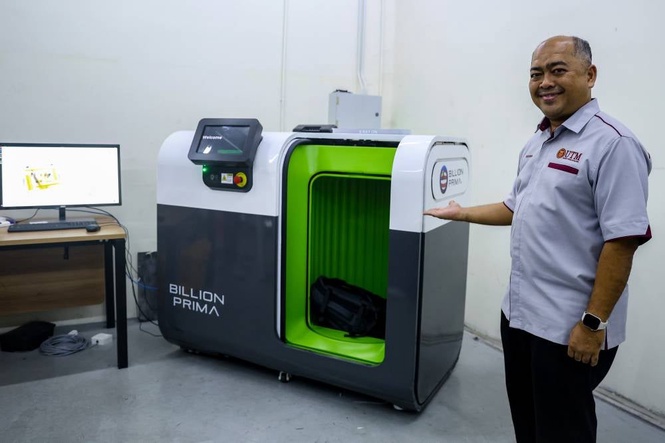
Universiti Teknologi Malaysia (UTM) lecturer at the Physics Department, Faculty of Science Prof Dr Suhairul Hashim said that conventional inspection measures are no longer sufficient because every day, hundreds of thousands of individuals and thousands of private vehicles, motorcycles, buses and lorries cross the Johor Causeway and the Second Link.
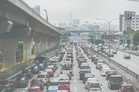
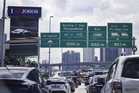
"At airports, all passengers go through lanes that are easily controlled, and all luggage is inspected using scanning machines according to flight schedules. However, at land gateways, inspections must be conducted within a short period to avoid congestion that can impact the economies of both nations.
"In such a situation, it is impossible to open and inspect every vehicle or luggage. This is the biggest challenge facing enforcement at land borders,” he told Bernama.
He said this challenge is set to become even more difficult when the RTS starts operating on Jan 1, 2027, with an expected 10,000 passengers travelling every hour in each direction.
He added that while that increased cross-border mobility would provide a significant boost to the economy, it would also lead to smuggling syndicates utilising the high traffic flow to their advantage.
"The higher the cross-border movement, the bigger the challenge will be to differentiate between legal trade activities and cross-border criminal activities.
"If the inspection approach is still based on conventional methods, the large number of people can cause congestion and raise the risk of threats evading detection. As such, the capacity for inspection must grow in tandem with the transport capacity,” he said.
As such, he said the solution is not to tighten inspection on all users, but to develop a risk-based smart screening system utilising AI, real-time data analysis, automatic vehicle registration number identification (ANPR), facial recognition, dual energy scanning, CT scanning and behavioural analysis.
The recipient of the Academy of Sciences Malaysia's 2020 Top Research Scientist Malaysia (RTSM) award also said that the approach would allow high-risk individuals or vehicles to be identified for a more comprehensive inspection, while allowing for a smoother passage through the border gates for the majority of other users.
"In addition to investing in technology, the government must also strengthen the integrity of personnel, training and the audit system, as well as carry out continuous monitoring on access to critical information and infrastructure,” he said.
Yesterday, the Immigration & Checkpoints Authority (ICA) said in a statement that a Malaysian man was arrested for allegedly attempting to smuggle drugs, including more than 8.6 kilogrammes (kg) of cannabis and 1.5kg of syabu, in a car at Woodlands Checkpoint.
The 22-year-old was arrested on Aug 1 after officers found a box in the car boot containing two blocks of substances believed to contain controlled drugs, estimated to be worth more than S$361,000 (S$1 = RM3.19).
Commenting on the perception that Malaysia has a poorer inspection system due to the frequency of cigarette, vape and drug seizures by the Singapore ICA involving Malaysians, Suhairul said that is not necessarily accurate.
He said although both countries used modern scanning technologies, such as X-ray machines and CT scans, the screening effectiveness does not rely merely on technology, but is instead dependent on inspection strategies, risk analysis, intelligence gathering, operational layout and enforcement objectives.
"A particular seizure may occur not because the machine in one country is more sophisticated, but because the authorities have gathered specific intelligence that leads to more detailed checks,” he said.
He said Singapore also places greater emphasis on the detection of cigarettes, vapes and drugs, which carry severe penalties in the country, thereby resulting in more intensive inspections. - BERNAMA