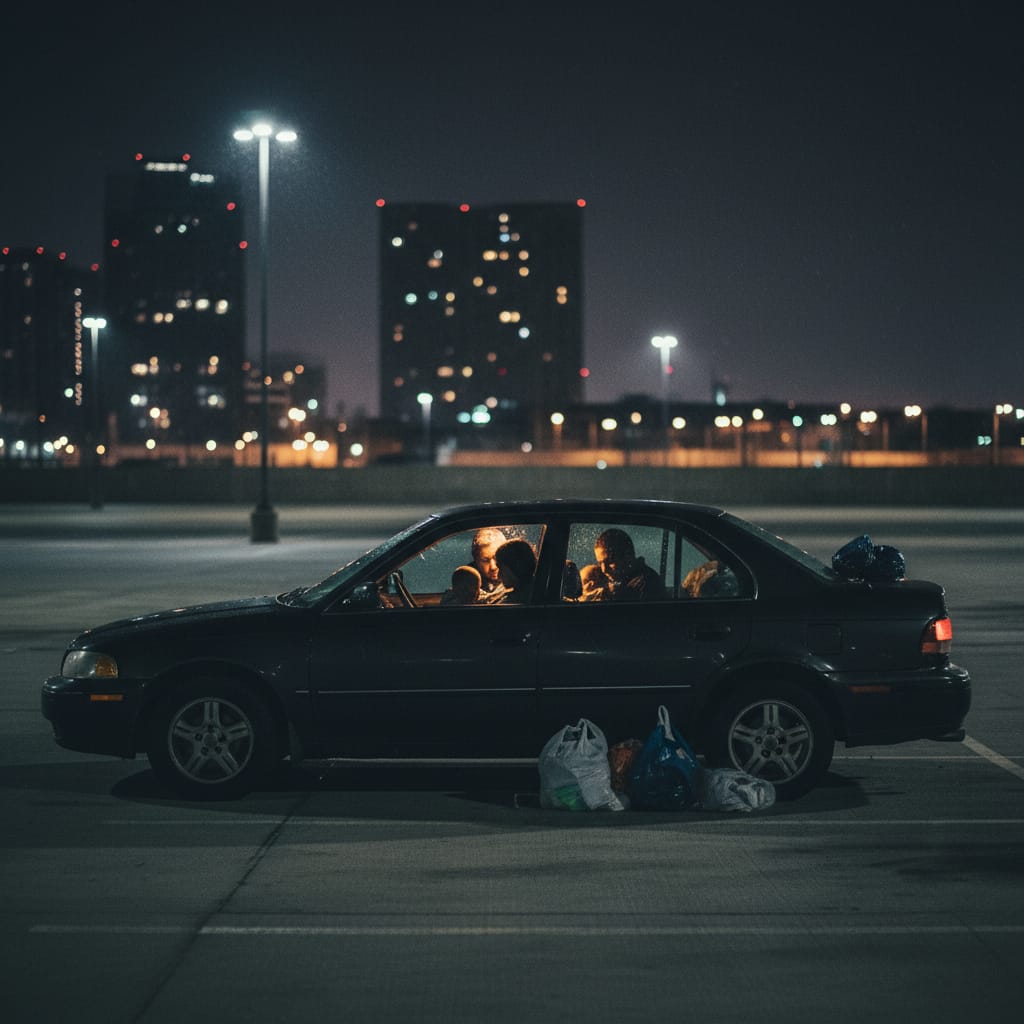
In one of the most disturbing social distress stories to emerge in Malaysia this year, five members of a single family, including an infant, were found living inside their car in Seremban during the holy month of Ramadan. Their ordeal has sparked national debate about poverty, housing affordability, and the weakness of social safety nets in the country’s growing urban centres. (Sinar Harian)
This deeply human story reveals more than just individual misfortune. It underscores structural issues in housing, urbanization, and economic inequality that are now forcing even families to treat vehicles as shelter. Below we investigate how this incident happened, what it reveals about Malaysia’s broader socioeconomic challenges, and what experts and data say about the trends behind it.
A Car Became a Home
In early March 2026, local media reported that a family of five in Seremban, Negeri Sembilan, had been living in their car, unable to secure stable housing after job loss and mounting economic pressures. The family included parents, school‑age children, and an infant barely months old. (Sinar Harian)
Police and welfare officers who encountered the family noted they had resorted to the vehicle because they could no longer afford rent and had no access to alternative shelter. Their car served as a bedroom, kitchen, and refuge a poignant emblem of their economic desperation.
This is not an isolated incident but part of a worrying pattern where Malaysia’s social systems fail to prevent vulnerable families from falling through the cracks.
Hidden Homelessness: An Unseen Problem in Malaysia
Malaysia does not publish regular nationwide counts of homelessness, but independent estimates suggest that the issue is far from negligible. In the capital Kuala Lumpur alone, there were estimated to be up to 2,000 people without stable shelter in recent years. (Twentytwo13)
Research on homelessness in Malaysia indicates that unemployment, low earnings, and rising housing costs are key drivers pushing people into unstable living situations. (as-proceeding.com)
These figures are almost certainly undercounts. Many people, like the family in Seremban, do not appear in official counts because they sleep in cars, informal dwellings, or temporary accommodation rather than on the streets.
Cost of Living and Housing Affordability Stress
Malaysia’s cost of living has risen steadily. Data from the Department of Statistics Malaysia shows that the average household expenditure in Negeri Sembilan including food, utilities, and housing is among the lower end nationally at about RM3,987 per month. Nevertheless, this still places pressure on lower‑income families, especially those affected by job loss or unpredictable incomes. (storage.dosm.gov.my)
Despite policy efforts, housing affordability remains a core challenge. Academic reviews show that rapidly rising property prices outpace incomes for many Malaysians, particularly the bottom 40% (B40) and middle 40% (M40) segments. Median house prices in urban and suburban areas often exceed what typical households can afford without significant debt. (intrest.utm.my)
The costs of buying or renting a home in areas like Seremban and Nilai have climbed alongside broader urbanization. Research on Seremban 2 shows that urban expansion has increased demand for housing, yet many low‑cost housing schemes lag behind this demand trend. (ResearchGate)
Poverty Trends: A Broader Context
National poverty statistics show a slight decline in absolute poverty rates in recent years, from 6.6% downwards in 2024, yet lingering urban poverty persists even as extreme poverty wanes. (Department of Statistics Malaysia)
However, official poverty metrics do not capture every dimension of financial precarity. Households just above the poverty line may still struggle with rent, utilities, food security, and medical costs. In some cases they may experience “hidden homelessness” where they have shelter but lack stability, dignity, and security.
Why Families End Up Without Homes
Experts identify several intersecting causes:
- Unemployment and underemployment. Jobs in lower‑wage sectors are often unstable, with little to no social protection.
- Rapid urbanization. Urban expansion increases housing demand faster than supply of affordable units.
- High housing costs. Without adequate low‑cost housing, families can be priced out and forced into irregular shelter solutions.
- Social safety net gaps. Support from welfare programs may not reach all those in need or may be limited in scope.
Academic research on homelessness in Malaysia aligns with these findings, identifying poor and irregular income, lack of affordable housing, and family breakdown as top contributors. (as-proceeding.com)
The Human Toll: Health, Education and Dignity
Living in a car is not just uncomfortable it jeopardizes health, education, and psychological well‑being, especially for children.
Medical studies on homeless populations worldwide show that people without stable housing are at elevated risk of infectious disease, chronic health conditions, and mental stress due to poor access to medical care and unstable living conditions. These issues likely apply to Malaysian contexts as well, especially in tropical climates where humidity, heat, and condensation make cars an unsafe habitat for long durations.
Children in these environments may miss school or struggle academically due to fatigue, distraction, or lack of basic amenities.
Government and Social Response
Malaysia’s welfare systems include housing assistance and cash transfers aimed at low‑income households. However, experts argue these programs need injection of scale, efficiency, and better targeting.
Affordable housing initiatives, such as public housing schemes, have expanded, but supply still falls short of the growing need. Policy analysts suggest reforms to make housing programs more responsive and accessible, including reducing delays in delivery, increasing supply, and aligning schemes with actual household income levels. (intrest.utm.my)
Non‑governmental organizations also provide outreach and emergency support, but their capacity is limited compared to the scale of the problem.
Comparative Insights: Regional and Global Patterns
The phenomenon of families living in vehicles is not unique to Malaysia. In high‑cost cities worldwide from Los Angeles to London rising housing costs have pushed some families to seek refuge in cars or converted vans. What makes the Seremban case particularly alarming is that it happened outside of a global mega‑city, reflecting deeper structural issues even in smaller urban centers.
What This Says About Malaysia’s Social Fabric
The plight of the family in Seremban speaks to multiple overlapping policy failures:
- The inability of the housing market to provide affordable options for low‑income households.
- Insufficient social safety nets to catch families slipping into housing insecurity.
- A welfare system that lacks capacity to prevent or rapidly respond to crises like job loss and eviction.
This story should catalyze recalibration of housing policy and social support frameworks, not just in Negeri Sembilan but across Malaysia’s urban and suburban regions.
Towards Solutions: Practical Steps
Experts highlight several interventions that can reduce the risk of homelessness:
- Increase supply of affordable housing units through public and private collaborations.
- Strengthen income support programs for low‑wage households facing unemployment or job transitions.
- Early intervention systems to identify and assist households at risk of losing housing.
- Improve access to healthcare and education services for families in precarious living situations.
What Do You Think? I’d Love to Hear Your Opinion in the Comments Section.
The Seremban family’s story of living in a car reveals a disturbing reality: when housing markets, labor markets, and social safety nets fail to protect the most vulnerable, society pays a heavy price in human dignity and futures lost.
Addressing the root causes of this crisis demands urgent policy action to bolster affordable housing, expand support systems, and protect families from falling into extreme housing insecurity.
AM World (tameer.work88@gmail.com) is a content creator under the Newswav Creator programme, where you get to express yourself, be a citizen journalist, and at the same time monetize your content & reach millions of users on Newswav. Log in to creator.newswav.com and become a Newswav Creator now!
The User Content (as defined on Newswav Terms of Use) above including the views expressed and media (pictures, videos, citations etc) were submitted & posted by the author. Newswav is solely an aggregation platform that hosts the User Content. If you have any questions about the content, copyright or other issues of the work, please contact creator@newswav.com.