Over the past few weeks we’ve talked about high blood pressure, high cholesterol, diabetes and why your waistline matters more than the number on your bathroom scales.
This week I’d like to introduce another condition that quietly affects millions of people, often without them having the slightest idea.
It’s called fatty liver disease.
For many people, the words “fatty liver” immediately bring one thing to mind.
Alcohol.
While drinking too much alcohol can certainly damage the liver, that’s only part of the story.
Today, many people who rarely drink alcohol—or don’t drink at all—are being told they have a fatty liver.
That often comes as a complete surprise.
So what exactly is it?
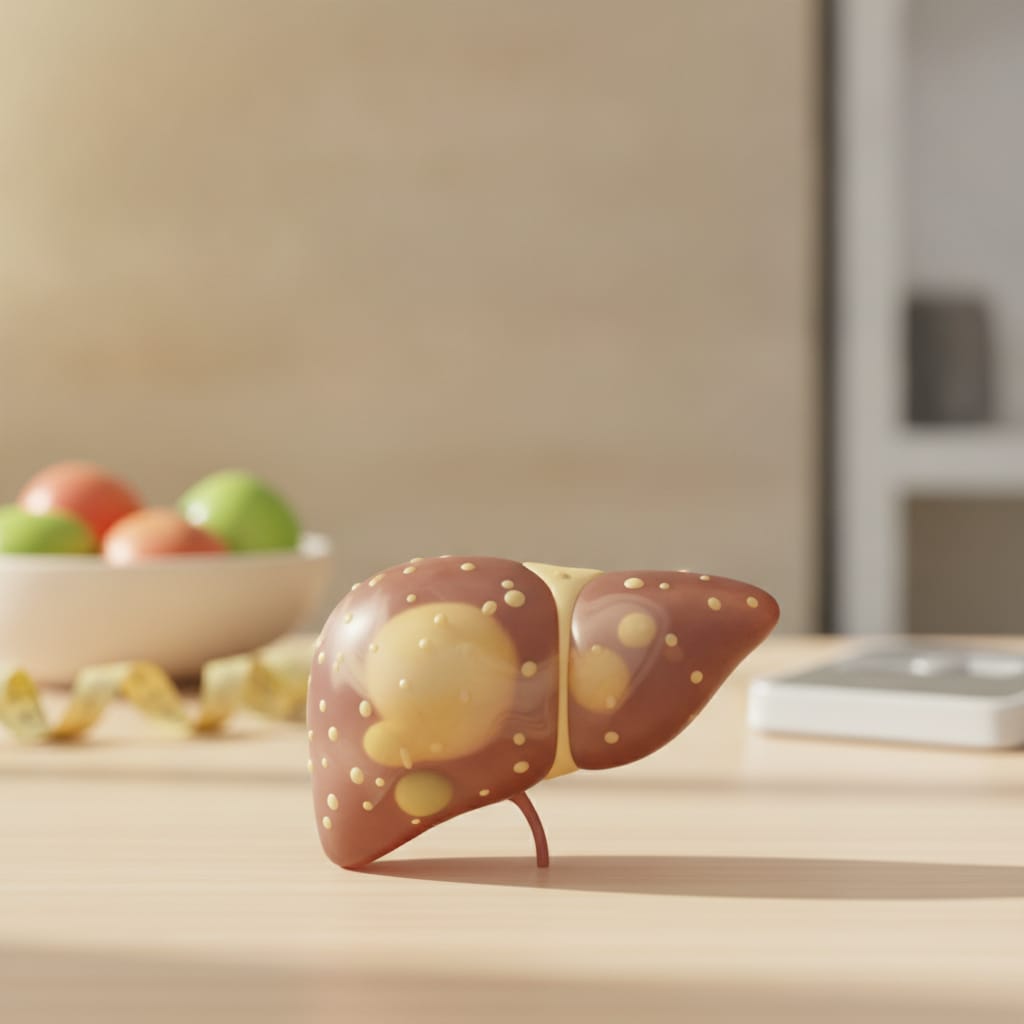
Simply put, fatty liver disease means too much fat has built up inside the liver.
A small amount of fat isn’t unusual. The problem starts when that fat continues to accumulate over many years.
At first, most people feel absolutely normal.
There is no pain.
No fever.
No obvious symptoms.
Your liver quietly continues doing its job while becoming increasingly overloaded.
That’s one of the remarkable things about the liver.
It is one of the hardest-working organs in the body.
Every day it processes nutrients from the food we eat, stores energy, helps regulate cholesterol, removes toxins, produces important proteins and plays a major role in digestion.
It works around the clock without us giving it much thought.
Until something goes wrong.
One of the biggest reasons fatty liver disease has become so common is that it shares the same risk factors as the conditions we’ve already discussed.
Being overweight.
Carrying extra fat around the waist.
Type 2 diabetes.
High cholesterol.
High blood pressure.
Lack of regular exercise.
They are all connected.
In fact, if you’ve been diagnosed with one of these conditions, there’s a reasonable chance your doctor may also want to check your liver.
Many people assume they’ll know if their liver is unhealthy.
Unfortunately, that’s rarely the case.
Fatty liver disease often causes no symptoms at all.
Some people complain of feeling tired, but tiredness has so many possible causes that it’s impossible to tell without proper tests.
Quite often, fatty liver is discovered by accident during a routine blood test or an ultrasound scan done for an entirely different reason.
When people hear they have a fatty liver, the first question is usually, “Can it be cured?”
The encouraging answer is that, in many cases, yes—it can improve.
The liver has an incredible ability to repair itself if we remove the things that are causing the damage.
Unlike many organs in the body, the liver is remarkably resilient.
But it does need our help.
If fatty liver disease is ignored for many years, ongoing inflammation can cause scarring.
Doctors call this fibrosis.
As the scarring becomes more severe, it can eventually lead to cirrhosis, where large areas of the liver are permanently damaged.
At that stage, treatment becomes much more difficult.
That’s why early action matters.
The good news is that there isn’t a complicated secret.
The same healthy habits that lower blood pressure, improve cholesterol and help control diabetes are also the best treatment for fatty liver disease.
Losing excess weight if needed.
Walking more.
Eating sensible portions.
Choosing more vegetables, fruit, beans, wholegrains and lean sources of protein.
Cutting back on sugary drinks and highly processed foods.
It isn’t glamorous advice.
But it works.
People often ask whether there is a tablet that melts the fat away from the liver.
At the moment, there isn’t a miracle medicine that replaces a healthy lifestyle for most people.
Your daily habits remain the most powerful treatment available.
That’s actually good news.
It means you have far more control than you might think.
One thing I always remind patients is not to be discouraged if change feels slow.
Fatty liver doesn’t develop in a few weeks.
It usually builds up over many years.
Improvement also takes time.
Small, steady changes are far more likely to last than crash diets or extreme exercise programmes that disappear after a month.
If you’re over 40, have diabetes, high cholesterol, high blood pressure or have noticed your waistline gradually increasing over the years, it may be worth asking your doctor whether your liver health should be checked as part of your routine care.
Most importantly, don’t wait until you feel ill.
The liver is remarkably quiet when it’s under pressure.
By the time symptoms appear, the damage may already be advanced.
Looking after your liver isn’t about following the latest health trend.
It’s about protecting one of the most important organs you have.
The remarkable thing is that by taking care of your liver, you’re also taking care of your heart, your blood vessels, your kidneys and your future health.
Everything we’ve discussed over the past few weeks is connected.
Good health isn’t about fixing one problem at a time.
It’s about making small decisions, every day, that allow your whole body to work the way it was designed to.
Until next time, stay healthy, stay informed and, above all, take good care of yourself.
The Daily Durian (zaynp100@yahoo.com) is a content creator under the Newswav Creator programme, where you get to express yourself, be a citizen journalist, and at the same time monetize your content & reach millions of users on Newswav. Log in to creator.newswav.com and become a Newswav Creator now!
The User Content (as defined on Newswav Terms of Use) above including the views expressed and media (pictures, videos, citations etc) were submitted & posted by the author. Newswav is solely an aggregation platform that hosts the User Content. If you have any questions about the content, copyright or other issues of the work, please contact creator@newswav.com.