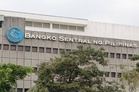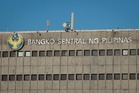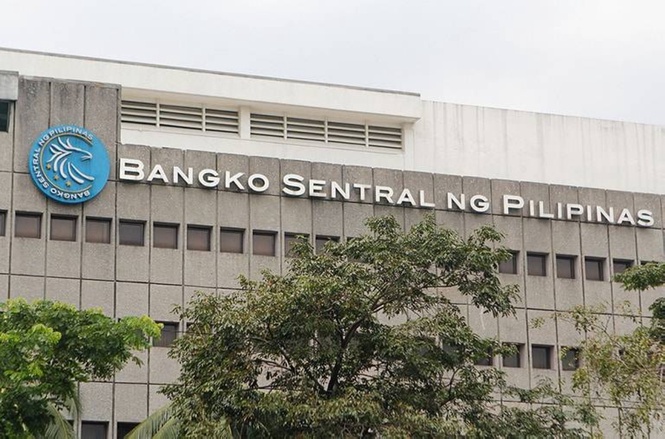
THE Philippine financial system’s resources went up by 8.6 percent to P38.9 trillion in the first nine months of the year, latest data from the Bangko Sentral ng Pilipinas (BSP) showed.
The nine-month tally, which remains preliminary and does not include the central bank’s resources, are also higher than the full-year results of P37.13 trillion last year, P34.17 trillion in 2024, P31.52 trillion in 2023 and P29.04 trillion in 2022.
Ateneo Center for Economic Research and Development senior research fellow Ser Percival Peña-Reyes said the growth was driven by continued bank lending, rising deposits and investments.
“Resilient domestic economic activity and demand for credit may have encouraged businesses and households to borrow, while banks’ growing balance sheets and improved lending capacity further supported the expansion,” Peña-Reyes said.
“The banking sector’s dominant share of financial system resources also contributed significantly to the overall increase,” he added.
Peña-Reyes expects the financial system’s resources to continue growing. However, he said the pace would depend on interest rates, inflation and economic activity.
“Continued demand for business and consumer loans, alongside steady deposit growth, could support further balance-sheet expansion,” he said.
“However, elevated borrowing costs and potential economic uncertainties may temper credit demand and affect borrowers’ repayment capacity,” he added.
“Banks will, therefore, need to maintain prudent lending standards, adequate capital buffers, and sound risk management to sustain growth.”
According to the BSP data, banks accounted for the bulk at P32.59 trillion, up 9.8 percent from P29.6 trillion in January to September 2025.
Of this, universal and commercial banks accounted for P30.25 trillion in the first nine months, a 9.5-percent increase from P27.61 trillion in the same period last year.
Thrift banks followed with P1.56 trillion, also higher compared to the year ago P1.4 trillion.
Digital banks’ total resources more than doubled by 129.9 percent to P343 billion from P149.2 billion while rural and cooperative banks saw an 11.6-percent decline to P447 billion from P505.9 billion in 2025.
The resources of nonbank financial institutions, meanwhile, grew by 2.6 percent to P6.39 trillion from P6.23 trillion.
This sector includes BSP-supervised investment houses, financing firms, investment companies, securities dealers and brokers, pawnshops, lending investors, nonstock savings and loan associations, credit card companies, government nonbank financial institutions such as Philippine Guarantee Corp. and Small Business Corp. and foreign exchange corporations of authorized agent banks.
The data for nonbank financial institutions are as of end-March 2026, the BSP noted.