.jpg)
By Mihar Dias (C) Copyright September 2024
Death is one of the hardest things to handle in life, yet the administrative side of it can feel even more overwhelming. It's not just about the grief, which is profound on its own, but the sheer uncertainty of what to do next.
When my wife's 90-year-old mother passed away over the weekend, we found ourselves facing both emotional turmoil and a daunting sense of logistical unpreparedness.
Our son was devastated, as his grandmother had been so close to him. For my wife, the pain was twofold: losing her mother after a long period of caregiving and the resentment of feeling alone in shouldering that burden. Her older brother, who hadn’t been as involved, became another emotional weight she had to carry. And yet, amid all this grief, she found herself at a loss when it came to the practical steps following her mother's passing.
This is where having a community support system, like the one at Bukit Damansara Mosque, proved invaluable. For me, it was an eye-opener. I had never handled the death of a close family member firsthand—my family members passed away when I was far from home. This experience, however, was different. It was immediate, intimate, and overwhelming.
We received the news at 5:30 a.m., while driving to the hospital. Only close family members were allowed in, so my wife went ahead, and I waited outside, unsure of what to do. The call came quickly: “Help me. Please tell me what to do.”
I had heard that you’re supposed to inform the police when someone dies, but I assumed the hospital would handle that automatically. My thoughts were interrupted by another call: “They’ll have to take her to forensics! What do I do now?”
I stopped the car and asked myself the same question: What do I do now? I vaguely knew about the Islamic rites of preparing the body, but I had no idea who to talk to or where to start.
“Where should we bury her?” my wife asked, her voice full of desperation. Like our son, she struggles deeply with processing loss. He had lost our family cat and was still grappling with that when his grandmother passed. The next day, he apologised for not being able to attend the funeral because he was too emotionally drained. Grief is a heavy load, and it’s different for everyone.
As for me, I remembered a retired police officer who handles community affairs at the Bukit Damansara mosque. I called him, but there was no answer. It was almost 6 a.m., so I drove to the mosque, hoping to find someone. A friendly face pointed me toward the imam, and, fortunately, he knew exactly what to do. It was routine for him, but for me, it was an immense relief.
The imam directed me to another member of the mosque who handles the logistics of death in the community. Prayers were said, and soon the ustaz (religious teacher) who manages these affairs appeared. He asked where the body was and then inquired about her height and weight. At that moment, I wondered why those details mattered, now that she was gone.
“Oh, and I’ll need a copy of her identity card,” he added. My wife, still deep in her grief, sent over the information and asked the same question that was on my mind: Why do they need this?
The ustaz explained that her address confirmed she was a member of our parish, which meant the mosque would handle everything. “Let us know when the body is released from forensics, and we’ll send our hearse for pickup.”
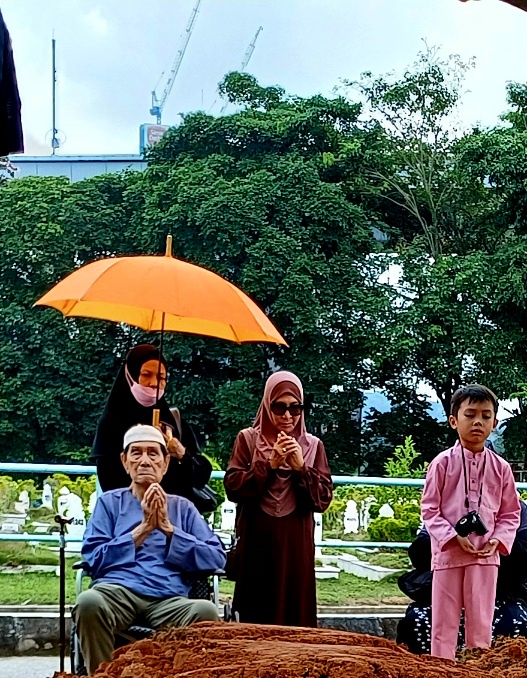
Sure enough, the hearse arrived and transported the body to the mosque for preparation. When we got there, chairs were already set up outside the preparation room. A comfortable air-conditioned waiting lounge was available, but we chose to wait just outside the door. We wanted to be close, to honour her in whatever small way we could.
Then, a head appeared out of the room: “I need three ladies to help me here.” Three family members stepped forward, put on aprons and gloves, and entered the room. An hour later, the body was ready for prayers in the mosque's main hall.
The community had already spread the word through chat groups, and by 11 a.m., a small crowd had gathered for the final prayers. At 11:15, the body was on its way to the cemetery. The same imam I had met at dawn read the last rites, and by noon, everything was complete. It was done with such efficiency and dignity—exactly the way my mother-in-law would have wanted.
This experience taught me something invaluable: the importance of knowing what to do when death strikes. It's not something we like to think about, but when the time comes, having a plan, or knowing where to turn for help, can make all the difference.
Now, when faced with a death in the family again, I’ll know what to do—and that, in itself, is a small comfort amid the pain.
Mihar Dias is a content creator under the Newswav Creator programme, where you get to express yourself, be a citizen journalist, and at the same time monetize your content & reach millions of users on Newswav. Log in to creator.newswav.com and become a Newswav Creator now!
The User Content (as defined on Newswav Terms of Use) above including the views expressed and media (pictures, videos, citations etc) were submitted & posted by the author. Newswav is solely an aggregation platform that hosts the User Content. If you have any questions about the content, copyright or other issues of the work, please contact Newswav.