
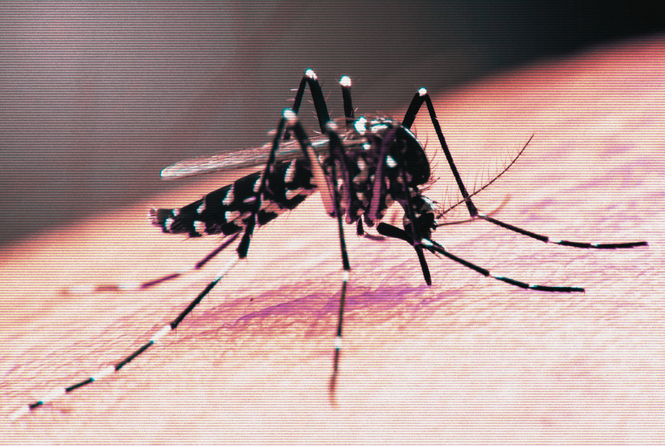
BERLIN - A case of Sindbis virus disease contracted in Germany has been confirmed in a person for the first time, German Press Agency (dpa) reported.
The Robert Koch Institute (RKI) in Berlin announced on Thursday that the patient is a 60-year-old man from Baden-Württemberg in southern Germany.
Antibodies indicating a previous infection had, it said, been found several years ago in blood donors from the state, and the virus had previously been detected in mosquitoes there. This is now the first time the virus has been detected in direct connection with the disease.
The RKI stated that the current case confirms that, given the known presence of the virus in mosquitoes and wild birds, human cases are to be expected.
In patients presenting with fever, a rash and severe joint pain during the mosquito season, a possible Sindbis virus infection should be considered as part of the differential diagnosis.
The Sindbis virus (SINV) is a pathogen that circulates primarily among birds and is transmitted by mosquitoes. It is found in parts of Northern Europe, Africa, Asia and Australia. There are no known cases of human-to-human transmission.
If an infected mosquito bites a person, they may contract what is known as Sindbis fever. Typical symptoms include sudden high temperature, an itchy rash and severe joint pain. These symptoms are similar to those of chikungunya virus infection.
Sindbis fever is not considered life-threatening. The rash and fever usually subside within one to two weeks, while the joint pain may persist for many weeks or even months, making everyday life difficult.
There is no specific treatment for the virus. The symptoms are alleviated with painkillers and anti-inflammatory medication. Prevention is primarily achieved through effective mosquito protection such as long clothing, mosquito repellent and mosquito nets.
The RKI says the man in Baden-Württemberg fell ill on July 12. As he lives in a district with established populations of the Asian tiger mosquito (Aedes albopictus), the doctors treating him initially had him tested for a possible chikungunya infection.
The investigations were subsequently extended to include SINV, and the virus was detected in September. - BERNAMA-dpa


-in-various-stages-of-their-development-(L.jpeg?width=1200&auto=webp&trim=0%2C32%2C0%2C32)