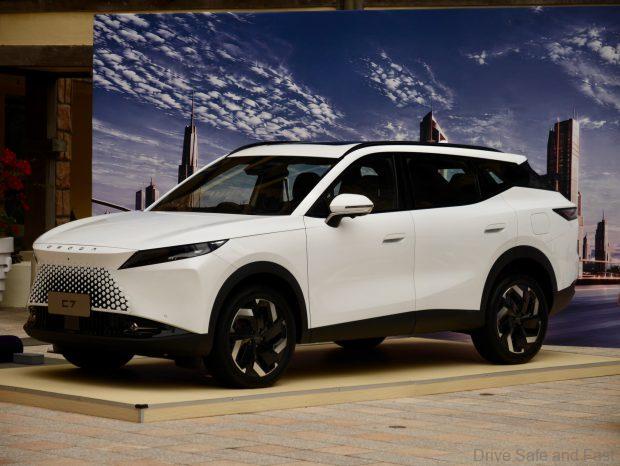
The Omoda C7 1.6T will be then next launch from Omoda Jaecoo Malaysia. We tried it out for a few hours.
Chery Group’s multi-brand offensive in Malaysia shows no signs of slowing down. Set for its official Malaysian launch on December 3, 2026, the Omoda C7 enters the fiercely contested C-segment SUV space as a wider, sleeker sibling to the popular Jaecoo J7.
The J7 was a massively popular car and the C7 could just be the second sales success in this segment for the Omoda Jaecoo brand.
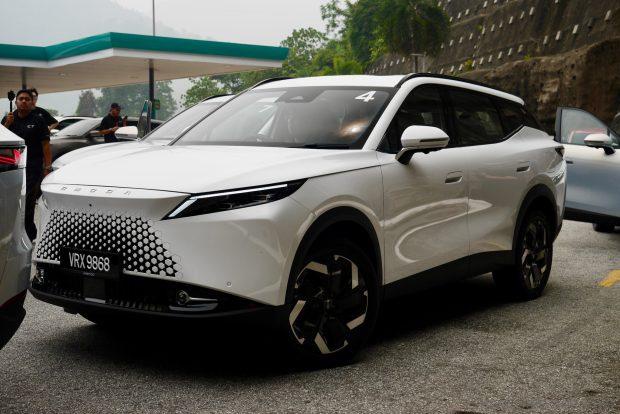
Locally assembled (CKD) at Chery’s Shah Alam plant and carrying an estimated price tag of RM160,000 for the launch 1.6-litre turbo petrol variant (with a 360 PS PHEV model slated to follow at an estimated RM180,000), the C7 trades rugged off-roader cues for futuristic, tarmac-focused luxury.
Exterior Styling: Trading British Boxiness for Fluid Aero
Where the Jaecoo J7 leans heavily into upright, British off-roader proportions, the Omoda C7 adopts a flowing, curvaceous silhouette reminiscent of modern Lexus crossovers.
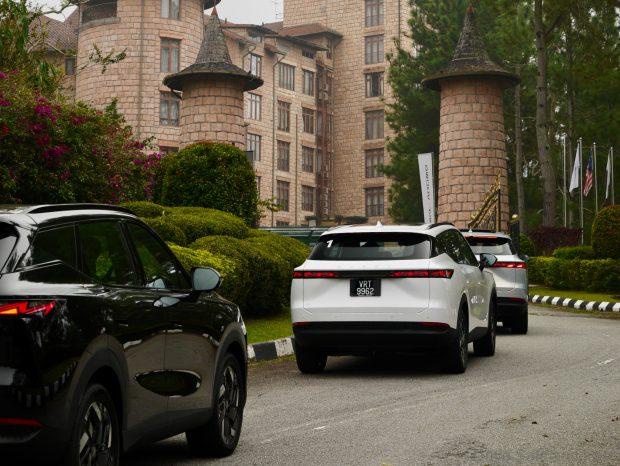
Measuring 4,660 mm long and 1,875 mm wide on a 2,720 mm wheelbase, it cuts a noticeably wider, more planted stance on the road.
Key exterior highlights include:
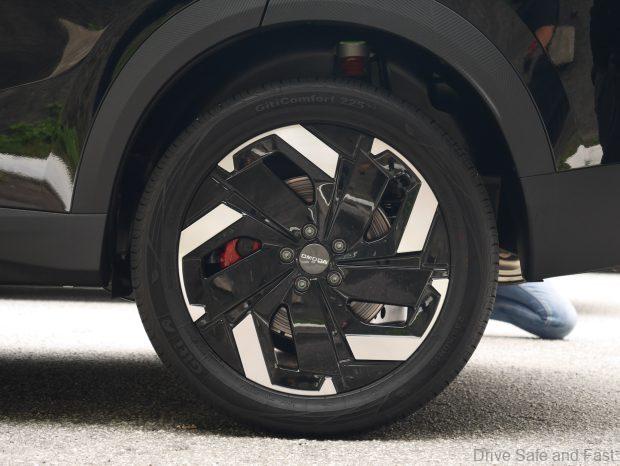
- Wheels & Brakes: 19-inch two-tone alloy wheels paired with matching center caps and red-painted brake calipers.
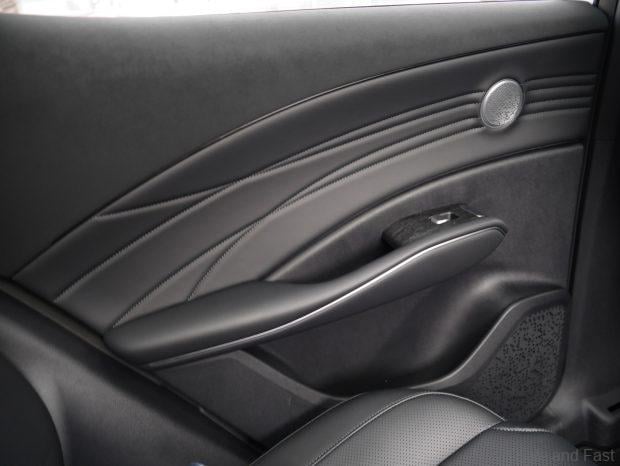
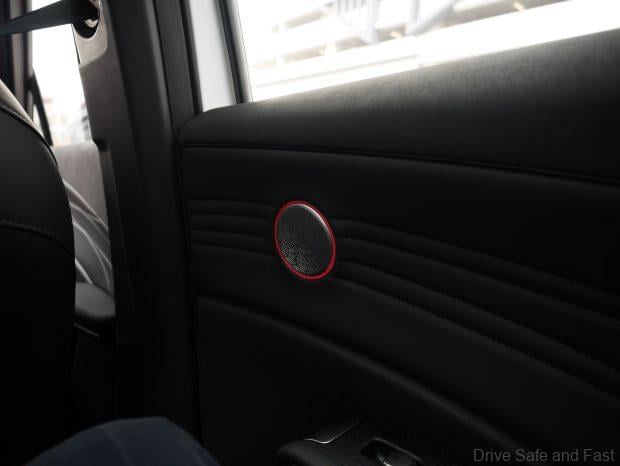
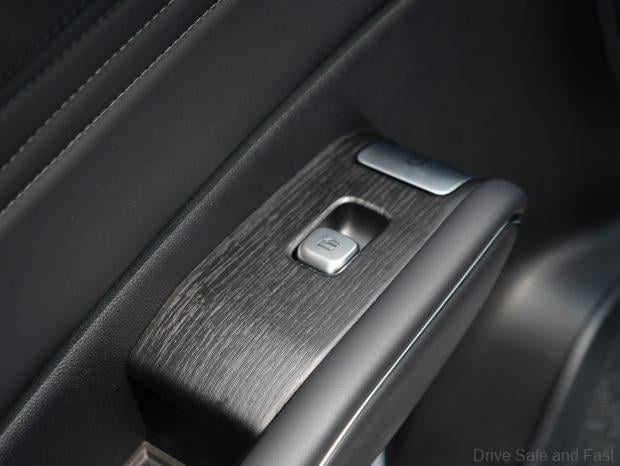
- Unique Door Hardware: Flush-style mechanical exterior door latches paired with Omoda C9-inspired interior door handles. While not full electronic latches like the flagship C9, the interior handles integrate with the Safe Exit Assist system—glowing red and providing a physical alert to warn occupants from swinging the door into approaching motorcycles or traffic.
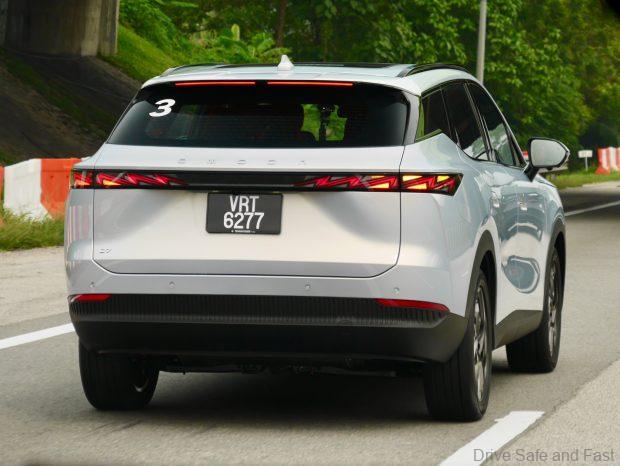
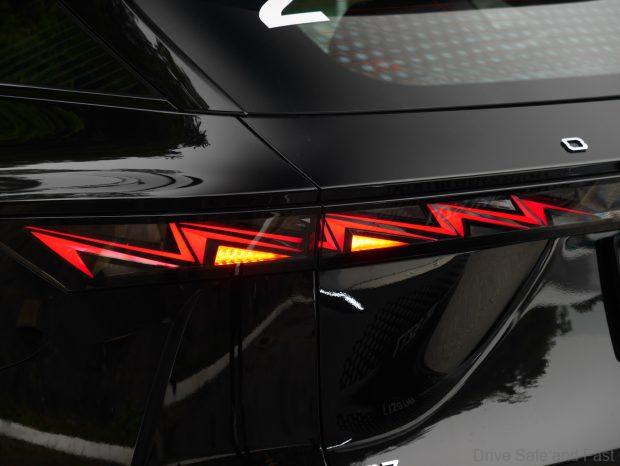
- Signature Taillights: Full-width LED rear lights featuring a bold lightning-bolt motif. Calibrated for heightened red-wavelength vibrancy, the illumination stands out sharply on the road without looking gimmicky against the car’s mature, sculpted bodywork.
Interior Packaging: Flagship Cues & Practical Substance
Inside, the C7 steps up the cabin ambience over the J7 with distinct design touches and high-utility tech:
- Cockpit Architecture: A sweeping dashboard line rises smoothly to meet the door cards—a wrap-around layout recalling classic Jaguar XJ flagships—paired with intricate door-panel stitching and dark wood trim.
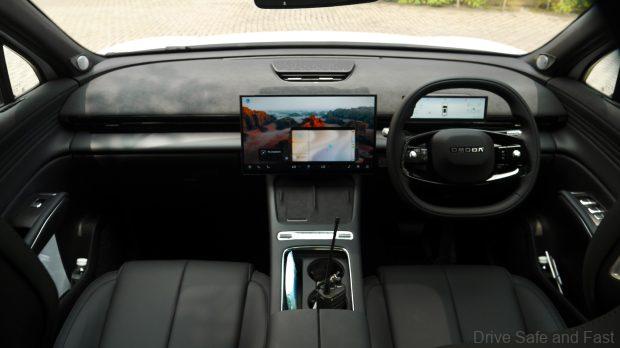
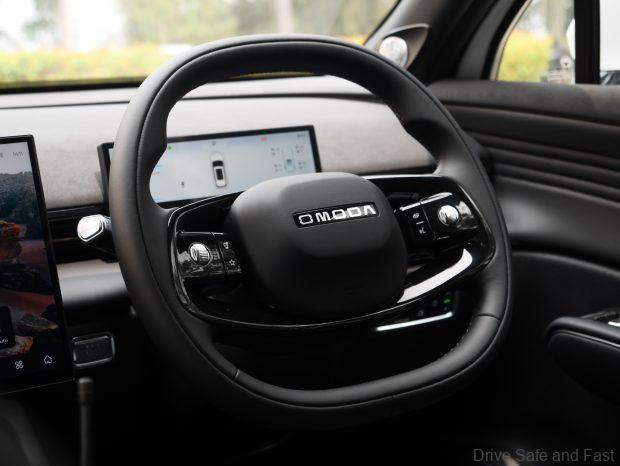
- Displays & Controls: An 8.88-inch digital instrument cluster sits ahead of a funky looking steering wheel, accompanied by a massive 15.6-inch 2.5K central touchscreen supporting wireless Apple CarPlay and Android Auto.
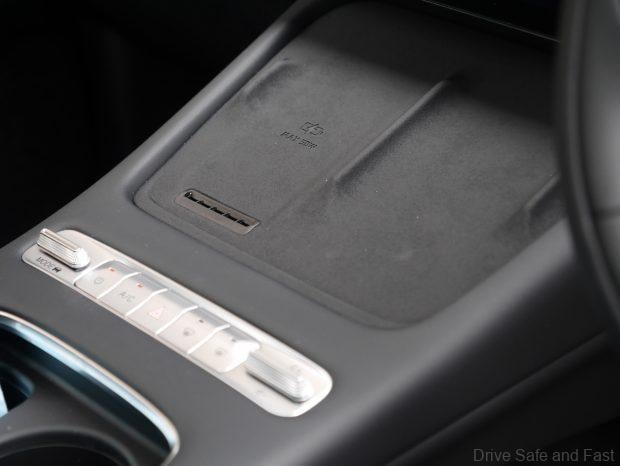
- High-Output Charging: Alongside standard USB-A ports and a 50W ventilated wireless charger, the front USB-C port delivers 65W of power output—strong enough to fast-charge a laptop directly from the center console.
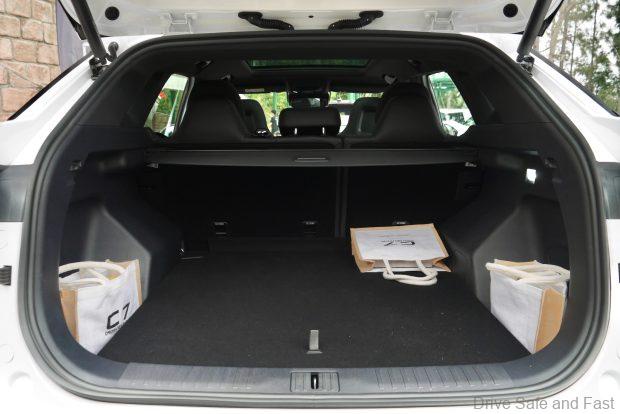
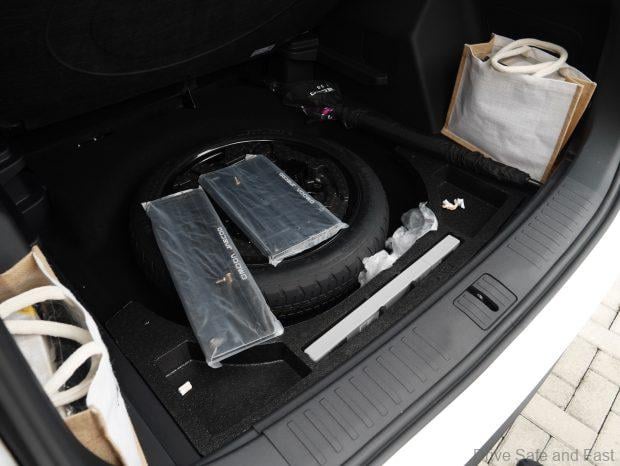
- Rear Comfort & Class-Leading Boot: Rear passengers get dedicated air-con vents, a center armrest with a leather pull-loop, and sporty bucket-style headrests that remain height-adjustable via a release button. Behind the second row, the C7’s wider footprint pays off with a cavernous 614-litre boot (expanding to 1,371 litres with the seats folded)—cargo capacity that rivals larger D-segment SUVs.
Refinement Over Outright Aggression
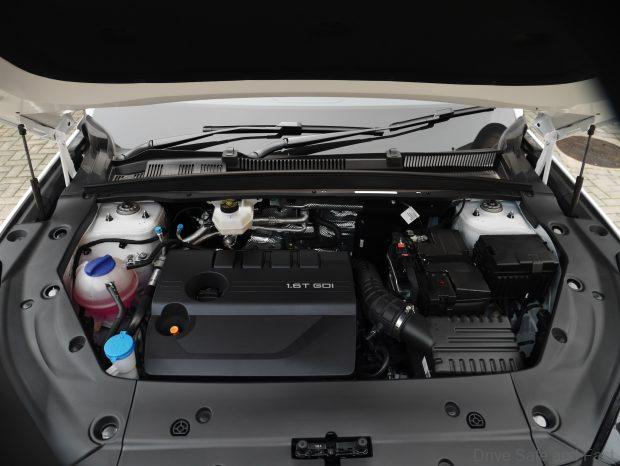
Under the hood sits the familiar 1.6-litre turbocharged four-cylinder petrol engine mated to a 7-speed wet dual-clutch transmission (DCT) driving the front wheels. In Malaysian specification, the engine is tuned to produce 186 PS and 275 Nm (slightly detuned by 11 PS and 15 Nm compared to the J7).
Rather than chasing sharp corner-carving thrills despite its sporty styling, Omoda engineers focused heavily on NVH (Noise, Vibration, and Harshness) refinement.
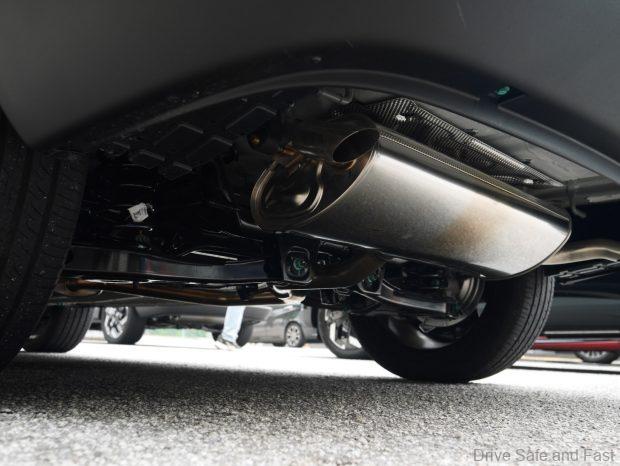
Equipped with double-glazed front acoustic windows, upgraded suspension bushings, and refined engine mounts, the C7 is noticeably quieter on the move than the already well-insulated J7.
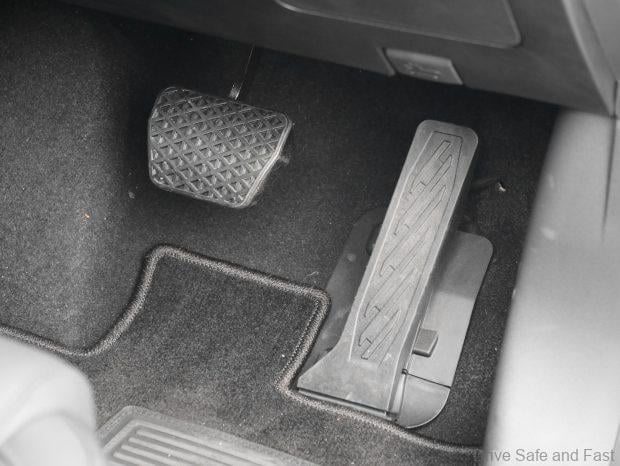
Malaysian-Spec Omoda C7 1.6T (CKD) Specifications
| Specification | Details |
| Assembly | Locally Assembled (CKD Shah Alam) |
| Engine | 1.6L 4-Cylinder Turbocharged Direct-Injection Petrol (1,598 cc) |
| Max Power | 186 PS (Malaysian spec) |
| Max Torque | 275 Nm (Malaysian spec) |
| Transmission | 7-Speed Wet Dual-Clutch Transmission (DCT), FWD |
| Suspension | MacPherson Struts (Front) / Multi-Link Independent (Rear) |
| Wheels & Tyres | 19-inch Two-Tone Alloy Wheels (235/50 R19) |
| Dimensions (L × W × H) | 4,660 mm × 1,875 mm × 1,670 mm |
| Wheelbase | 2,720 mm |
| Boot Capacity | 614 litres (1,371 litres with rear seats folded) |
| Infotainment & Audio | 15.6-inch 2.5K Touchscreen, 8.88-inch Digital Cluster, Wireless Apple CarPlay & Android Auto, 8-Speaker Sony Audio System |
| Key Equipment | Panoramic Sunroof, Powered & Ventilated Front Seats, 65W Front USB-C Port, 50W Ventilated Wireless Charger, Double-Glazed Front Windows, Powered Tailgate, 360-Degree Camera |
| Safety & ADAS | 8 Airbags, AEB, Adaptive Cruise Control with Stop & Go, Lane Centring Assist, Blind Spot Monitoring, Rear Cross Traffic Alert with Auto Brake, Safe Exit Assist |
| Estimated Price | ~RM160,000 (1.6T Petrol) / ~RM180,000 (1.5T PHEV, launching later) |
Early Verdict
Stepping into a crowded RM150,000–RM160,000 arena populated by everything from Japanese stalwarts to its own Chery, Jaecoo, and Jetour stablemates, the Omoda C7 carves out a clear niche. It offers a wider stance, D-segment luggage practicality, a larger 15.6-inch display, and superior cabin quietness—giving buyers genuine luxury substance to back up its head-turning exterior.
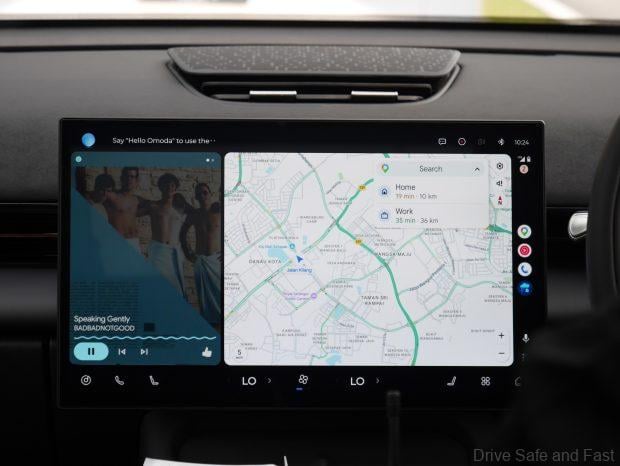
Unfortunately the Omoda C7 has one or two areas where improvements could be made. The car rolls through corners when driven hard. This is acceptable, as the vehicle is on the larger side and is aimed for family use. The gearbox feels pretty clumsy in deciding when to kick down.
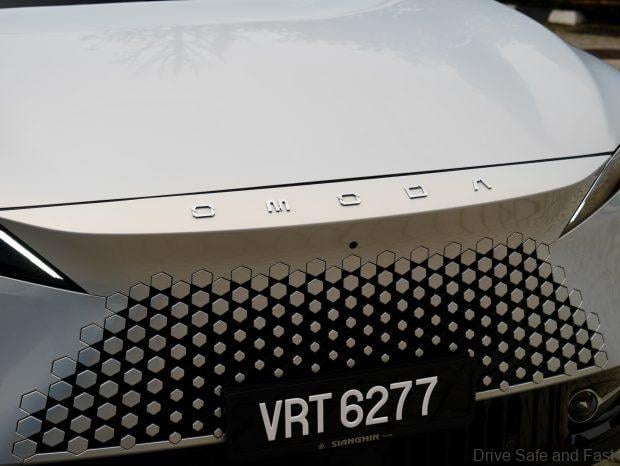
It’s also unfortunate and possibly a bit dangerous that there is no way to manually override the gear selection or force the car into a lower gear ratio to rely on engine braking. Driving downhill for an extended period of time can put a lot of heat into the brakes, which may lead to brake fade. Hopefully, this is something can be addressed at or before the launch.