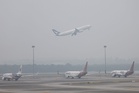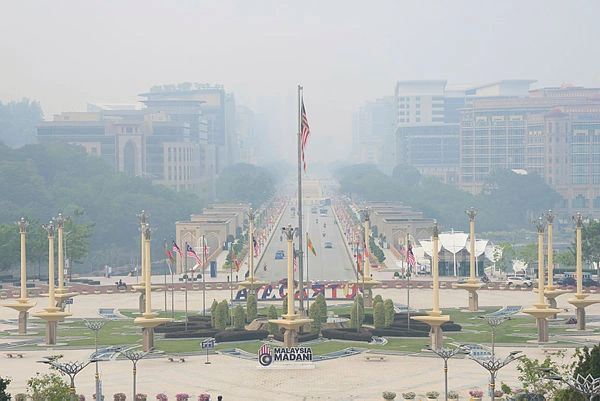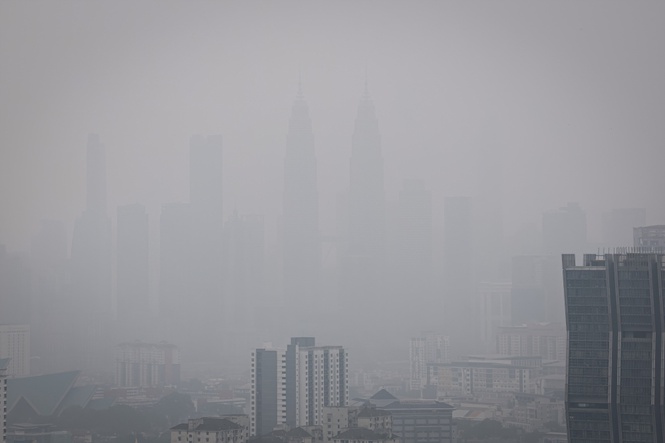
PUTRAJAYA, Oct 22 — Malaysia will introduce several transformative measures to strengthen efforts to tackle transboundary haze when it chairs the Sub-Regional Ministerial Steering Committee (MSC) on Transboundary Haze Pollution next year.
Natural Resources and Environmental Sustainability Minister Datuk Seri Arthur Joseph Kurup said his ministry was conducting studies and drafting several new initiatives to ensure more effective and concrete action to address the recurring haze problem.
“Malaysia will take over the MSC chairmanship next year, and we are studying and planning several new initiatives to strengthen Asean-level efforts to tackle the haze problem.
“We hope to take more effective and concrete measures when we chair the MSC,” he told a press conference on the latest haze situation here today.
He said Malaysia proposed two key initiatives at the Asean ministerial meeting on July 9: science diplomacy, to ensure planning, action and spending to tackle haze are based on scientific data, enabling more targeted fire prevention and suppression efforts, and the setting up of a sustainable haze fund.
“The proposed sustainable haze fund, if approved, would serve as an Asean-level mechanism to help member states strengthen prevention, preparedness and monitoring measures,” he said.
He said most fires involved extremely dry peatland, where they could spread underground undetected for weeks or months, highlighting the need to study new technologies, including dry ice-based methods, to improve firefighting efforts.
In a related development, Arthur said Malaysia had also introduced the Malaysian Community Multiscale Air Quality Model (CMAQ), which can forecast potential air pollution and haze up to five days in advance.
He said the Malaysian Meteorological Department (MetMalaysia) had developed the platform to provide detailed air quality forecasts for Malaysia and the wider Southeast Asian region.
“We hope other countries will also adopt the system so that the public can plan and prepare up to five days in advance,” he said, adding that the platform began operating this year and is open to the public and Asean member states.
On the haze situation, Arthur said the transition to the Northeast Monsoon, expected to begin in late October, could alter the movement of transboundary haze currently affecting several areas in the south of the country, particularly Sarawak and Johor.
He said shifts in wind direction during the Northeast Monsoon could carry haze to other areas, easing its impact on areas currently affected, noting that haze drifting northwards from the south had significantly affected southern Sarawak, Johor and Singapore.
However, Arthur said Malaysia faced a greater risk of transboundary haze as the Super El Niño phenomenon was forecast to intensify from this month until January 2027, increasing the likelihood of forest and peatland fires in the region.
He said the El Niño phenomenon is expected to persist until mid-2027, with the year potentially among the hottest on record, bringing increasingly erratic rainfall, a higher risk of drought and more hotspots and fires that could worsen the haze.
“We also forecast that next year could be among the hottest on record, with temperature anomalies exceeding 2°C,” he said, adding that the government had taken into account the experience of the 2015-2016 Super El Niño, when rainfall decreased by up to 30 per cent in peninsular Malaysia and 45 per cent in Sabah.
He said prolonged hot and dry conditions would not only increase the risk of forest and peatland fires but could also affect agriculture, food security, water supplies and public health. — Bernama