
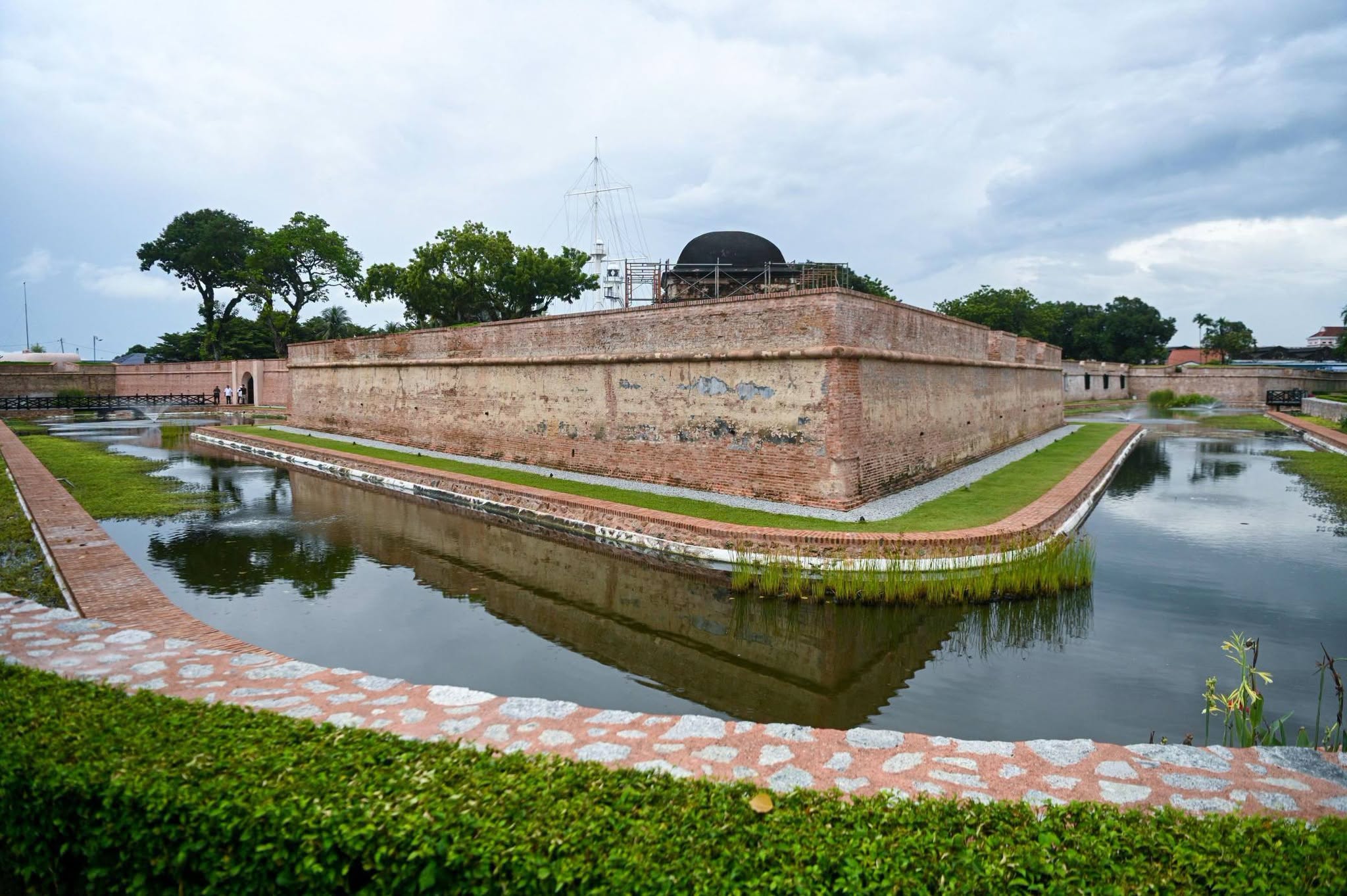
Fort Cornwallis has reopened after an extensive restoration, marking a significant milestone in Penang’s efforts to revitalise its historic waterfront while reinforcing George Town’s status as a world-class heritage destination.
Officially reopening the landmark, Prime Minister Datuk Seri Anwar Ibrahim said the restoration goes beyond preserving a colonial-era monument. Instead, it provides an opportunity for Malaysians to reclaim and reinterpret their history through their own perspective.
He said the fort should serve as a living classroom where future generations can learn about the nation’s struggles, resilience and journey towards independence, rather than merely reflecting on its colonial past.
“Our history must be reconstructed by our own people to reflect the sacrifices, struggles and aspirations of the nation,” he said, adding that Fort Cornwallis stands as a reminder of a time when major decisions affecting Penang were made by foreign powers.
Anwar also stressed that rapid economic progress should not come at the expense of cultural identity, noting that Penang’s achievements as a leading industrial and semiconductor hub must be complemented by continued investment in heritage conservation.
Chief Minister Chow Kon Yeow described the reopening as a key milestone under the North Seafront Programme, a long-term initiative to transform George Town’s historic waterfront into a vibrant public destination that seamlessly integrates heritage, tourism and urban development.
Nearly RM50 million has been invested by the Penang government through Penang Chief Minister Incorporated (CMI), in collaboration with the Penang Island City Council (MBPP) and Think City, to deliver several completed projects under the master plan. These include the upgrading of Padang Kota Lama, the Fountain Garden, Esplanade Seawall, Queen Victoria Memorial Clock Tower, Linear Garden, Fort Cornwallis Gallery, the restoration of the historic moat and the redevelopment of Astaka Kota Selera.
Chow said Fort Cornwallis remains the cornerstone of the North Seafront Programme, demonstrating that heritage conservation can drive economic growth while preserving George Town’s unique identity.

Today, the revitalised fort offers more than a restored historical attraction. It is envisioned as a vibrant public space that supports educational programmes, cultural activities, tourism and local businesses, creating new opportunities for entrepreneurs while enhancing the visitor experience along Penang’s iconic waterfront.
The North Seafront transformation will continue through additional projects until 2030, further strengthening the area as a connected public realm that balances heritage conservation with modern urban development.
The restoration has also earned international recognition. The Esplanade Seawall strengthening project received the UNESCO Asia-Pacific Award under the New Design in Heritage Context and Sustainable Development categories earlier this year, while Astaka Kota Selera was honoured with the Gold Award and Building of the Year by the Malaysian Institute of Architects (PAM).
Together, the projects demonstrate how heritage conservation can become a catalyst for urban regeneration, ensuring George Town’s rich history continues to support its future as a thriving cultural, tourism and economic destination.

