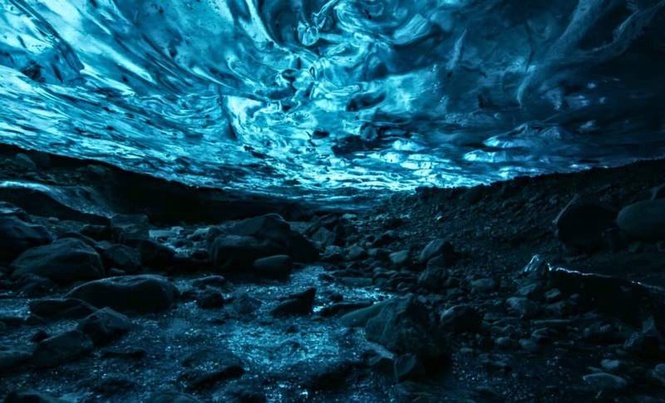
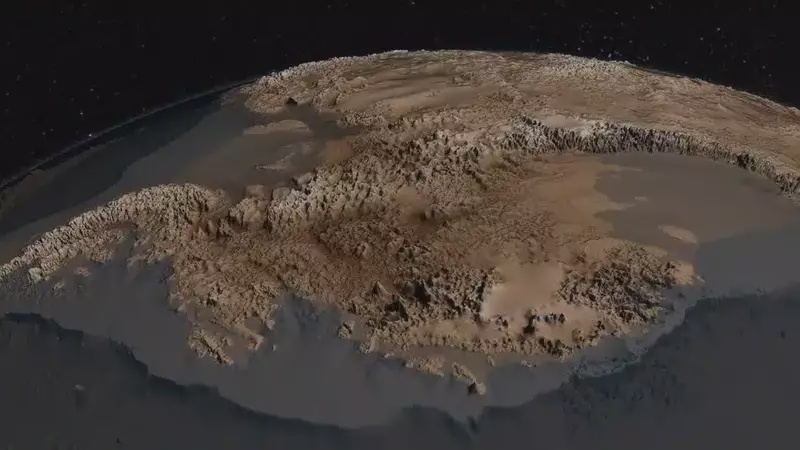
Nearly four kilometres beneath the East Antarctic ice sheet, Lake Vostok sits in darkness under enough ice to hide one of the largest freshwater lakes on Earth. Live Science describes it as about 150 miles long and 30 miles wide, near Russia’s Vostok research station in East Antarctica. The lake’s scale and isolation have made it one of Earth’s clearest comparisons for water hidden below ice.
A report on the lake’s isolation says Vostok has been cut off from sunlight and the atmosphere for hundreds of thousands, and perhaps millions, of years. That matters because it resembles a central question in astrobiology: whether liquid water hidden beneath ice can support life without sunlight. Scientists ask similar questions about Europa, Jupiter’s icy moon, and Enceladus, Saturn’s icy moon.
The comparison is not exact, because Vostok is freshwater under Antarctic ice, while Europa and Enceladus are thought to hold salty oceans beneath frozen shells. But all three settings share a basic problem for exploration. Water may exist in darkness, where any living system would need chemical energy rather than photosynthesis.
A Buried Antarctic Lake Sealed From Sunlight
Lake Vostok was once a surface lake, before it became buried at least 15 million years ago. Some estimates suggest it may have been covered for 20 million years or more. Scientists did not know the lake was there when researchers began working at Vostok Station in 1957.
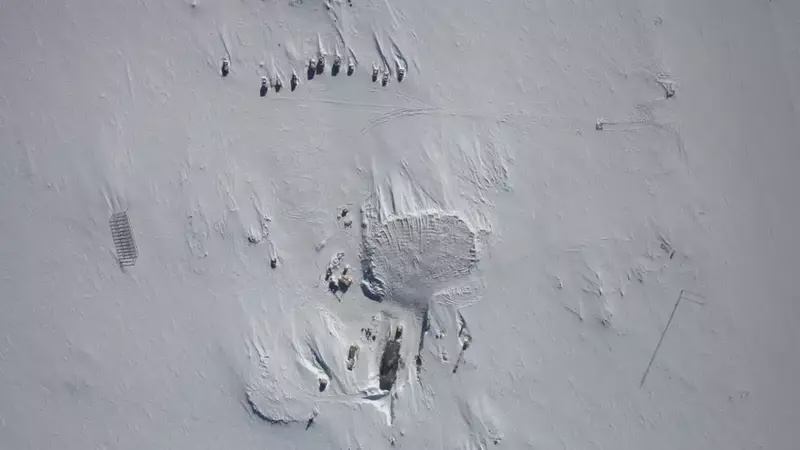
A Russian geographer and pilot first noticed the unusually flat ice above the lake from the air in the 1960s. In 1993, researchers identified the lake using satellite-based radar technology that could see through the ice. That discovery helped confirm that liquid water could persist far below the Antarctic ice sheet.
The lake remains liquid even though its water temperature is reported to hover around 27 degrees Fahrenheit, or minus 3 degrees Celsius. The pressure from the overlying ice lowers the freezing point, keeping the water from becoming solid. That combination of pressure, darkness, cold and isolation makes Vostok a natural laboratory for studying a subglacial lake environment.
Life Claims Remain Tangled With Contamination
The hardest question at Lake Vostok is not simply whether microbes have been detected near the lake. It is whether those microbes truly came from the lake itself. Russian scientists reached the lake surface in 2012 after drilling through the ice, but the borehole had been kept open with kerosene and Freon before lake water surged upward and mixed with that fluid.
That history complicates later biological claims because the drilling system carried surface bacteria. It also shows why clean sampling is central to any search for life in sealed water systems. Finding life in a hidden lake is persuasive only if the sample can be separated from anything introduced by the drill, fluids, tools or surface environment.
A 2013 analysis of Lake Vostok accretion ice reported genetic sequences from thousands of organisms. Live Science also reports that researchers sampled accretion ice, a frozen layer formed from lake water at the top of the lake, and found DNA from more than 3,500 organisms. But those findings are not the same as a clean sample of lake water.
Other work found almost nothing, and Russian microbiologist Sergey Bulat cautioned that even a single candidate organism might be contamination. The issue does not make Vostok unimportant. It makes it a warning for any future attempt to sample an alien ocean, where researchers would need to prove that a signal came from the target environment.
Lake Whillans Offered a Cleaner Example
A different Antarctic lake offered a clearer route soon after Vostok was breached. In January 2013, the U.S. WISSARD project reached Subglacial Lake Whillans in West Antarctica using a clean hot-water drill. In an Annals of Glaciology account of the operation, the team reported that scientific tools were deployed through the borehole over three days.
Those tools included a downhole camera, a conductivity-temperature-depth probe, water samplers, a filtration unit, sediment corers, a geothermal probe and a geophysical sensor string. Whillans is not the same as Vostok, because it lies under about 800 metres of ice rather than nearly four kilometres. But its value lies in the way it was reached and sampled.

The WISSARD paper reported that observations confirmed the existence of a subglacial water reservoir previously inferred from satellite altimetry and surface geophysics. It also described water that was far less saline than seawater, yet more saline than pure drill meltwater. Later work on Whillans found a functioning microbial ecosystem living on chemical energy in permanent darkness.
Together, Vostok and Whillans show two sides of the same scientific problem. One lake demonstrates the appeal of a long-isolated environment that may preserve clues from deep time. The other shows why contamination control can be as important as the discovery itself when scientists are searching for life in sealed places.
Europa Clipper Will Investigate an Icy Ocean World
NASA’s interest in Europa brings the Antarctic lesson into sharper focus. In an article on possible Europa water plumes, NASA said Europa is an ice-covered ocean world that may have ingredients needed to support life. The agency also notes that Enceladus has a plume of vapor, ice particles and organic molecules erupting from its south polar region.
Europa and Enceladus are heated internally as their solid layers stretch and flex under gravitational forces from their planets and neighboring moons, according to NASA. That heat, rather than sunlight, helps keep subsurface water from freezing. Those details make Europa a strong target in the search for habitable environments beyond Earth, while Antarctica provides a practical warning.
For Lake Vostok, Lake Whillans and Europa, the question is not only whether liquid water exists. It is whether researchers can understand that water without changing it during the attempt. Vostok’s mixed record shows how a promising sample can become difficult to interpret if drilling fluid, surface microbes or equipment contamination enter the system.