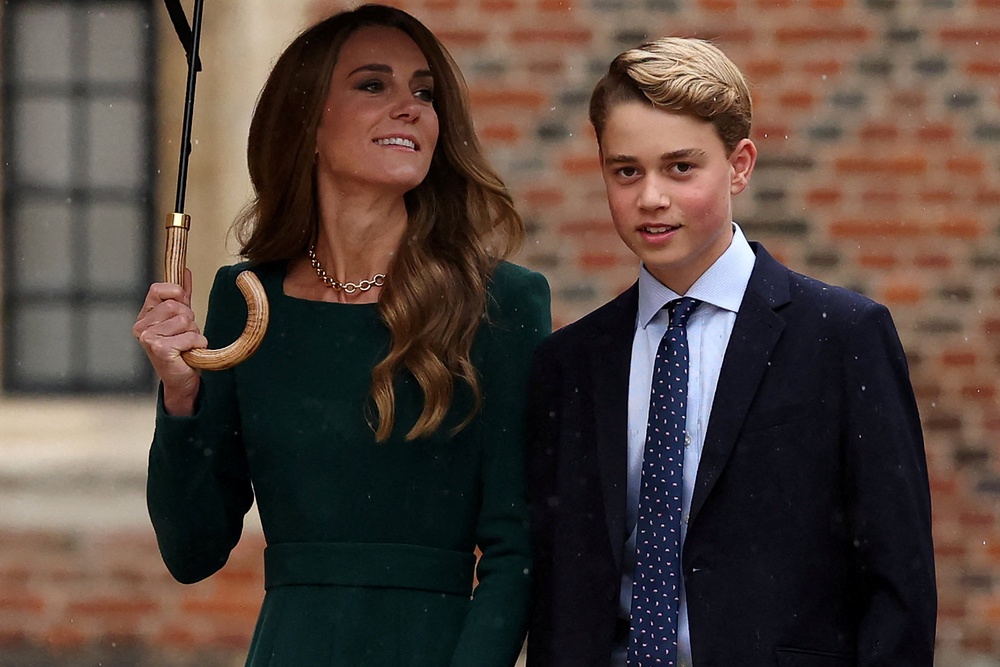
Prince George, 13, arrived for his first day at Eton College yesterday accompanied by his parents, the Prince and Princess of Wales.
Like millions of children heading back into the classroom for the autumn term, the future king will have been feeling nervous. And not too far away, his cousins Prince Archie, seven, and Princess Lilibet, five, were also starting their new schools in the UK, pre-prep and prep, after the Duke and Duchess of Sussex relocated the family from their Montecito home in California – supposedly settling near the Cotswolds.
Meghan, as an American, will need to decode unwritten British school-gate etiquette, which may trigger memories of her life as a senior working royal before Megxit. The truth is, to be back on the school run after a six- to eight-week summer break is a complete shock to the system, whoever you are and wherever you choose to send your children.
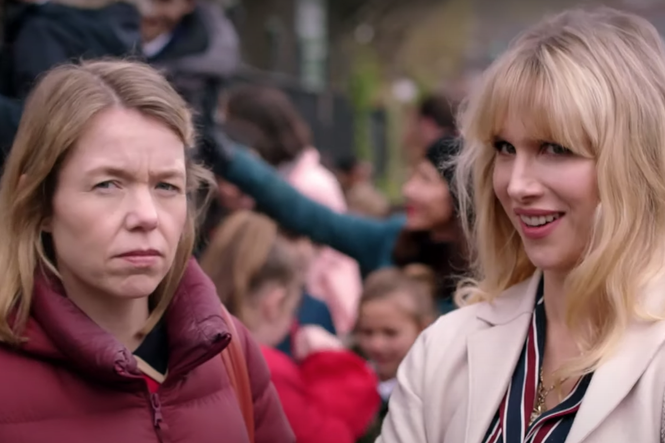
This is Motherland writ large, with competitive parents, cliquey groups, judgmental stereotypes, and epic dramas all there to be unravelled over the next few weeks during school drop-offs and pick-ups.
I’ve had my fair share – and the summer school holidays have been a welcome break from it all. As I walked down the alleyway into the school playground of my children’s West London primary school, it felt like a tidal wave of parents might wipe me out.
While we’re all busy taking photos of our children, emotions are flying high. Most parents feel panic about how our kids are going to settle in, which only adds to the dread of the dreaded class WhatsApp revving up – a guaranteed hotbed for explosive fallouts.
As soon as I saw the first message for a new class rep and the “polite reminder” for parents to step up to the job like we are being called to fight for our country, I wanted to mute the channel.
I try to pace things by keeping communication to the minimum and legging it back to my car because before you know it, you can be knee-deep in issues that zap your time and energy.
I walked straight back into the drama as my eight-year-old daughter Liberty started Year 4 and found there to be only 13 other children in what is meant to be a class of 30. Her best friend had left without telling us, going to a private school across the road in Kensington – and my daughter was hysterical.
On top of that, other mums are roaming the playground discussing tutoring, which secondary school is best, and how to get your child through entrance exams.
The usual rivalry is in full force with one tiger mum who pretends to be relaxed like a jellyfish parent, fast-tracking her daughter into every extracurricular activity possible, which made me feel like a total failure.
Of course, with the elections of school class councillors next week, some mums are already coaching their children in public speaking - and handing out flyers to vote for them.
I know I need to throw myself into the community spirit – and I have a lot of great mum friends at the school. But things can turn in a second; last year I felt ostracised for not helping to carry trestle tables at the school’s fun run.
Dr Tara Porter, clinical psychologist and author of 2026’s Good Enough Parenting: How to Stop Beating Yourself Up, and Raise Happy, Self-Reliant Kids, says the school gate can be a “tinderbox for competitiveness”.
“There are so many different aspects of raising children and when we talk to other parents, it’s so hard not to compare, and then start to have a wobble about your own standards,” she tells me.
“When parents start to worry about meeting other people’s standards or how they or their child are doing comparatively, it can pull them away from their relationship with their child – meeting their child where they are as who they are, having fun with them, creating happy memories or good times.”
Over the last generation, she says, there have been many different factors which have combined to supercharge this, and tip normal comparison into something unhealthy, verging on competition.
Dr Tara PorterNowadays parents aren’t just comparing themselves to the parents in their community. There is a whole other world of idealised parenting on social media which raises expectations
“Nowadays parents aren’t just comparing themselves to the parents in their community. There is a whole other world of idealised parenting on social media which raises expectations of what parenting should be like. So it ups the pressure for everybody.”
The education system has also been through several different reforms, with children being assessed at multiple points, even through primary school, which, she says, creates so many opportunities for parents to worry that their children aren’t making the grade.
“They hear that other parents have started tutoring, extra homework, or Kumon Maths, and wonder if their child needs that. Will they be left behind?” she adds.
“This all occurs against the backdrop of fears about the economy, competing for places at the best schools and universities, and how will they ever afford a house. Everything feels like a competition.”
Anita Cleare, parenting expert and author of The Work/Parent Switch, says it’s not always easy to stay sane at the school gate and to not get knocked off track by competitive parenting.
“It’s easy to feel resentful when you hear other parents’ stories about their idyllic summer holidays, but always remember that what you’re getting are the edited highlights of the best bits,” says Cleare.
“All families have their challenges and their bad moments; they just don’t always advertise them. It’s best to assume that behind every glossy parental veneer, there is an equal portion of stress, hair-pulling and far-from-perfect parenting.”

She also adds that it can take time to find your tribe at the school gate – “the parents who you can be honest with and laugh with and mutually support”.
“One of the key principles of positive parenting is looking after yourself,” she adds. “We are all far less likely to parent calmly and consistently when we are stressed or stretched too thin.”
If you have time to spare, she advises, then you might want to jump into the school community by volunteering or joining the PTA. “But,” she says, “it is fine to step back and conserve your energy so you can be a calm and connected parent at home rather than trying to appear like a super parent to everyone else.”
Catherine Mintague, a UK-based psychotherapist, points out that the school gate isn’t just where we drop our children off; it’s one of the biggest social arenas many adults step into.
“We’re pack animals, wired to seek belonging, so it’s no surprise that many parents feel like the playground can be daunting, perhaps even flooded with memories of their own childhood, which can be extremely emotive,” she tells me.
“Playground politics is about our deeply human need to belong. When we feel uncertain, our brains naturally look for where we fit in, and that can lead to comparison, cliques and misunderstandings.”
One important “don’t” is not to forget that your child needs a present parent, not a perfect one. The irony is, she says, that most parents are worrying about exactly the same thing: “Am I doing a good enough job?” Once we realise that, it's much easier to swap comparison for compassion.
Read MoreNew research explains how to transition your kid away from their phone
Prince George arrives for first day at Eton College
The surprising subject that could improve your child’s academic success
Nicole Kidman just gave the best parenting advice – so why do so many disagree?
I took my kids to see Toy Story 5 – now one of my daughters won’t touch her iPad
Prince William’s school-run story is like a scene from Amandaland – I’m not buying it