When the analysis is extended to GE16, PN appears to be the more electorally advantageous—although politically riskier—partner for BN.
BARISAN NASIONAL’S decision over whether to cooperate with Pakatan Harapan or Perikatan Nasional in the Melaka state election should not be viewed as a state-level calculation alone. Melaka could become a testing ground for the political arrangement that BN eventually carries into the 16th General Election.
When the analysis is extended to GE16, PN appears to be the more electorally advantageous—although politically riskier—partner for BN.
In Melaka, BN begins from a position of strength. It won 21 of the 28 seats in the 2021 state election and still controls the government comfortably. BN does not require either PH or PN to retain power. However, cooperation in Melaka could demonstrate whether a broader national partnership is workable.
PH offers several immediate benefits. Its support is concentrated among urban, non-Malay and reform-oriented voters, complementing BN’s stronger position in Malay-majority and semi-rural constituencies.
A BN-PH arrangement could minimise electoral competition, preserve federal stability and project a moderate, multiracial governing formula.
Yet the recent political trajectory raises questions about PH’s ability to transfer votes to BN.
PH performed poorly in the Johor and Negeri Sembilan state elections, while BN demonstrated that it could win without PH. In Johor, BN captured 48 of 56 seats, whereas PH secured only eight.
In Negeri Sembilan, electoral coordination between BN and PN helped the two coalitions comfortably win 25 of 36 seats.
These results suggest that cooperation with PN could offer BN a more direct path to electoral dominance at GE16.
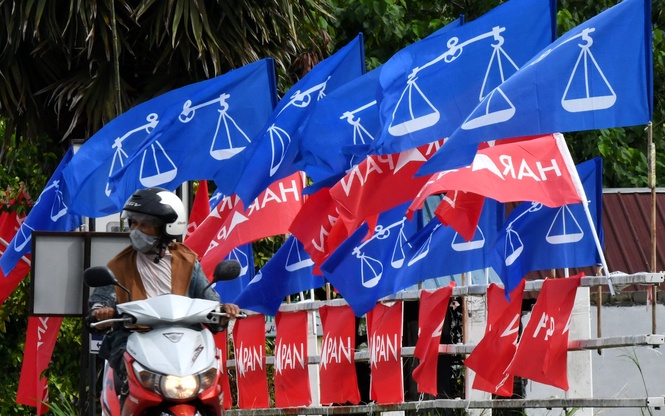
The main advantage is consolidating Malay votes. Electoral competition between UMNO, PAS and Bersatu has divided this constituency since 2018, allowing PH to win several seats through multicornered contests.
A negotiated BN-PN partnership could turn many marginal constituencies into straight fights and reduce vote-splitting.
One projection suggests that BN and PN could collectively reach 122 parliamentary seats—comfortably exceeding the 112 required for a simple majority—if recent voting patterns were replicated at GE16.
Such projections should not be treated as guaranteed outcomes, but they demonstrate the mathematical appeal of Malay electoral consolidation.
Melaka therefore represents an important experiment. If BN and PN can agree on seat distribution, leadership and a common policy platform there, the arrangement could be expanded nationally.
However, the negotiations must reflect actual party strength. BN should defend all its incumbent Melaka seats and avoid granting PN an equal allocation unsupported by previous state results.
The greatest risk is that BN may strengthen its main competitor. PN competes for the same Malay-Muslim electorate that UMNO seeks to recover. PAS could emerge as the largest party in a future Parliament, potentially reducing BN from coalition leader to junior partner.
Cooperation may win GE16 while gradually weakening BN’s long-term identity.
By contrast, PH is less likely to replace BN within its traditional political base. Nevertheless, remaining with PH could expose BN to dissatisfaction among Malay voters who oppose UMNO’s association with DAP.
It may also force BN to defend the federal government’s unpopular decisions while receiving limited electoral benefit.
The strategic choice therefore depends on BN’s priority. If it seeks governmental continuity, moderation and policy stability, PH remains the safer partner.
If it prioritises winning the largest possible number of seats and potentially forming a stronger government after GE16, PN offers greater electoral value.
On balance, PN is likely to be BN’s more effective partner for both Melaka and GE16.
However, BN should pursue a conditional electoral pact rather than an unconditional merger.
Seat distribution must be based on incumbency and winnability, while BN must retain organisational independence and present its own prime ministerial candidate.
A BN-PN partnership may offer the clearest route to Putrajaya—but only if BN remains the driver rather than becoming the passenger.
Afi Roshezry Abu Bakar
Adi Wira Mohd Zin
Universiti Tunku Abdul Rahman (Kampar Campus)