.png)
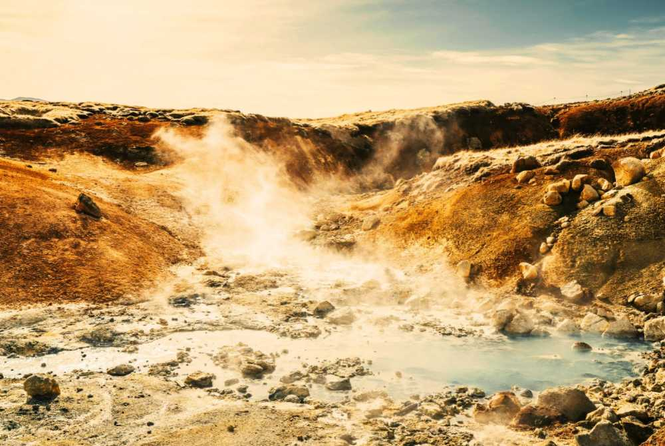
IN my book Demi Rakyat – A Book on Nation Building, I highlighted the immense potential of geothermal energy as a source of electricity generation.
The principle is straightforward: if we drill deep enough, typically three to four kilometres, the Earth’s heat is sufficient to turn water into steam, driving turbines to produce electricity.
This requires minimal land compared with other energy sources.
Geothermal power is often likened to nuclear energy. Both rely on steam turbines, but while nuclear plants use radioactive materials to heat water, geothermal taps directly into the Earth’s natural heat.
This makes it cheaper, as there is no need to secure radioactive fuel, and safer, with no risk of radiation exposure.
Traditionally, geothermal development has been confined to tectonic plate boundaries, where hot springs, geysers and volcanic activity are present.
Later, the Enhanced Geothermal System (EGS) was developed to expand beyond these areas. EGS involves drilling two wells: one to inject water into hot rock fractures, and another to extract steam.
Yet this method remains limited to regions with sufficient hot rocks, carries risks of induced earthquakes and suffers from water loss.
A more promising solution is the closed-loop system: a metal pipe is inserted into deep underground zones where temperatures exceed 100°C.
Two connected pipes allow water inflow and steam outflow to drive turbines. This design avoids earthquake risks and prevents water leakage.
Malaysia attempted to harness geothermal energy in Tawau in 2017, with operations planned for 2018, but the project was abandoned.
The main barrier has always been the high cost of deep drilling.
Although Malaysia, as an oil-producing nation, possesses drilling expertise, investors have favoured cheaper alternatives, prioritising short-term profit over long-term sustainability.
Today, breakthroughs in drilling technology may change this equation.
Chinese companies have developed hybrid laser-plasma drilling systems and other advanced methods capable of cutting through ultra-hard rock up to eight kilometres deep in just five months. These innovations reportedly reduce drilling costs by up to 80 per cent.
Malaysia, located in a zone of above-average underground heat intensity, does not need to drill as deep as eight kilometres.
In Singapore, for instance, temperatures of 100°C were recorded at a depth of only 1.7 kilometres.
With several local universities, UKM, UM, UTP and Curtin, already advancing geothermal research, the Government should urgently connect them with the Chinese technological breakthroughs and develop solutions tailored to Malaysia’s geography.
If drilling costs are sufficiently reduced, geothermal energy could become Malaysia’s primary power source.
The result would be unending, almost-free and reliable electricity, transforming both the lives of the people and the strength of the economy.
Khoo Kay Ping is a lawyer and an author based in Penang.
The views expressed in this article are the author's own and do not necessarily reflect those of Sinar Daily.