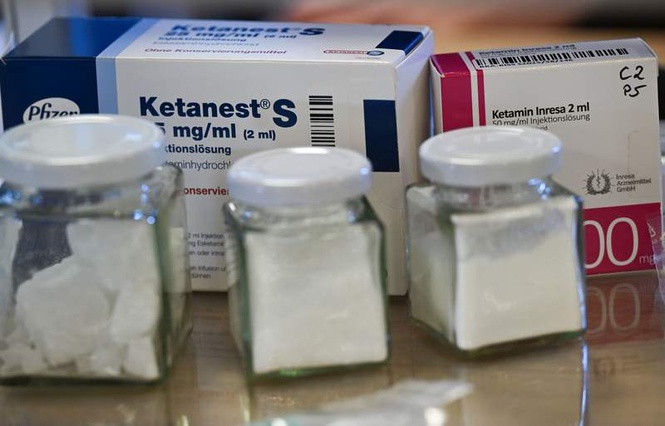
Germany has become one of Europe's main transit hubs for illegal ketamine, second only to the Netherlands, according to a United Nations report that highlighted rising use of the drug across the region.
The World Drug Report, published on Friday by the UN Office on Drugs and Crime (UNODC), was based on data from 2020 to 2024.
Ketamine is legally used as an anaesthetic and painkiller but is also widely consumed as a recreational drug, often in combination with other substances. Most of the ketamine reaching Europe's illicit market is diverted from legal production channels in India, the report said.
UNODC noted that ketamine in Germany is regulated under pharmaceutical legislation rather than the country's stricter narcotics law, a framework also used by some other European countries.
The report said demand for treatment with ketamine had increased across Europe in recent years. At the same time, the number of ketamine-related deaths in Germany had risen. The drug is sold through social media, among other channels, and is cheaper than cocaine, it added.
Research by Britain's University of Exeter has linked ketamine dependence to physical health problems, including bladder damage as well as mental health disorders. Mixing ketamine with other drugs can lead to life-threatening conditions such as respiratory failure or loss of consciousness.
Globally, ketamine remains less widely used than cannabis, amphetamines or cocaine. UNODC estimates that around 331 million people used drugs worldwide in 2024, up about 30% from a decade earlier.