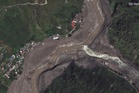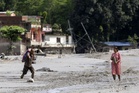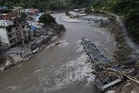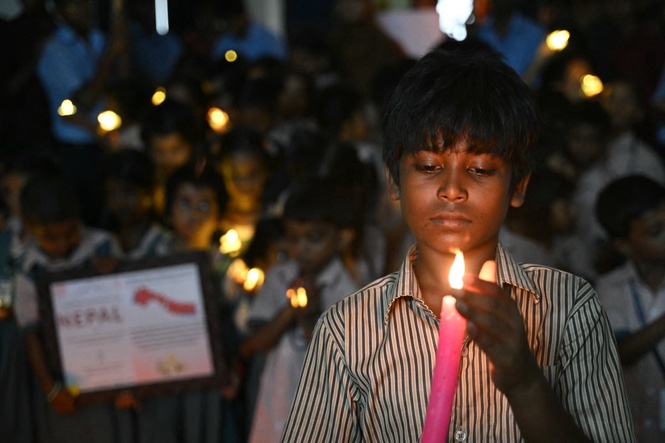
A wall of ice, rock and mud tore through Nepal and Tibet this week, killing hundreds of people. Scientists believe the disaster began when part of a glacier and the mountainside beneath it collapsed. Though it is unclear what set it off, it has raised a bigger question: are the Himalayas becoming a more dangerous place to live?
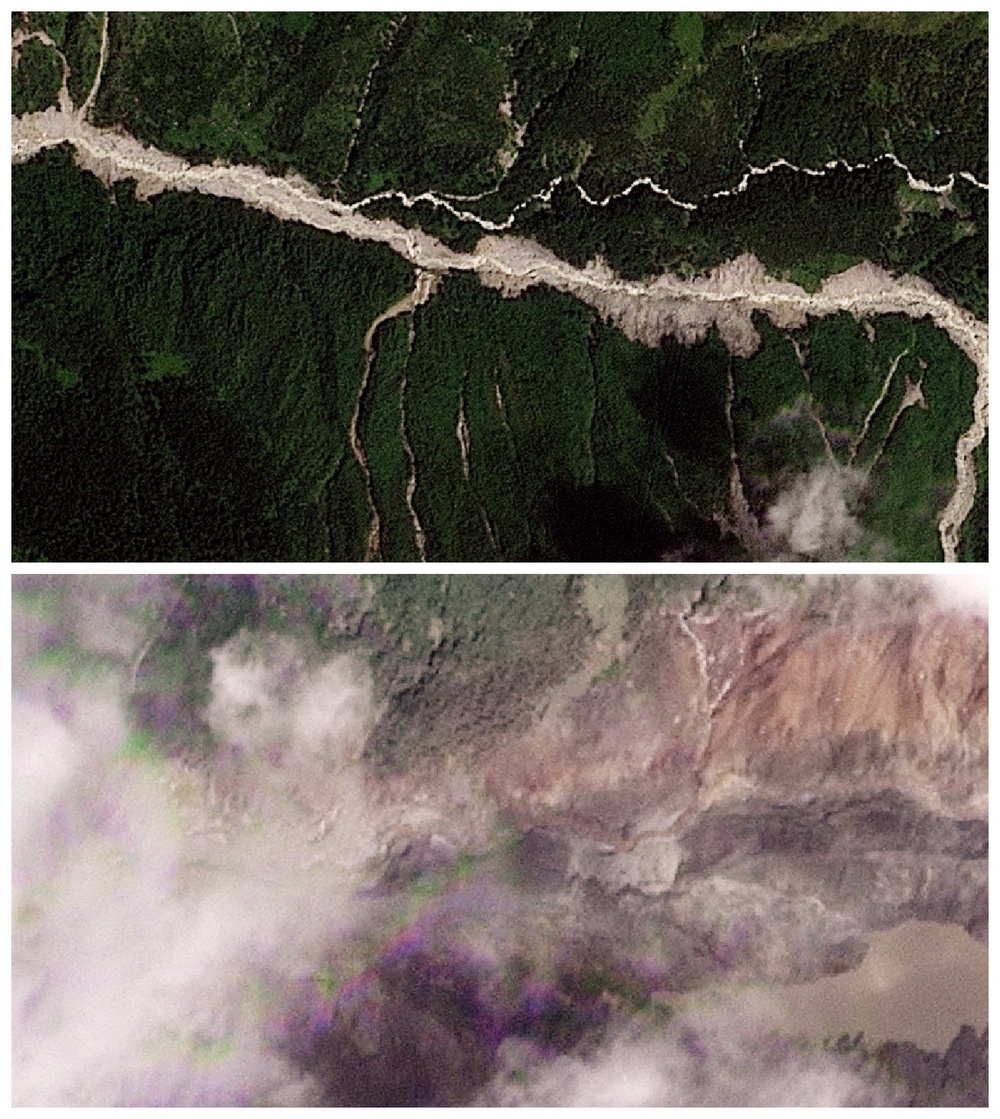
High on Langtang Lirung, a 7,000m mountain on the Nepal-Tibet border, part of the mountainside gave way and took a section of glacier with it.
The resulting mass of ice, rock and debris crashed into the Lhende Khola river below and grew as it travelled, picking up sediment and water before surging downstream into Nepal's Rasuwa, Nuwakot and Dhading districts.
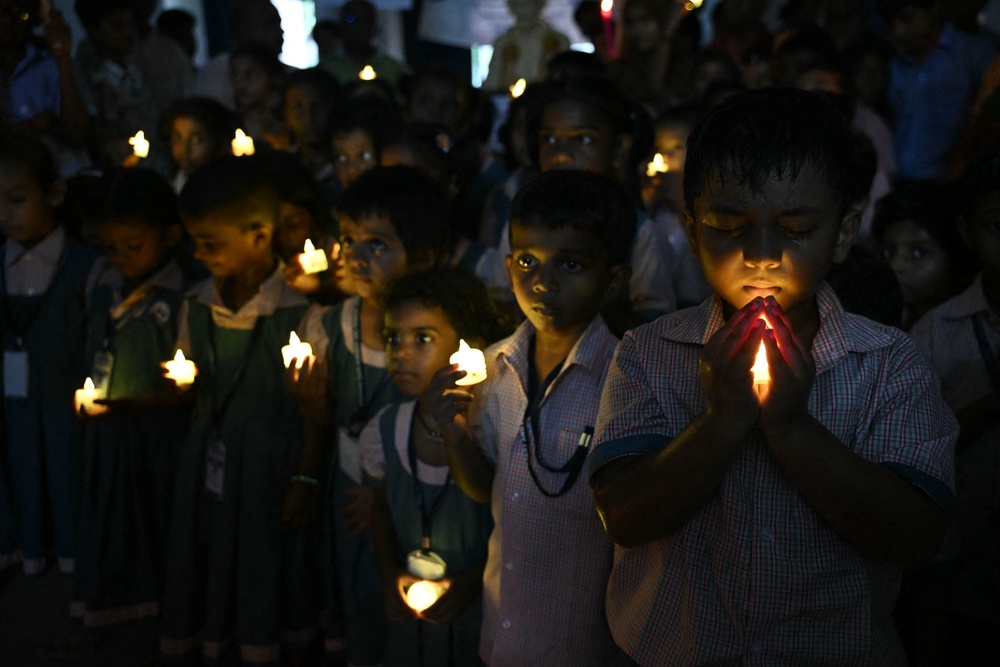
A lake formed by the initial landslide has since begun overflowing, triggering fresh panic in communities already devastated by Wednesday's disaster. The death toll has risen to 538 in Nepal and five in Tibet, authorities say.
The Red Cross says more than 90,000 people had been directly affected and were in urgent need of help, and warned the crisis was "still unfolding" as officials braced for further flooding.
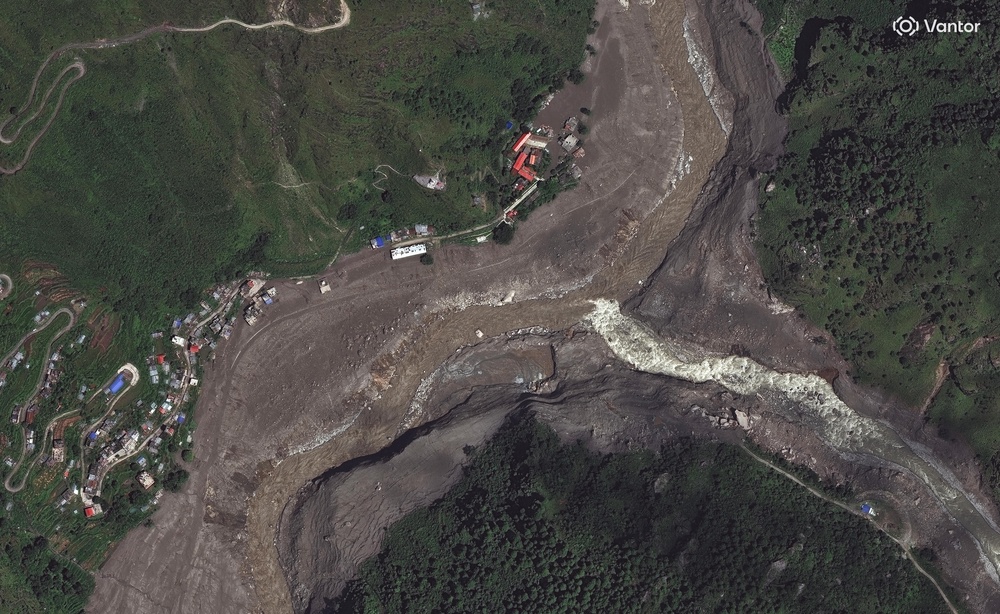
Jeffrey Kargel, a senior scientist at the Planetary Science Institute, calculated that the flow covered its first 22km at an average speed of 193kmph, reaching the valley floor in under seven minutes.
Rivers in the affected valleys are reported to have risen by as much as nine metres in half an hour.
This is not the first time disaster has struck this exact stretch of the Himalayas.
A flood in July last year killed nine people and swept away the same border bridge, after heavy rain sent the Lhende and Bhote Koshi rivers over their banks.
The wider Langtang region was also badly damaged by an avalanche during Nepal's 2015 earthquake, which destroyed the village of Langtang itself.
The mountains around Langtang are warming at an exceptional rate, and that warming is already reshaping the region in ways scientists say make disasters like this one more likely. Land above 4,000m in the Langtang catchment has warmed at roughly five times the global average since the 1960s, according to research led by Bethan Davies, chair in glaciology at Newcastle University, with that trend sharpening further over the past decade.
Part of the reason, she tells The Independent, is that as snow and ice disappear, they expose darker rock underneath, which absorbs more heat from the sun and warms the mountain even faster.
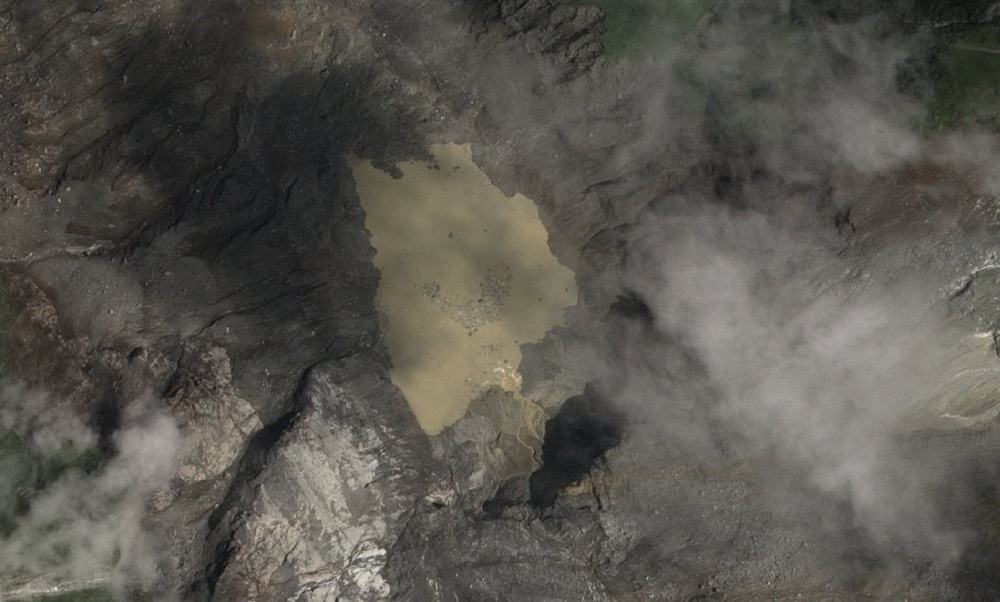
Across the wider Himalayan region, the rate of ice loss from glaciers has doubled since 2000, according to Ella Gilbert, a climate scientist at the British Antarctic Survey.
"We know that climate heating is destabilising glaciers in the Himalaya," she says, "when glacier stability is undermined, sudden failures can occur, leading to horrible incidents like this one."
Dr Davies points to a related process: the thawing of permafrost, ground that normally stays frozen year-round and helps hold steep mountainsides together.
"Permafrost is like the 'glue' that holds rocks together," she says.
As that ground warms and the glue melts, steep slopes like the one above Langtang Lirung become progressively less stable.
The Intergovernmental Panel on Climate Change has said, with high confidence, that declining glaciers, snow and permafrost are already destabilising mountain regions worldwide, and that events like this week's collapse are likely to become more frequent as the climate continues to warm.
However, experts are not connecting this disaster to climate change yet.
"We don't know exactly what happened here," Dr Gilbert says, "but it's likely that some combination of these factors was at play, and we know that all of these are enhanced by climate change."
Asked whether the unusually warm, dry conditions reported in the area this week fitted the pattern typically seen before a major glacier collapse, Dr Gilbert says: "I've seen reports that temperatures were unusually warm and snow cover was low, which is consistent with what happens before a major calving or collapse event."
Why some communities had time to escape and others did not has become a central question of its own. Hannah Cloke, professor of meteorology and climate science at the University of Reading, says the disaster unfolded across three distinct zones, each with different lessons for early warning.
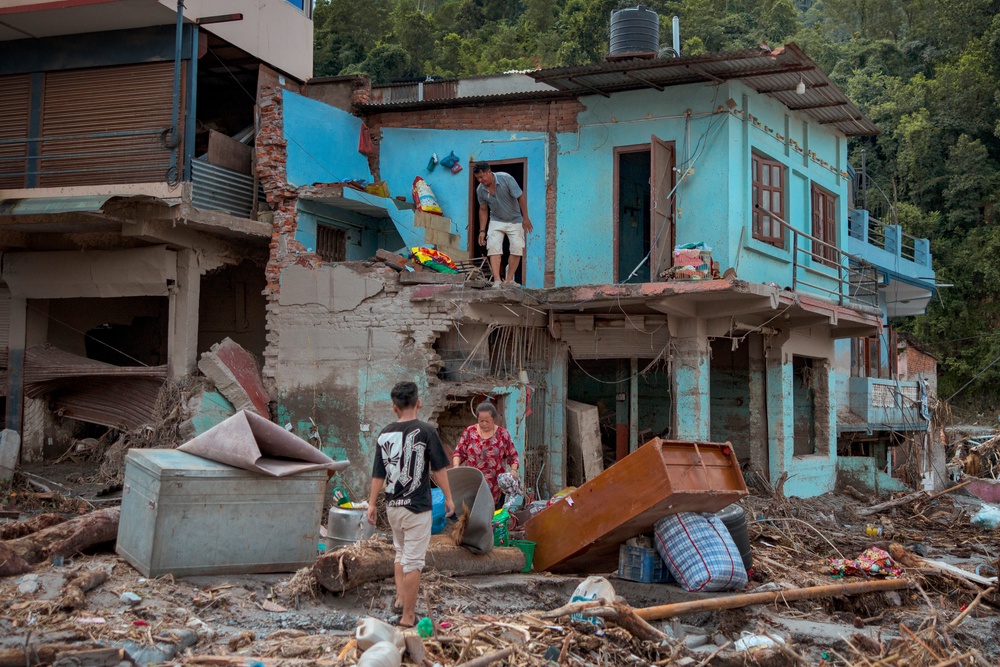
Closest to the source, floodwaters arrived within minutes, leaving little chance for any warning to matter.
Further downstream, by contrast, Nepal's forecasting authorities issued warnings several hours before the flood arrived, which officials say helped save many hundreds of lives.
The hardest zone lay in between, she says: a flood that struck under clear skies, with no rain to signal danger.
"For many, a flood is something that follows a storm," Dr Cloke says. "When a warning describes a threat that does not match people's mental picture of danger, it can be easy to dismiss."
The physical unpredictability of the disaster also compounded that problem.
Fatima Pillosu, a hydrometeorologist at the University of Reading, said the debris blocking the river after the initial collapse formed what is known as a barrier lake, a natural dam with no engineered structure and no way to release pressure safely.
"Unlike an engineered dam, this barrier has no spillway and no solid core," she says.
"The exact moment of failure cannot be predicted, because it depends on the internal structure of the dam." That is largely why the same lake now threatens a second wave of flooding, days after the first.
Jeff Da Costa, a researcher in hydrometeorological hazards at the University of Reading, says the risk was worsened by a known gap in cross-border cooperation. After last year's flood on the same river, he said, Nepal’s officials reported receiving no advance warning from China and said there was no formal mechanism for sharing that kind of information across the border.
Nepal subsequently committed to strengthening that coordination, though it remains unclear how much had changed by the time this week's disaster struck.
"This is a transboundary river system, and information about the barrier lake is being shared between China and Nepal," he says.
"Observations upstream can give people downstream valuable time, but they become useful when they are connected to modelling, warnings and practical decisions on the ground."
Beyond what caused the collapse, the disaster has reopened a longer-running argument about climate justice.
Nepal produces less than 0.1 per cent of the greenhouse gas emissions driving global warming, yet it is ranked as one of the most vulnerable countries in the world to climate-related disasters.
"This is the reality: those who have contributed the least are paying the highest price, especially with their lives," Savio Carvalho, of the campaign group 350.org, says.
He says wealthier countries had a duty to help fund disaster preparedness before a crisis hits, not just respond afterwards, pointing to the well-resourced early warning systems used in the Alps as an example of what Nepal lacks.
"If only Nepal had good technology, like the Swiss or Italians do for the Alps, they could have had better forecasting mechanisms," he said. He also called for taxes on the windfall profits of fossil fuel companies to help pay for the response.
Carvalho says the economic damage would reach far beyond the disaster zone itself.
Rasuwa sits on a major trekking and pilgrimage route, and tourism supports large numbers of people in Nepal, work that comes with none of the safety net available to workers in wealthier countries.
"Most of these communities, unlike many parts of the global north, have no state protections like unemployment allowances," he said. The damage extends well beyond tourism too, he added, pointing to destroyed hydropower plants, bridges, power lines and roads.
Existing international funds meant to help countries like Nepal cope with disasters, he said, remain inadequate and hard to access, often taking months or years to arrive, and sometimes coming as loans that leave poorer countries deeper in debt rather than grants.
Sudarshan Neupane, WaterAid Nepal's country director who grew up in Rasuwa district, says the damage to water and sanitation systems would need urgent attention during the recovery to protect public health and stop disease spreading through communities already reeling from the disaster.
WaterAid has called on the UK government to restore its aid budget to 0.7 per cent of national income to support the response.
"Having grown up in Rasuwa district, one of the hardest hit regions in the recent flash floods in Nepal, it is truly devastating to see so many families facing unimaginable loss, displacement and uncertainty," he says.
Read MoreSatellite images show scale of devastation from Nepal floods
Nepal flash floods mapped: Where deadly floods hit along Tibet border
What triggered Nepal flash floods? And why are experts worried about a second flood?
Growing proportion of deaths associated with hottest days, figures suggest
Warning over extreme weather and food prices as ‘unprecedented’ El Nino builds