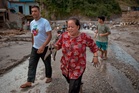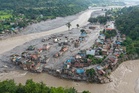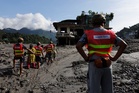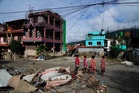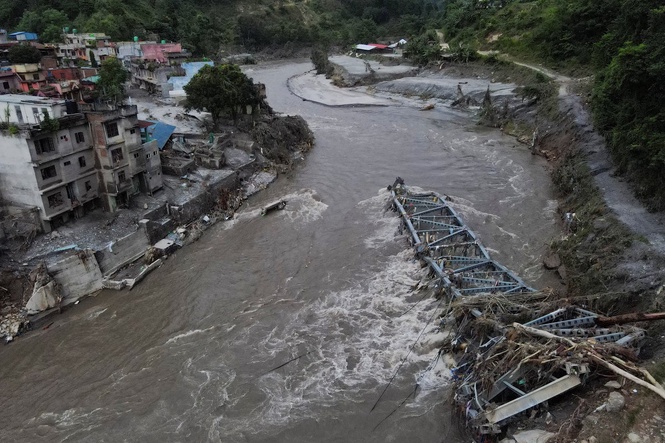
The number of people missing in the flood-hit Himalayas doubled on Friday as desperate rescue operations resumed and the death toll swelled past 500.
The Nepalese disaster authority said that there were still 1,924 people unaccounted for, including hundreds of foreigners, after suspending search missions for three vital hours earlier in the day due to the risks from an overflowing barrier lake formed during Wednesday’s flash floods.
Chinese officials said their search missions had reached a “critical stage” as they pulled back from a “landslide-dammed lake” near the border earlier in the day, warning of the ongoing risk of a potentially devastating breach.
A Nepalese official said on Friday that flood risks will remain until two lakes upstream of the flood zone have fully drained, even as 15,000 security personnel restarted search and rescue operations.
The complications have hampered rescue efforts, with teams using helicopters to look for survivors and drop emergency supplies to thousands of people cut off in towns.
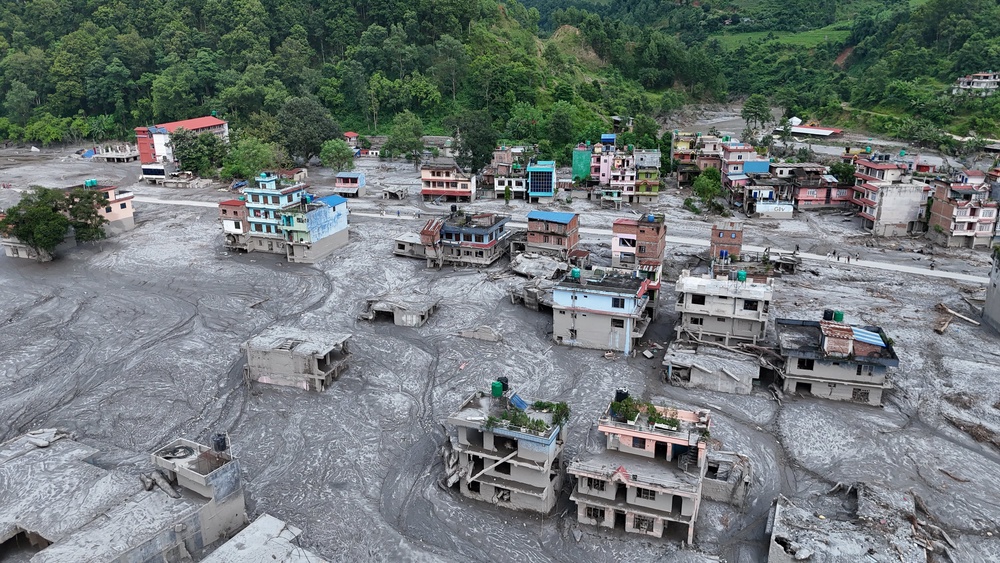
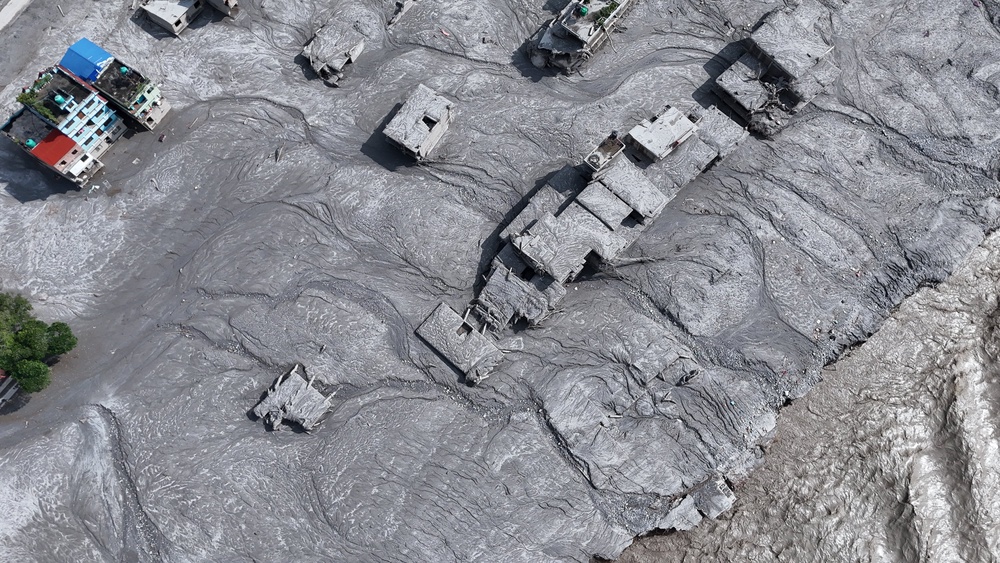
Nepal estimates that at least 579 people have been killed since catastrophic floods tore through villages on the border on Wednesday, prompted by a glacier collapsing in the Himalayan mountains.
There are 33 British nationals among the 575 foreigners still missing in the wake of the floods, according to the Nepalese authorities.
Pramod Poudel, from Uckfield in East Sussex, told the BBC that he had not heard from his mother, wife, brother or uncle since the flood hit on Wednesday.
“It’s a very, very difficult time for me and for my family and my country at this moment, but obviously I have to go and see what’s happening there,” he said.
Nepal’s armed forces and police teams were also in a race against time to rescue 100 people trapped in a tunnel at a hydropower plant for almost two days.
The military dispatched helicopters to the Trishuli 3A hydropower project in Rasuwa district to reach the workers trapped inside the tunnel since Wednesday.
Nepal Army spokesperson, Raja Ram Basnet, told the AFP news agency that two helicopters had been dispatched but it was “tough to even locate the entry points of the tunnel”.
More than 90,000 people are estimated to have been affected by the floods, the Red Cross said, adding that trucks with relief supplies were blocked after the barrier lake broke its banks.
But Nepal’s foreign ministry said on Friday that it would be managing the rescue efforts itself, declining the offer of support from other countries.
“The offer for help is natural. Our security agencies are doing the search-and-rescue operation. For now we don’t require such help,” Lok Bahadur Chhetri, spokesperson for the foreign ministry, said on Friday.
The Kathmandu Post reported that India, China, the United States, Britain, Japan, South Korea, Sri Lanka and Bangladesh had asked the government to allow their search-and-rescue teams to assist in the operation.
Dinesh Bhattarai, a former Nepali ambassador to the United Nations in Geneva, said the government’s reluctance to accept foreign search-and-rescue teams may be linked to the location of the flood-hit Rasuwa district, which borders China’s Tibet, one of Beijing’s most sensitive territorial issues.
Nepal has long walked a tightrope in diplomatic relations with its much bigger neighbour. But Nepalese foreign ministry spokesperson Chhetri said the decision had nothing to do with China’s sensitivity but was because Nepal’s own rescue teams were already handling the operation.
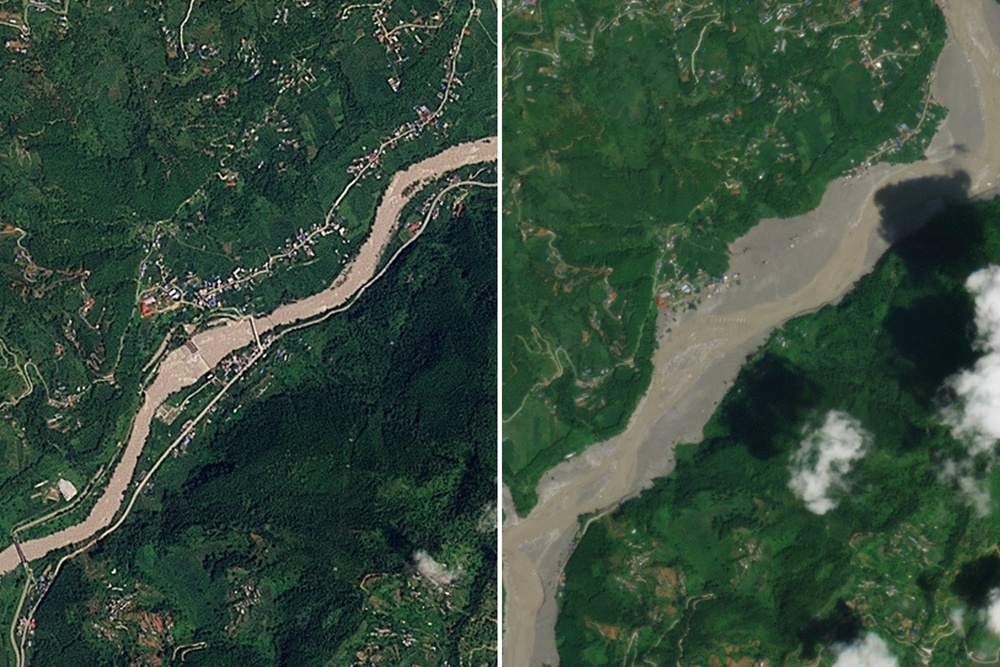
Authorities on both sides of the border were monitoring risks from an overflowing lake caused by the floods as water continued to collect and rise.
On Friday, the lake's reservoir had topped 2.5 million cubic metres of water, up from the estimated 1.5-2 million cubic metres recorded a day earlier, before overflowing into the Lhende Khola river and then into the Trishuli, authorities and witnesses in Nepal said.
Chinese state broadcaster said that rescue operations had resumed by noon as the risk posed by the upstream lake was deemed “manageable”.
Nepal's army spokesperson Raja Ram Basnet told Reuters that rescue operations had been temporarily halted after the flood alert, but it was found that the rise in the water level was only by about two feet.
Read MoreBefore-and-after photos offer more clues into cause of Nepal floods
Nepal floods: Why emergency warnings weren’t enough to save victims and villages
Nepal rescuers race to reach 100 trapped in hydropower tunnel after flash floods
Elderly man arrested for overstaying 15-day tourist visa by 26 years
Glacier collapse that killed hundreds in Nepal was decades in making, scientists say
Singapore Airlines honours crew members who saved passenger after his heart stopped