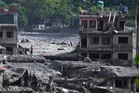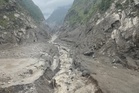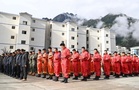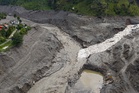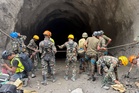
WE see, in newspapers, on TV, and online, the deadly floods ravaging villages in Nepal. The flooding on Aug. 26 killed hundreds of people in Nepal and Tibet. Hundreds more are missing, including foreigners and pilgrims. The flooding was caused by Himalayan glaciers that are melting fast as planet heats, and that probably makes us feel safe: there are no glaciers in the Philippines
Yes, the floods in Nepal are triggered by the sudden collapse of glaciers along the Nepal-China border. What begins as melting ice in the Himalayas cascades downstream, sweeping away homes, livelihoods, and lives. As rescuers race to find thousands missing after torrential flooding along the border with China, Nepal’s Foreign Minister Shisir Khanal and Executive Secretary of UN Climate Change Simon Stiell have warned of the growing threat from global warming in the Himalayas.
In a collaborative move to deal with the dangers facing the Himalayan ecosystem, Minister Shisir Khanal said he had spoken by phone with Chinese Foreign Minister Wang Yi, and agreed to share “real-time hydrological data.”
Wang, in a Chinese foreign ministry statement, likewise assured that Beijing in turn had “shared crucial information with Nepal, including disaster area imagery, satellite and hydrological data, as well as early warnings about upstream barrier lakes.”
Wang added that “China and Nepal are bound by mountains and rivers, sharing a common destiny.”
Khanal earlier told reporters that Nepal needed greater research to “understand the changing dynamics of the Himalayan ecosystem” and the risks they pose not only “to Nepal and the downstream community, but also to our neighbor China, as well.”
Yes, there are no glaciers in the Philippines. But Science Secretary Renato Solidum Jr., who heads the Department of Science and Technology (DOST), reminds us that while a glacier collapse is unlikely here, the Philippines has a history of deadly flash floods. We have extreme and prolonged rainfall from severe typhoons that acts as main trigger for sudden flash floods. According to the University of the Philippines Resilience Institute (UPRI-NOAH), more than a thousand areas in the Philippines are identified as potential sites for dangerous debris flows.
So no, we are not safe. Climate change knows no boundaries, so mitigating it involves action by the international community.
Nepalese and Chinese foreign ministers sharing hydrological data, and demonstrating how cooperation and transparency can save lives, gives us a glimmer of hope and a great example. Their collaboration underscores a vital truth — climate resilience is not the work of one nation alone, but of a global community bound together by shared vulnerability.
The lesson from Nepal also speaks to industries whose reach is global. This includes the shipping industry. Responsible for nearly three percent of global greenhouse gas emissions, shipping, while being a contributor to climate change, is a potential leader as well in its mitigation. The industry is moving decisively to decarbonize fleets, invest in alternative fuels such as green ammonia and hydrogen, and adopt wind-assisted propulsion. Beyond emissions, ships themselves are floating observatories. By sharing oceanographic and meteorological data, they can strengthen global disaster prediction systems, just like Nepal and China sharing hydrological information. Ports must also adapt — building infrastructure that resists storm surges and flooding, and modeling climate-proofing for coastal communities. And when disaster strikes, shipping networks can deliver aid rapidly, turning global trade routes into lifelines.
The challenge for us is equally urgent. With extremely heavy rainfall and prolonged typhoons acting as triggers for floods and landslides, preparedness begins at the community level. Villages can adopt early warning systems and conduct disaster drills, ensuring preparedness when storms arrive. Filipino seafarers — who make up one of the largest maritime workforces in the world — carry a unique responsibility. Onboard ships across the globe, they can champion greener practices, from fuel efficiency to waste reduction, becoming advocates for sustainability within the industry. Overseas Filipinos, through diaspora networks, can amplify these efforts, pressing for reforms and sharing experiences that highlight the urgency of climate action.
At home, the Philippines’ natural defenses lie not in glaciers but in coastlines. Mangrove restoration and sustainable fisheries provide buffers against storm surges, protecting both ecosystems and communities. On the regional stage, the Philippines can strengthen Asean cooperation, sharing rainfall, typhoon, and flood data to build collective resilience. Just as Nepal and China demonstrated, information shared across borders can mean the difference between catastrophe and survival.
The floods in Nepal remind us that climate change is a shared challenge, demanding shared solutions. The shipping industry, with its global reach, and Filipinos, with their maritime heritage, stand at the forefront of this struggle. From the Himalayas to the Pacific, cooperation and responsibility can transform vulnerability into resilience. The task is immense, but so too is the opportunity: to build a world where the rising waters of climate change are met not with despair, but with solidarity and action.