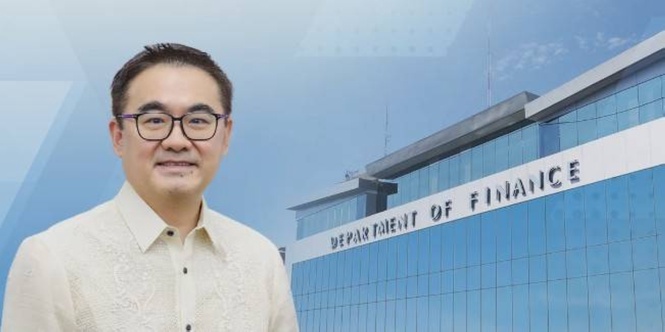
FINANCE Secretary Frederick Go has urged multilateral development banks to expand access to flexible financing for economies transitioning to upper-middle-income status amid countries’ evolving development needs.
Speaking at the International Monetary Fund’s (IMF) Managing Director’s Strategic Dialogue with authorities from the Association of Southeast Asian Nations (Asean) in Thailand, Go stressed the need for financing arrangements that would help transitioning economies sustain development momentum as their financial requirements change.
“The Philippines highlights the importance of a modernized partnership with the IMF and the World Bank,” Go said, adding that flexible financing “should expand access to flexible financing solutions for transitioning nations.”
The country has recently been upgraded to an upper-middle-income country (UMIC) category on July 1 after gross national income per capita reached $4,850 in 2025, above the $4,636 threshold.
The trade-off of attaining upper-middle-income status is losing access to concessional loans, subsidized financing and grants from development partners such as the World Bank and the Asian Development Bank.
The finance chief said blended finance and enhanced credit guarantees could help mobilize private capital, reduce investment risks and lower financing costs, providing countries with additional means to support economic development.
Blended finance combines public or development funding with private capital to help finance projects that may otherwise struggle to attract investment because of perceived risks or financing costs.
Credit guarantees, meanwhile, can help reduce lenders’ exposure to potential losses and encourage financing for eligible borrowers or projects.
Data from the Department of Economy, Planning and Development showed that the total value of the Philippines’ active ODA-funded projects grew by 6.0 percent to $39.6 billion in 2024 from $37.3 billion in 2023, spread across 426 loans and grants.
Loan commitments of infrastructure projects drove the increase, with nine of the 17 fresh loans worth $8.2 billion supporting the administration’s Infrastructure Flagship Projects.
Go said the Department of Finance is pursuing fiscal consolidation under the updated Medium-Term Fiscal Framework, which aims to expand fiscal space, optimize public spending and safeguard funding for high-impact public investments.
“Our fiscal discipline ensures we safeguard and fully fund high-impact public investments,” Go said. “We are focused on building economic foundations for long-term growth.”
He cited the Luzon Economic Corridor as one of the strategic corridors where the government is channeling capital to strengthen the Philippines’ position in global value chains.
The corridor is part of the country’s broader effort to support investment and improve its integration into international production and supply networks.
Go also invited regional finance leaders and development partners to Manila for the 49th Asean Summit in November, where the Philippines will work with its counterparts to advance shared regional priorities.