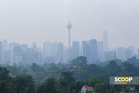
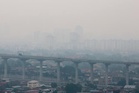
KUALA LUMPUR: The government is considering setting up a dedicated fund to help Malaysians whose livelihoods are affected by transboundary haze, with gig workers among those who could potentially benefit from financial assistance.
Natural Resources and Environmental Sustainability Minister Datuk Seri Arthur Joseph Kurup said the proposal, including the possibility of providing financial aid to affected individuals, would require further assessment by his ministry and the relevant agencies.
He said the government would need to evaluate existing assistance programmes, the needs of affected communities and the potential financial implications before deciding whether to introduce additional support.
Arthur was responding during his winding-up speech on Budget 2027 for his ministry in the Dewan Rakyat yesterday.
He said Malaysia was also prepared to explore international legal avenues to seek compensation for damage caused by transboundary haze. However, the existing Asean Agreement on Transboundary Haze Pollution does not contain a specific mechanism for pursuing such claims.
He added that a comprehensive assessment of the haze’s effects on public health, productivity and economic activity would be necessary before the government could determine its next course of action.
“The government is examining appropriate mechanisms to protect the interests of affected citizens and strengthen the principle that polluters should bear responsibility,” he said.
Arthur was responding to Bagan MP Lim Guan Eng, who called for a permanent Asean task force to address recurring transboundary haze, backed by an emergency response team operating throughout the year.
Lim cited what he described as worsening forest and land fires in Indonesia, claiming that about 300,000ha had been affected this year, representing a 70% increase compared with 2023.
On proposals to introduce legislation targeting companies responsible for cross-border pollution, Arthur said his ministry had repeatedly assessed the feasibility of enacting a Transboundary Haze Pollution Act, modelled on legislation introduced by a neighbouring country.
However, he said implementing such legislation would present considerable challenges, including establishing legal jurisdiction, obtaining and verifying evidence from overseas, determining corporate liability and respecting the sovereignty of other countries.
Arthur also said there was no conclusive evidence linking plantation companies associated with Malaysian interests to forest and land fires in Indonesia, despite recent allegations involving 21 companies.
He said his ministry, together with the Plantation and Commodities Ministry, had examined the allegations but had not established sufficient evidence of wrongdoing.
The allegations followed the publication of a report titled Who are Behind the Fires by Indonesian environmental group Wahana Lingkungan Hidup Indonesia (Walhi). The report linked 21 companies with Malaysian business connections to forest and land fires recorded between January and September this year.
Arthur said a proposal to restrict financing for companies found responsible for the fires would also need to be examined carefully, particularly in relation to its legal basis, evidentiary requirements, jurisdiction and potential consequences for the financial sector.
He added that Malaysia would continue to strengthen bilateral and Asean cooperation on enforcement while exploring measures to ensure that parties proven responsible for pollution were held accountable.