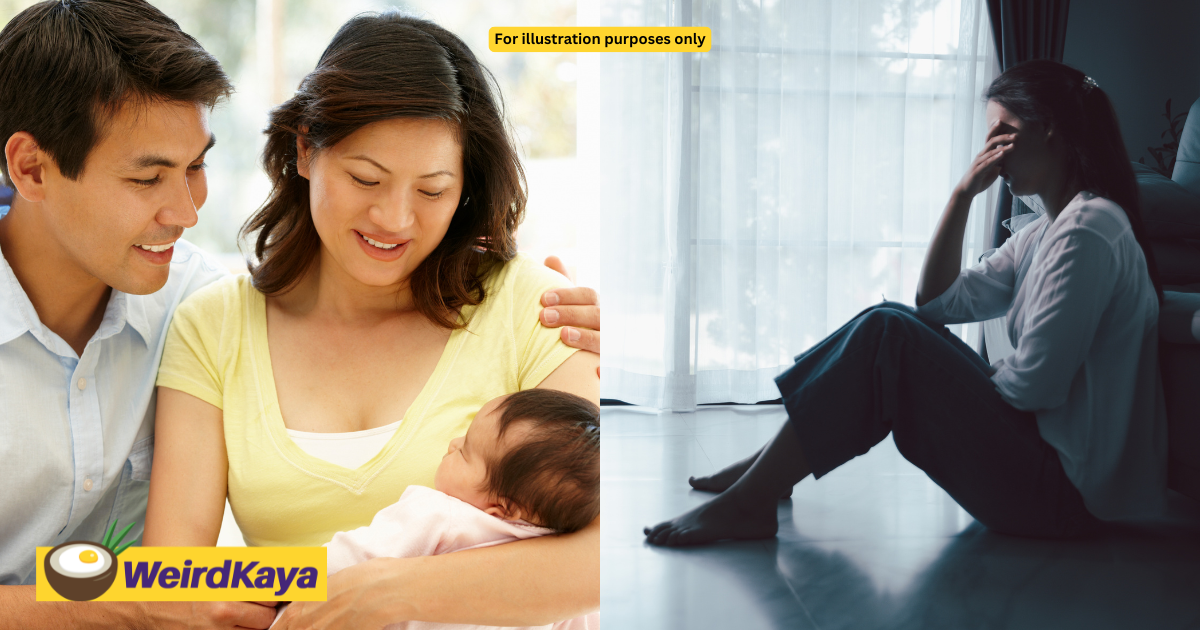
According to XUAN解忧树洞, a young adult says growing up has completely changed the way they view their parents, after years of believing that their father was the villain and their mother was the innocent victim.
As a child, the writer remembers their father constantly suspecting their mother of having affairs and inappropriate relationships with other men. At one point, even a relative was suspected.
Meanwhile, their grandfather would frequently scold the children and use hurtful words to insult their mother. Their grandmother had also allegedly taken some of their mother's belongings without permission.
Despite everything, the mother would still return from work to care for the grandmother whenever she became ill.
The writer also recalls having a negative impression of their uncles and their families.
One day during primary school, the grandfather once again verbally insulted the mother. Unable to tolerate it any longer, the child confronted him and an argument broke out.
The mother, who was preparing dinner at the time, eventually lost her patience. She grabbed her car keys and left the house, intending to get away from the family.
Seeing their mother leave, the children followed her.
From that day onwards, the children lived with their mother.
They knew raising four children alone was difficult, and this gradually changed their behaviour. The children became more obedient and responsible because they understood how hard their mother was working to support them.
However, the mother would often remind them about how difficult it was to raise them and how little money she had. She also told them that if they had not been so young at the time, she would have divorced their father long ago.
More than a decade later, the parents still have not divorced. Instead, they have remained separated for years.
For a period after leaving home, the children stopped visiting their grandfather and had little contact with their father.
Eventually, however, the mother began telling them that their father and grandfather were still family and that they should visit them.
The children gradually started spending weekends at their father's home before visiting their grandfather together the following day.
Yet those visits remained uncomfortable, particularly when it came to the grandfather.
Whenever they were about to leave, he would sometimes grab the writer's hand, smell it and repeatedly apologise. He would behave similarly towards the mother.
Although he was a family elder, the gesture made the writer extremely uncomfortable.
As the children grew older, the mother's narrative also began to change.
She started telling them that their father actually loved and cared about them, despite saying that she herself no longer loved him.
But the writer began questioning whether that was really true.
Their father had used the children's childhood savings after experiencing business problems, cancelled their insurance policies and left them without coverage for a period of time.
There was also an incident in which the mother, during an intense argument, chased their father with a kitchen knife, while he reportedly pulled the children in front of him as a shield.
There were many other incidents that the writer no longer wishes to revisit.
Looking back, however, the writer has also begun questioning the mother's actions.
The most obvious example was the incident involving the knife. Regardless of the circumstances, the writer now recognises that exposing children to such a dangerous situation was unacceptable.
The question of whether the mother had ever been unfaithful also remains unanswered.
As a child, the writer remembers that she was particularly close to a young male colleague. They often talked and confided in each other. The man would sometimes take the children out for meals and even offered to bring them to an amusement park.
At the time, the writer strongly disliked him and refused to accept him.
Today, however, the writer admits there is still no way of knowing what the true nature of that relationship was.
Another source of frustration is the mother's repeated attempts to portray the father as a loving parent.
On one occasion, she even tried to arrange a birthday meal with the father without first asking the writer.
That moment made the writer realise how often their own feelings had been overlooked.
For years, the children had been caught between their parents — siding with their mother when they were young, and later being encouraged to understand their father.
Yet they rarely felt anyone had asked what they actually wanted.
Now, as an adult, the writer has become increasingly impatient with the mother's version of events.
Perhaps, they realise, this is not simply rebellion or becoming “difficult”.
Perhaps growing up has finally allowed them to see that family conflicts are rarely completely black and white.
Their father was not as terrible as they once believed.
Their mother was not as perfect or innocent as they once thought.
And the story they had spent years believing may never have been the complete truth.
For the first time, the writer is learning to look at the world through their own eyes rather than seeing it through either parent's version of the past.
Jovy Jing (ndreagoh@gmail.com) is a content creator under the Newswav Creator programme, where you get to express yourself, be a citizen journalist, and at the same time monetize your content & reach millions of users on Newswav. Log in to creator.newswav.com and become a Newswav Creator now!
The User Content (as defined on Newswav Terms of Use) above including the views expressed and media (pictures, videos, citations etc) were submitted & posted by the author. Newswav is solely an aggregation platform that hosts the User Content. If you have any questions about the content, copyright or other issues of the work, please contact creator@newswav.com.