.png)
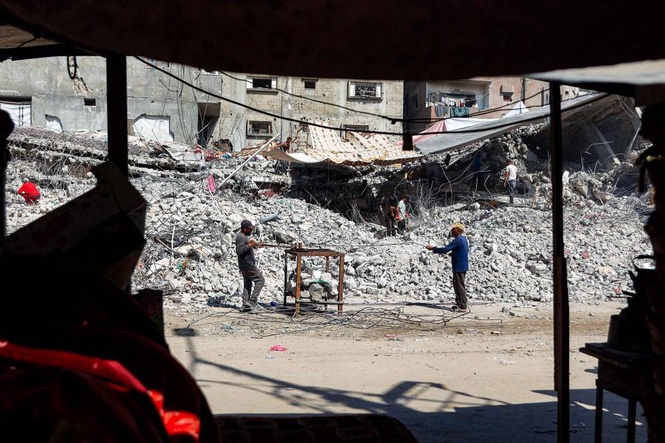
KUALA LUMPUR - International solidarity with the Palestinian people must move beyond demonstrations and statements and be translated into tangible action to pressure Israel to halt its settlement expansion in the occupied Palestinian territory, said Palestinian Affairs analyst Osama Nazzal.
Speaking during a live video interview from Palestine on Bernama TV's Bernama World recently, Nazzal said the international community must act on its stated position against Israeli settlements before the situation becomes more catastrophic.
He was speaking on the topic "Palestine Beyond The Headlines: International Solidarity With The Palestinian People."
"It is the time for this position to translate into action on the ground," he said, referring to the international position that regards Israeli settlements in the occupied Palestinian territory as illegal and illegitimate.
Nazzal said international governments and parliaments should increase pressure through the United Nations and other international mechanisms to compel Israel to halt what he described as its "colonial project" in the occupied Palestinian territory.
"If the international community does not take tangible measures to force Israel to stop this colonial project, I think it is going to be more catastrophic and more disastrous," he said.
He said the international community should respond to demands to end the occupation and establish a Palestinian state on the land occupied in 1967, stressing that international positions should not remain confined to declarations.
Nazzal also warned about the continuing expansion of Israeli settlements in the occupied West Bank, saying the territory was being fragmented into smaller enclaves and Palestinian communities increasingly surrounded by settlements and Israeli military forces.
"Cantonising, dividing the occupied Palestinian territory into small enclaves, keeping the Palestinian citizens in cages surrounded by the Israeli settlements and by the Israeli military,” he said.
He said the settlement expansion had reached a critical point, warning that Israel was seeking to increase the number of settlers in the occupied West Bank to more than one million, compared with about 800,000 currently, according to his assessment.
Nazzal said the growing international solidarity movement had helped strengthen pressure on governments and international institutions, with the movement now involving universities, trade unions, non-governmental organisations (NGOs), academics and wider civil society.
"We are talking about a pan-solidarity movement, and it is getting more structured, and it is getting more developed,” he said, adding that the movement had demonstrated its potential to influence political developments.
He also linked international public mobilisation to developments at international legal institutions, saying millions of people had called on their governments and parliaments to take positions on Palestinian rights and put pressure on Israel.
Nazzal said the international community must now build on those developments, stressing that Palestinian rights and the issue of ending the occupation required continued international pressure and concrete measures.
Turning to Malaysia's role, Nazzal described Malaysia and Muslim countries as the "strategic depth” of the Palestinian people, citing their financial and diplomatic support as important in helping Palestinians remain resilient.
"Malaysia and the Muslim world have been providing forms of support for the Palestinian people, whether the financial support that comes directly to the Palestinians or the support at the international chambers,” he said.
He also praised successive Malaysian governments for maintaining strong positions in support of Palestinian rights and against the Israeli occupation. - BERNAMA