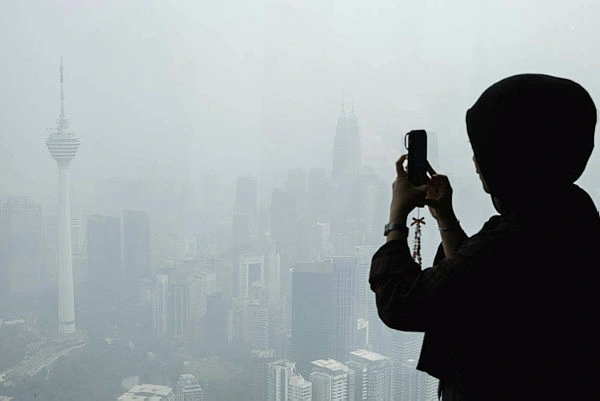
SHAH ALAM – Transboundary haze continues to recur every year, affecting air quality and the well-being of Malaysians.
Despite longstanding regional cooperation, haze caused by forest and peatland fires in Indonesia continues to affect the region, raising questions about the effectiveness of prevention, enforcement and follow-up measures.
After years of facing the same problem, the question now is how far Malaysia can use diplomatic and legal channels to hold Indonesia accountable.
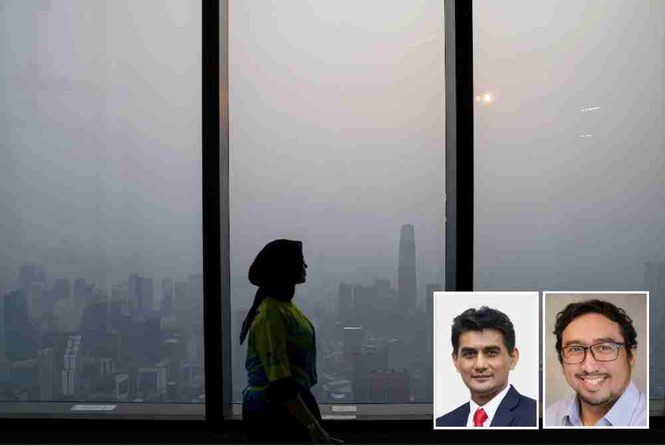
Universiti Putra Malaysia (UPM) environmental and sustainability expert Associate Professor Dr Mohd Yusoff Ishak said the shortcomings in addressing haze were not solely due to inadequate policies, but also involved commitment, implementation on the ground and the ability to identify those responsible and take action.
He said Malaysia should move beyond merely voicing concerns and instead pursue clear demands, supported by scientific data and specific implementation deadlines, through bilateral channels and Asean.
“Besides that, companies, investors, financial institutions and authorities need to be involved through legitimate accountability mechanisms, rather than blaming the Indonesian people as a whole.
“Malaysian investors should take the lead in providing evidence that their plantations do not practise open burning. This is in line with the sustainability approach that has become a cornerstone of the region’s palm oil industry.
“In addition, a public science diplomacy approach should be established in collaboration with citizen scientists, comprising concerned members of the public from both countries, to build fact-based public pressure.
“The spirit of shared regional ties and Asean should be a strength in this diplomatic effort, with the aim of finding solutions to the problem rather than using it as an excuse to avoid accountability,” he told Sinar Harian.
He said the Asean Agreement on Transboundary Haze Pollution (AATHP) provided a binding framework for cooperation, but its dispute resolution mechanisms depended on negotiations and consultations.
“There is no effective or deterrent automatic penalty mechanism.
“This is why those responsible for these environmental crimes have still failed to be brought to justice. Therefore, we need more transparent and independent monitoring and assessment of compliance, alongside regular progress reports.
“This must be followed by a clear follow-up mechanism to address situations such as the current haze. However, any new penalties or enforcement mechanisms would require the agreement of member states and an appropriate legal basis,” he said.
Diplomatic note
Meanwhile, Universiti Kebangsaan Malaysia (UKM) legal expert Associate Professor Dr Shahrul Mizan Ismail said national sovereignty came with a responsibility to address harm that crossed territorial borders.
He said Malaysia should submit an official diplomatic note detailing evidence of pollution, the relevant legal obligations and the corrective measures being sought.
“Article 4(2) of the Asean Agreement on Transboundary Haze Pollution (AATHP) requires the state from which the pollution originates to respond promptly to requests for information or consultations from affected states,” he said.
An ANTARA report dated Oct 16, 2026, stated that Indonesian President Prabowo Subianto had approved the acceptance of assistance from neighbouring countries, while arrangements for the assistance were still being discussed at the technical level.
However, Shahrul said the announcement did not establish that assistance had been deployed or that the pollution had been brought under control.
He said accepting assistance also did not automatically answer whether adequate preventive measures had been implemented before the fires broke out.
Shahrul also referred to the International Court of Justice (ICJ) ruling in the 2010 Pulp Mills on the River Uruguay case, paragraph 101, which affirmed the obligation of states to use all means available to prevent activities within their jurisdiction from causing significant environmental damage to another state.
“The principle was reaffirmed in an ICJ judgment on Dec 1, 2022. However, the existence of fires in Indonesia does not automatically prove that the country's government has violated international law.
“Malaysia must prove that the state concerned has breached its obligations. For a claim for compensation, the causal link between the breach and the losses being claimed must also be established,” he said.
Shahrul Mizan said Articles 31 and 36 of the International Law Commission's Articles on Responsibility of States for Internationally Wrongful Acts outlined full reparation and compensation for losses arising from internationally wrongful acts.
However, he said the articles were not, in themselves, a binding convention and did not automatically confer a right to compensation.
“I suggest that Malaysia examine Singapore's approach through the Transboundary Haze Pollution Act 2014, particularly Sections 4, 5 and 6, which cover extraterritorial jurisdiction, criminal offences and civil liability.
“However, the actions of private companies cannot automatically be attributed to the state. Corporate liability and government responsibility for failing to fulfil preventive obligations are two separate issues,” he said.
He also stressed the need to strengthen regional cooperation, noting that Article 27 of the AATHP provided for dispute resolution through negotiation and consultation rather than granting compulsory adjudicatory jurisdiction.
He said proceedings at the ICJ would also require a valid basis for jurisdiction, which depended on state consent.
“Therefore, the most practical step is for Malaysia to compile scientific and legal evidence, submit formal demands, set measurable corrective measures and explore corporate accountability.
“Regional relations should not be used as an excuse to avoid accountability. Instead, the spirit of shared regional ties and Asean should be a strength in ensuring that obligations are fulfilled and the health of the people continues to be protected,” he said.
Seven steps to address transboundary haze
1. Submit an official diplomatic note
Demand an explanation from Indonesia regarding the causes of the fires, preventive measures and enforcement action, together with clear implementation deadlines.
2. Compile scientific evidence
Combine data on fire locations, smoke movement, air quality readings and losses to strengthen the basis of Malaysia's claims.
3. Demand corrective action
Request that Indonesia detail the measures taken to control fires, prevent open burning and enforce the law against those responsible.
4. Seek clarification on assistance
Request records on the acceptance of assistance offers, operational decisions and deployment timelines to assess the actions taken.
5. Explore civil action against companies
Consider claims against companies identified as responsible, subject to court jurisdiction, applicable laws and sufficient evidence.
6. Consider claims for reparation and compensation
Pursue claims if a breach of international obligations, the resulting losses and the causal link between them can be established.
7. Push for stronger Asean compliance mechanisms
Propose more transparent monitoring, scientific data sharing, regular reporting and clear follow-up mechanisms. Any new penalty mechanism would require the agreement of member states and an appropriate legal basis.
Proceedings at the International Court of Justice (ICJ) could also be examined, but the court's jurisdiction would require a valid legal basis, generally founded on state consent.