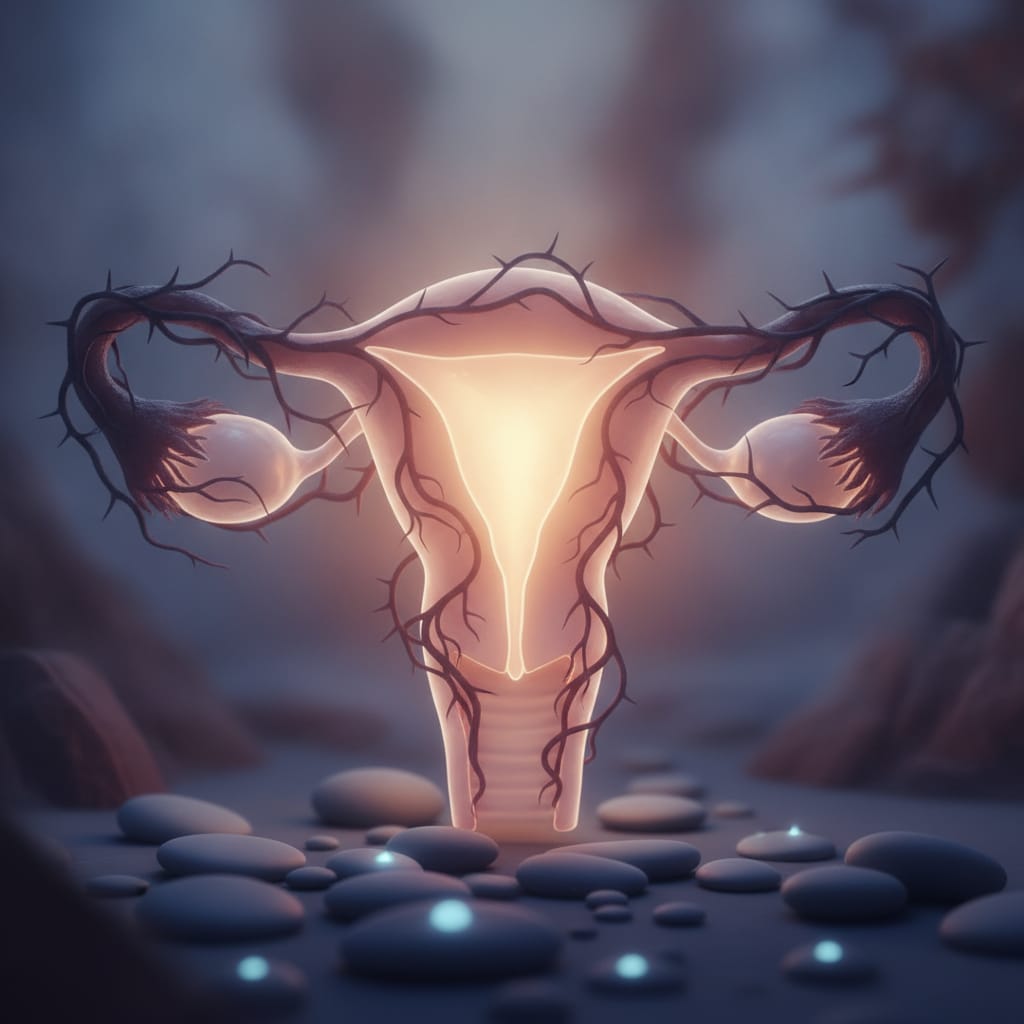
There is a sentence I really don’t like hearing from women:
“I’ve always had painful periods, so I thought it was normal.”
Periods can be uncomfortable.
They can cause some cramping, bloating and tiredness.
But being in agony every month, missing work or school, vomiting with pain, needing strong painkillers just to function or being unable to have a normal life during your period is not something a woman should simply be told to put up with.
One condition that can cause this is endometriosis.
And unfortunately, it can take years for some women to get a proper diagnosis.
So what exactly is endometriosis?
Endometriosis occurs when tissue similar to the lining of the womb grows outside the womb.
It can be found around the ovaries, fallopian tubes, bowel, bladder and other areas of the pelvis.
This tissue responds to hormonal changes during the menstrual cycle.
It can bleed and become inflamed, leading to irritation, scar tissue and adhesions.
Over time, this can cause significant pain and sometimes damage to surrounding structures.
And this is why endometriosis isn’t simply a “bad period”.
What does it feel like?
The symptoms vary enormously.
Severe period pain is one of the classic symptoms.
But women can also experience:
Pelvic pain.
Pain during or after sex.
Pain when opening the bowels.
Pain when passing urine, particularly around the period.
Heavy or irregular periods.
Bloating.
Fatigue.
Back pain.
And sometimes difficulty becoming pregnant.
The pain doesn’t necessarily disappear when the period finishes either.
Some women have chronic pelvic pain throughout the month.
And the pain can be debilitating
This is something I think people sometimes underestimate.
Imagine having severe pain every month and being expected to carry on normally.
Go to work.
Look after children.
Run the household.
Attend meetings.
Socialise.
Smile.
And pretend everything is fine.
Some women become very good at hiding how much pain they are actually in.
That doesn’t mean the pain isn’t real.
What about fertility?
Endometriosis can affect fertility, although having endometriosis does not mean you cannot have children.
Inflammation, scar tissue and adhesions can interfere with the normal functioning of the ovaries and fallopian tubes.
Some women conceive naturally.
Others may need fertility treatment.
The important thing is not to assume that infertility is inevitable.
Why does it take so long to diagnose?
This is one of the frustrating things about endometriosis.
There is no simple blood test that can diagnose it.
Symptoms can overlap with other conditions, including IBS, urinary problems and ordinary menstrual pain.
Women may therefore be treated repeatedly for individual symptoms without anyone putting the whole picture together.
And some women are simply told:
“Periods are painful. That’s normal.”
That can delay diagnosis.
If the pain is severe enough to interfere with everyday life, it deserves investigation.
How is it diagnosed?
A doctor will usually start with the history and symptoms, followed by an examination where appropriate.
An ultrasound may be used.
An MRI can sometimes provide more detailed information.
In some cases, laparoscopy — a type of keyhole surgery — is used to diagnose and sometimes treat endometriosis.
Importantly, a normal scan doesn’t necessarily mean a woman doesn’t have endometriosis.
Some disease can be difficult to see on imaging.
What can actually be done?
There isn’t currently a simple cure for endometriosis, but there are several ways of managing it.
Pain relief
Anti-inflammatory painkillers such as ibuprofen or naproxen can help some women, particularly when started around the beginning of symptoms.
But they aren’t suitable for everyone.
People with stomach ulcers, certain kidney or heart problems, some forms of asthma or those taking particular medicines may need to avoid NSAIDs or use them cautiously.
This is where a pharmacist can be useful.
Hormonal treatment
Because endometriosis is influenced by hormones, hormonal treatments can be very effective.
The combined contraceptive pill, progestogen-only contraception and other hormonal medicines can reduce or suppress menstrual bleeding and hormonal stimulation.
For some women, taking hormonal contraception continuously rather than having monthly withdrawal bleeds can significantly reduce symptoms.
Other specialist hormonal treatments are available when standard options aren’t sufficient.
Treatment needs to be individualised, particularly if pregnancy is currently wanted.
Surgery
Sometimes surgery is necessary.
Laparoscopic surgery can remove areas of endometriosis and divide adhesions.
For women with severe disease, particularly when medication isn’t controlling symptoms or fertility is affected, surgery may provide significant benefit.
But endometriosis can recur, so surgery isn’t always a permanent solution.
What about diet?
This is an area where you’ll find plenty of claims online.
Anti-inflammatory diets.
Gluten-free diets.
Dairy-free diets.
Supplements.
Herbal remedies.
Some women genuinely find that certain dietary changes improve their symptoms.
But there is no universally proven diet that cures endometriosis.
A balanced diet, maintaining a healthy weight and regular physical activity are sensible for overall health, but women should be wary of anyone promising that a particular food or supplement will make the disease disappear.
And the mental health side?
We shouldn’t ignore this.
Living with recurring pain can affect mood, relationships, work and self-confidence.
Pain during sex can put enormous pressure on relationships.
Fertility concerns can add another layer of distress.
And repeatedly being told that your symptoms are “normal” can be incredibly frustrating.
Supporting the mental health of someone with endometriosis isn’t admitting that the pain is psychological.
The pain is real.
But the psychological consequences of living with chronic pain are real too.
My view as a pharmacist
If a young woman tells me she is regularly taking strong painkillers just to get through her period, I don’t think the answer should automatically be:
“That’s what periods are like.”
If she’s missing school or work because of the pain, experiencing pain during sex, having significant bowel or bladder symptoms around her periods, or struggling to conceive, those are reasons to investigate further.
Women shouldn’t have to become experts in their own disease before someone takes them seriously.
Endometriosis can be complicated.
It can take time to diagnose.
And there isn’t a magic tablet that fixes everybody.
But there are treatments that can reduce pain, control symptoms, protect quality of life and, where appropriate, help with fertility.
So if your periods are regularly stopping you from living your life, don’t simply accept it as something you have to endure.
Painful periods may be common, but debilitating periods are not something you should just put up with.
Until next time take good care of yourself.
The Daily Durian (zaynp100@yahoo.com) is a content creator under the Newswav Creator programme, where you get to express yourself, be a citizen journalist, and at the same time monetize your content & reach millions of users on Newswav. Log in to creator.newswav.com and become a Newswav Creator now!
The User Content (as defined on Newswav Terms of Use) above including the views expressed and media (pictures, videos, citations etc) were submitted & posted by the author. Newswav is solely an aggregation platform that hosts the User Content. If you have any questions about the content, copyright or other issues of the work, please contact creator@newswav.com.