Installing a heat pump can be an expensive business. Depending on the system you choose and the work your home needs for the installation, the upfront cost can run into thousands of pounds, even if switching to low-carbon heating could save you money in the long run.
Fortunately, government heat pump grants can make the switch considerably more affordable. Homeowners in England and Wales can currently claim up to £9,000 towards installing certain types of heat pumps through the Boiler Upgrade Scheme, while households in Scotland have access to their own funding programmes.
And if you're on a lower income, you might qualify for a fully funded heat pump installation through another government-backed scheme.
The difficulty is knowing which UK heating grant you're eligible for. The rules vary depending on where you live, the type of property you own, your existing heating system and, in some cases, your income.
Here's what heat pump grants are available in 2026, how much you can get and how to apply.
Interested in a heat pump? Get a free quote
Use our tool below to get a range of free quotes for heat pumps from some of the leading installers across the UK.
What heat pump grants are available in the UK?
There are several government-backed schemes that can help with the cost of installing a heat pump.
Some provide a fixed amount towards installation, while others can cover the entire cost for eligible households.
The main heat pump grants available in 2026 are:
Scheme | Where available | Funding |
Boiler Upgrade Scheme | England and Wales | £7,500 for eligible air-to-water and ground source heat pumps, £2,500 for air-to-air systems, or £9,000 for certain off-grid properties |
Warm Homes: Local Grant | England | Fully funded eligible home improvements, potentially including a heat pump |
Home Energy Scotland Grant and Loan | Scotland | Grants of up to £7,500, rising to £9,000 for eligible rural and island households, plus optional interest-free loans |
Warmer Homes Scotland | Scotland | Fully funded heating and energy-efficiency improvements in most cases, potentially including heat pumps |
Nest | Wales | Free approved heating and energy-efficiency improvements for qualifying households, potentially including a heat pump |
Northern Ireland doesn't currently offer an equivalent dedicated national heat pump grant, although limited support may be available through wider energy-efficiency programmes.
For most homeowners in England and Wales, the Boiler Upgrade Scheme will be the main option. Unlike heat pump grants aimed at lower-income households, it isn't means-tested, so your earnings don't affect whether you qualify.
What is the Boiler Upgrade Scheme?
The Boiler Upgrade Scheme (BUS) is a government-funded programme designed to encourage homeowners to replace fossil fuel heating systems with low-carbon alternatives such as heat pumps.
Launched in May 2022 and administered by Ofgem, it offers upfront grants towards the cost of buying and installing an eligible heating system.
The scheme operates in England and Wales and has been extended until at least 2030 as part of the government's wider Warm Homes Plan.
One of its biggest advantages is that it isn't means-tested, meaning you can qualify whether you're on a low income or a high income, provided your property and proposed installation meet the eligibility criteria.
You also don't need to apply for the money yourself. Your heat pump installer handles the grant application and deducts the funding from the price you pay.
How much is the Boiler Upgrade Scheme grant in 2026?
The amount available depends on the type of system you install and, in some cases, your existing heating system.
Heating system | Grant amount |
Air-to-water heat pump | £7,500 |
Ground source or eligible water source heat pump | £7,500 |
Air-to-air heat pump | £2,500 |
Air-to-water or ground source heat pump replacing oil or LPG in an eligible off-gas-grid property | £9,000 |
Biomass boiler | £5,000 |
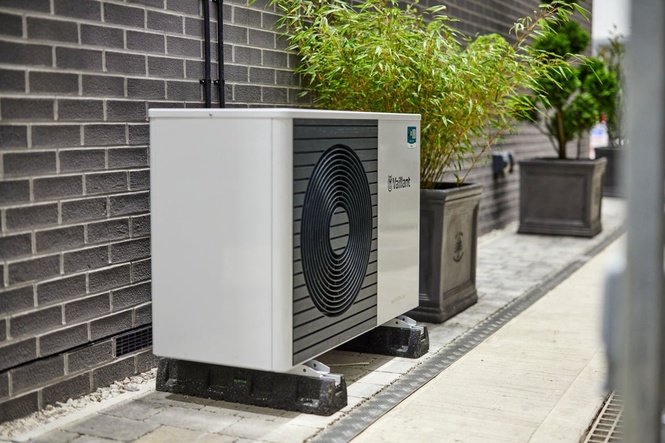
The standard £7,500 grant applies to air-to-water heat pumps, which transfer heat into water for radiators or underfloor heating, and ground source heat pumps, which extract heat from the ground. You can read more on these in our guide to air-source vs ground-source heat pumps.
Although biomass boilers are included in BUS, they aren't heat pumps and have their own stricter eligibility criteria.
The newer £2,500 grant applies to eligible air-to-air heat pumps. These use indoor units to deliver warm air directly into rooms and can also provide cooling.
You can find out more in our guide to the £2,500 air-to-air heat pump grant.
Who can get the £9,000 heat pump grant?
In July 2026, the government increased the amount of funding available to certain households that aren't connected to the mains gas grid.
If your home currently uses oil or liquefied petroleum gas (LPG) for heating, you might qualify for a £9,000 grant when switching to an eligible air-to-water or ground source heat pump. This is £1,500 more than the standard BUS grant.
To qualify, your property must be off the gas grid and you must be replacing an existing oil or LPG heating system. Other eligibility requirements may also apply.
This higher grant is currently available until 31 March 2027, so if you’re considering making the switch, you should check eligibility and installation timescales before the deadline. It’s worth noting that the scheme runs on a fixed annual budget, and if applications exceed that budget, Ofgem will stop issuing vouchers. So if you're on oil or LPG, it's worth acting fast to make sure you don't miss out.
For more information on this specific heat pump grant, see our guide on how to get £9,000 towards a heat pump.
Properties connected to the mains gas grid continue to qualify for the standard £7,500 grant, provided they meet the scheme requirements.
Who is eligible for a heat pump grant through the Boiler Upgrade Scheme?
To qualify for a heat pump grant through the Boiler Upgrade Scheme, you must meet several conditions relating to your property and existing heating.
The main requirements are:
- Your property must be in England or Wales.
- You must own the property. This can include your main home, a second home or a property you rent to tenants.
- You must be replacing an eligible existing heating system, such as a gas, oil, LPG or conventional electric heating system.
- You must not already have received government funding for a heat pump or biomass boiler at the property.
- The proposed system must meet the scheme's technical requirements and be installed by an MCS-certified installer.
Most new-build properties and social housing are excluded, although some self-build homes and completed new builds with existing heating systems can qualify.
Landlords can also apply for BUS grants for eligible privately rented properties. Their tenants' income doesn't affect eligibility.
Do you need an EPC to qualify for a heat pump grant?
No. One of the most significant changes to the Boiler Upgrade Scheme came on 28 April 2026, when the government removed the previous requirement for properties to have a valid Energy Performance Certificate (EPC).
Previously, homeowners could be required to install recommended loft or cavity wall insulation before qualifying for funding, but that requirement has now been removed, meaning an outdated EPC or outstanding insulation recommendations won't automatically prevent you from applying.
However, this doesn't mean insulation is unimportant.
Heat pumps generally work most efficiently in homes that can retain warmth. A poorly insulated property may need a larger system or improvements to its walls, roof or windows to achieve comfortable temperatures at an affordable running cost.
Your installer should assess your home's heat loss and explain whether insulation or other upgrades are recommended before installation.
Where a valid EPC does exist, installers will still use it as supporting evidence. Where one is absent or out of date, the installer can use alternative documentation – typically a recent utility bill and photographs of the existing heating system – to confirm eligibility. This has made the scheme more accessible for older and rural properties that have historically had limited EPC coverage.
How do you apply for the Boiler Upgrade Scheme?
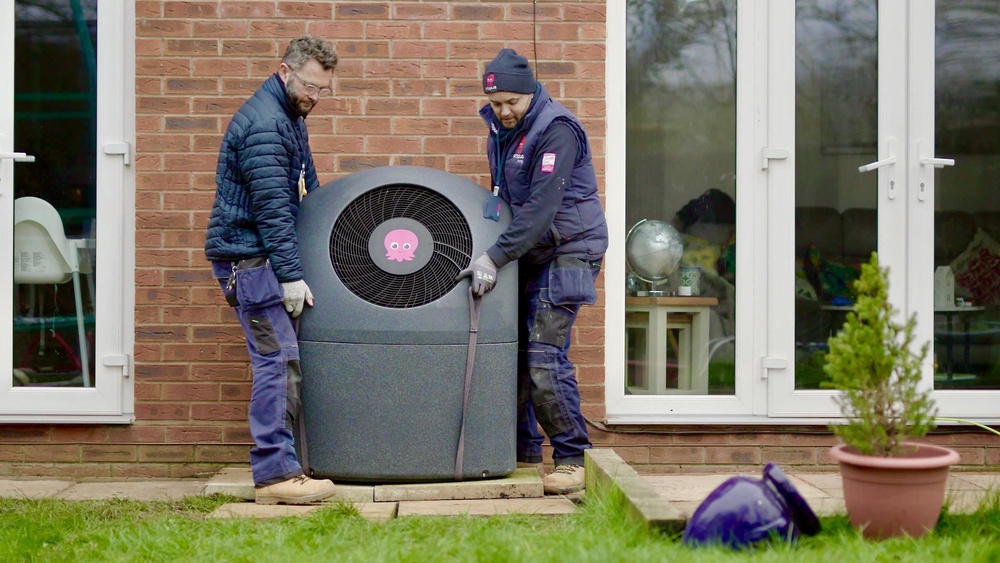
Unlike some government grants, you don't apply for BUS funding directly. Instead, the installer applies on your behalf, with the heat pump grant deducted from the cost of the installation.
The process is relatively straightforward:
- Find an approved installer. Use the Microgeneration Certification Scheme website to find MCS-certified heat pump installers in your area.
- Arrange a property assessment. The installer will assess your heating requirements, check eligibility and recommend a suitable heat pump.
- Get a quote. Your quote should show the full installation price and the amount of grant funding being deducted.
- Confirm the application. If you accept the quote, your installer applies to Ofgem for a grant voucher. Ofgem will contact you to confirm that you have authorised the application.
- Have the heat pump installed. Your installer completes the work and claims the grant after installation. You pay the remaining cost.
It's worth getting several quotes before making a decision, as installation prices can vary significantly between companies.
You should also check exactly what's included, particularly whether the price covers new radiators, a hot water cylinder, electrical work and any recommended insulation improvements.
You can find full details in Ofgem's Boiler Upgrade Scheme guidance.
Can you get a free heat pump through Warm Homes: Local Grant?
If you're on a lower income, you may be eligible for a fully funded heat pump installation through the Warm Homes: Local Grant. Unlike BUS, which provides a fixed contribution towards installation, this scheme can cover the entire cost of approved improvements for eligible owner-occupiers.
It's available in England and delivered through local authorities, and to qualify, your property must be privately owned, have an EPC rating of D, E, F or G, and meet the scheme's household eligibility rules.
Your household income must usually be £36,000 a year or less, although you can still qualify above this threshold if you receive certain benefits or live in an eligible postcode area.
If you're eligible and your council has funding available, it will arrange a home assessment to determine which improvements are appropriate. These might include an air source heat pump, insulation, solar panels or smart heating controls.
However, qualifying for the scheme doesn't automatically mean you'll receive a heat pump. The improvements offered depend on your property and what the assessment recommends.
Private tenants may also benefit, although their landlord must agree to the work and may need to contribute towards the cost.
You can check your eligibility through the government's application service.
What heat pump grants are available in Scotland?
Scotland has its own funding arrangements, so the Boiler Upgrade Scheme isn't available to Scottish homeowners. Instead, the main options are the Home Energy Scotland Grant and Loan and Warmer Homes Scotland.
Home Energy Scotland Grant and Loan
The Home Energy Scotland Grant and Loan provides financial support to eligible homeowners installing low-carbon heating. You can currently receive a grant of up to £7,500 towards an eligible air-to-water, ground source or water source heat pump, alongside an optional interest-free loan of up to £7,500.
Homeowners in qualifying rural and island areas can receive an additional £1,500 grant uplift, bringing the maximum grant to £9,000, which means some Scottish homeowners could receive up to £16,500 in combined grant and loan funding – although the loan must be repaid.
And unlike some other heating grants, you don't need to be receiving benefits to qualify.
However, the funding is generally available only for existing properties that are your main or only residence. The system must also meet the programme's technical requirements and provide the home's heating and hot water.
Air-to-air and hybrid heat pumps aren't eligible under this programme.
Warmer Homes Scotland
Lower-income households may qualify for additional help through Warmer Homes Scotland, which supports eligible homeowners and private tenants who are struggling to heat their homes.
Depending on the property assessment, households may receive fully funded heating improvements, potentially including an air source heat pump, alongside insulation and other measures.
The Scottish Government covers the full cost of approved work in most cases, although a contribution can sometimes be required.
Eligibility depends on factors such as your circumstances, household income, benefits and the condition of your home.
What heat pump grants are available in Wales?
Homeowners in Wales can apply for the Boiler Upgrade Scheme on the same basis as those in England. So all of the same heat pump grants of £7,500 are available towards eligible air-to-water and ground source heat pumps, including the £9,000 available for qualifying off-grid oil and LPG households until 31 March 2027.
However, lower-income households may also receive help through the Welsh Government's Nest scheme, which provides free energy-saving advice and, for eligible households, fully funded home improvements.
These can include heat pumps, insulation and solar panels, depending on what a home assessment recommends.
To qualify for the home improvements, you generally need to own or privately rent your property, meet the scheme's income or benefits requirements and have a sufficiently poor EPC rating.
Homes rated E or worse may qualify, while some D-rated properties may be eligible where a household member has a qualifying health condition.
You can check your eligibility through the Welsh Government's Nest service or call 0808 808 2244.
Are there heat pump grants in Northern Ireland?
Northern Ireland doesn't currently have a dedicated national heat pump grant equivalent to the Boiler Upgrade Scheme. However, some households may qualify for help with heating or insulation through wider energy-efficiency programmes.
The Northern Ireland Sustainable Energy Programme (NISEP) provides funding for certain improvements through participating organisations, although availability and eligibility vary. There is no guarantee that a heat pump installation will be funded.
For further details, see the Energy Saving Trust's guide to heat pump funding or contact Northern Ireland Energy Advice to find out what help may be available for your property.
What is the Warm Homes Plan and how does it affect heat pump grants?
The government's £15 billion Warm Homes Plan was launched in January 2026 to help households make their homes more energy efficient and adopt cleaner heating technologies.
The plan includes continued funding for the Boiler Upgrade Scheme, support for lower-income households through programmes such as Warm Homes: Local Grant and measures intended to make energy-saving home improvements more affordable to more people.
It also forms part of the government's wider effort to encourage households to move away from fossil fuel heating. It should be noted that the Warm Homes Plan isn't itself a grant you can apply for. Instead, it provides the framework for several different funding programmes.
If you’re considering a heat pump, BUS remains the main heat pump grant in England and Wales, while households with lower incomes should check whether they qualify for more extensive support through other schemes.
Is it worth applying for a heat pump grant?
For many homeowners, a heat pump grant can make a significant difference to the upfront cost of replacing an existing heating system.
A typical air source heat pump installation can cost significantly more than a straightforward gas boiler replacement, particularly if new radiators, a hot water cylinder or other improvements are required.
However, the £7,500 BUS grant can close much of that gap. And for eligible households replacing oil or LPG heating, the £9,000 grant makes switching even more affordable still.
The financial case will ultimately depend on your property, your existing heating costs and how efficiently the new system is designed and operated.
Heat pumps can be cheaper to run than some fossil fuel systems, but savings aren't guaranteed. Electricity and gas prices, your heating requirements and the tariffs available to you will all affect running costs.
It's particularly worth considering a heat pump if your existing boiler is approaching the end of its life, you're planning significant improvements to your home or if you're looking to reduce your reliance on oil or LPG.
If your current heating system is relatively new and working efficiently, you probably shouldn’t replace it just yet. Before deciding, get a detailed installation quote and compare the likely running costs with your existing system.
If you are ready to make the switch, read our guide to the best heat pumps for UK homes.
Read MoreDo you qualify for heating grants? From new boilers to heat pumps, here’s how to apply
ECO4 scheme UK grants: Who qualifies for free solar panels, insulation and heating upgrades in 2026?
Solar panel grants and funding UK: what’s available and how to apply