Replacing an old boiler or upgrading the heating in a cold, inefficient home can cost thousands of pounds. And with energy bills still putting pressure on household budgets, finding the money for essential improvements isn't always easy.
Fortunately, several government-backed schemes can help with the cost. Depending on your circumstances, you could qualify for a free heating upgrade, insulation or even a grant towards installing a heat pump.
But the funding landscape is changing. The government's £15bn Warm Homes Plan is reshaping how households now receive support, while the long-running ECO4 scheme is approaching its closure on 31 December 2026.
There's also no single UK-wide grant available to everyone. What you can claim depends on where you live, your income, whether you own or rent your home and the type of heating improvement you need.
Here's what heating grants are available in 2026, who qualifies and how to apply.
Read more: How to choose the best heat pump
Get a boiler installation quote for your home
Use our comparison tool to get a range of free quotes from leading boiler installers across the UK.
What heating grants are available in the UK?
There are several government-backed schemes that can help households replace inefficient heating systems, install low-carbon technology or improve their home's energy efficiency.
Some are aimed at lower-income households and can cover the full cost of approved work, while others offer a fixed grant towards an installation, meaning you'll still need to pay the difference.
The main schemes available in 2026 are:
Scheme | Who is eligible? | What funding is available? |
Eligible low-income households in England living in privately owned homes with poor energy efficiency ratings | Free approved improvements, including insulation, heat pumps and solar panels | |
Eligible property owners in England and Wales | £2,500 to £9,000 towards low-carbon heating | |
Eligible homeowners and private tenants struggling to heat their homes | Fully funded heating and energy-efficiency improvements in most cases | |
Eligible homeowners in Scotland | Heat pump grants up to £7,500, rising to £9,000 for qualifying rural and island homes, plus optional interest-free loans | |
Eligible low-income households in Wales | Free approved heating and energy-efficiency improvements | |
Qualifying households in Northern Ireland | Fully or partly funded heating and insulation improvements, depending on the scheme | |
Eligible low-income and vulnerable households in England, Scotland and Wales | Limited remaining support for heating and energy-efficiency improvements ahead of closure on 31 December 2026 |
The best option will depend on your circumstances and where you live. For example, if you're on a low income and live in a poorly insulated home, you may qualify for fully funded improvements. If you own your home and want to install a heat pump, you may be better suited to the Boiler Upgrade Scheme.
Read more: Solar panel grants and funding UK: What's available and how to apply
What is the Warm Homes Plan?
The government's Warm Homes Plan, launched in January 2026, is a £15bn programme designed to help households reduce their energy bills, improve their homes' energy efficiency and switch to cleaner heating.
It aims to help millions of households benefit from improvements such as insulation, heat pumps, solar panels and battery storage, with additional support targeted at families on lower incomes.
However, the Warm Homes Plan isn't a single grant that you can apply for. Instead, it brings together a range of government funding programmes, including the Boiler Upgrade Scheme and Warm Homes: Local Grant, alongside other measures intended to make home improvements more affordable.
It also marks a change in how government support is delivered. Older schemes such as ECO4 are being phased out, while funding increasingly focuses on low-carbon heating and improvements that reduce the amount of energy homes need.
For households looking to upgrade their heating, the important thing is to identify which of the individual schemes under this wider approach they qualify for.
Can I get a free boiler replacement?
Some households may be able to get help replacing or repairing an old heating system, but many current schemes focus on improving energy efficiency or switching homes to low-carbon heating rather than simply replacing a gas boiler with another gas boiler.
That means the phrase “free boiler grant” can be misleading. In practice, a home assessment may recommend insulation, heating controls, an air source heat pump, solar panels or other measures, depending on the property and the scheme.
For example, the Warm Homes: Local Grant can fund improvements such as wall, loft and underfloor insulation, air source heat pumps, smart controls and solar panels for eligible households in England. If the council agrees to the work, it organises and pays for it, and the household does not need to pay for the improvements.
By contrast, the Boiler Upgrade Scheme is designed to cover part of the cost of replacing fossil-fuel heating systems with a heat pump or biomass boiler in England and Wales. It is not a like-for-like free boiler replacement scheme.
Read more: New boiler and installation cost 2026: An expert guide on UK prices
Heating upgrades through the Warm Homes: Local Grant
The Warm Homes: Local Grant is one of the clearest routes for households looking for free heating or energy-efficiency improvements.
The scheme is available in England and is aimed at households on a low income, receiving certain benefits or living in an eligible postcode area.
To qualify, your home must:
- Be in England
- Be privately owned, either by you or your landlord
- Have an Energy Performance Certificate (EPC) rating of D, E, F or G
- Meet the scheme's income, benefits or postcode eligibility requirements
Household income must usually be £36,000 a year or less; however, some people earning more may still qualify if they live in an eligible postcode area or someone in the household receives certain benefits.
If you're eligible and your local council has funding available, it will arrange a home survey to determine which improvements would make your property warmer and more energy efficient.
These could include loft or wall insulation, air source heat pumps, smart heating controls or even solar panels.
The council then organises and pays for the approved improvements, so eligible owner-occupiers won't have to contribute towards the work. Private landlords may be required to pay for some improvements to their properties.
You can check your eligibility and apply through the government's Warm Homes: Local Grant service.
Is ECO4 still available in 2026?
The Energy Company Obligation (ECO4) has helped eligible low-income and vulnerable households access heating and energy-efficiency improvements. These mostly include insulation, but can also be boiler upgrades and first-time central heating installations.
However, the scheme is now approaching its end date.
ECO4 was originally scheduled to finish in March 2026, but the government extended it by nine months to 31 December 2026.
Importantly, that extension didn't come with increased targets or new funding obligations for energy suppliers. Instead, it was designed to give suppliers more time to meet existing obligations, address any problems with previous installations and bring the programme to an orderly close.
Although ECO4 technically remains open to new applications, funding is now limited and people may find it difficult to secure an installation before the scheme formally ends.
The government has also confirmed that ECO4 won’t be replaced by another supplier-funded obligation scheme. Instead, support for low-income households is shifting towards programmes under the Warm Homes Plan.
If you're looking for help with heating or insulation in England, the Warm Homes: Local Grant is now a more useful starting point. Households in Scotland and Wales should also check the schemes available in their respective countries.
You can find further information about ECO4 through Ofgem.
Heat pump grants through the Boiler Upgrade Scheme
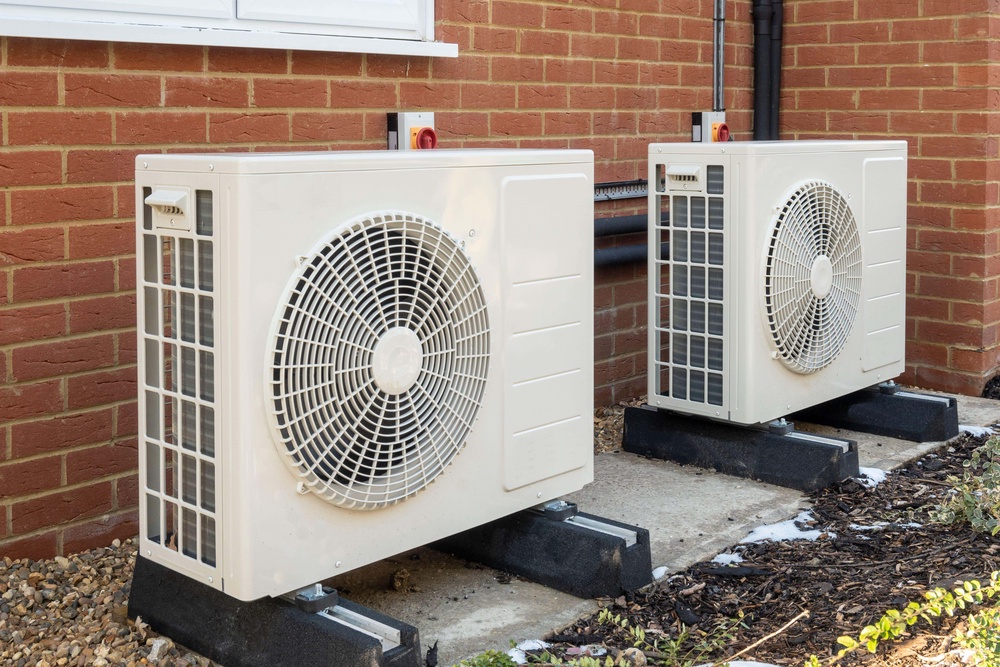
The Boiler Upgrade Scheme (BUS) is the main government grant for property owners in England and Wales looking to replace eligible heating systems with low-carbon alternatives.
Unlike the Warm Homes: Local Grant, BUS isn't means-tested. That means you don't need to be receiving benefits or earning below a certain income in order to qualify.
Instead, eligibility depends on factors such as your property, your existing heating system and the technology you want to install.
The grants currently available are:
- £7,500 towards an air-to-water heat pump
- £7,500 towards a ground source or eligible water source heat pump
- £2,500 towards an air-to-air heat pump
- £5,000 towards an eligible biomass boiler
- £9,000 towards an air-to-water or ground source heat pump for eligible off-gas-grid properties replacing oil or LPG heating
The £9,000 grant for eligible oil and LPG households was introduced in July 2026 and is currently available until 31 March 2027.
Like ECO4, the scheme is administered by Ofgem and works through approved installers, which means your installer must be certified by the Microgeneration Certification Scheme (MCS) and will apply for the funding on your behalf.
The grant is then deducted from the cost of the installation, meaning you pay the remaining amount rather than receiving the funding directly.
For many households, this can make installing a heat pump much more affordable, although the grant may not cover the full cost.
Heating grants in Scotland
Scotland has its own funding programmes to help households improve their heating and energy efficiency.
Warmer Homes Scotland
Warmer Homes Scotland supports homeowners and private tenants who are struggling to heat their homes and is aimed at those who are meeting certain income, benefits, age or health-related criteria, alongside requirements relating to the property itself.
Depending on the results of a home assessment, eligible households could receive insulation, draughtproofing or heating improvements, including a new boiler, electric storage heaters or an air source heat pump.
The Scottish Government covers the full cost of approved improvements in most cases, although sometimes a contribution may be required.
You can check your eligibility through Home Energy Scotland.
Home Energy Scotland Grant and Loan
Home Energy Scotland Grant and Loan is another option for homeowners who want to install clean heating or improve their home's energy efficiency.
It provides grant funding of up to £7,500 towards eligible heat pumps and heat network connections, with an additional optional interest-free loan of up to £7,500.
Homeowners in qualifying rural and island areas can receive an additional £1,500 grant uplift, increasing the maximum heat pump grant to £9,000.
Separate grant funding is also available for eligible insulation measures, subject to scheme limits.
Unlike Warmer Homes Scotland, applicants don't generally need to be receiving means-tested benefits to qualify for the Home Energy Scotland Grant and Loan.
For details, visit Home Energy Scotland's grants and loans guidance.
Heating grants in Wales and Northern Ireland
Wales
Homeowners in Wales can apply for the Boiler Upgrade Scheme; however, those on lower incomes may also qualify for free heating and energy-efficiency improvements through the Welsh Government's Nest scheme.
Nest provides free advice on saving energy, checking benefits eligibility and improving home efficiency. Eligible households can also receive fully funded heat pumps, solar panels or insulation.
What’s more, those without working heating or hot water may qualify for certain boiler or electric storage-heater repairs or replacements.
To qualify for improvements, you must generally own or privately rent your home, meet the income or benefits requirements and have a sufficiently poor EPC rating.
Eligibility is more restrictive than simply having an EPC rating of D or below. Homes rated E or worse may qualify, while some D-rated homes qualify where a household member has an eligible health condition. Other D-rated homes will be placed on a reserve list.
You can check your eligibility through the Welsh Government's Nest service.
Northern Ireland
Northern Ireland has separate heating and energy-efficiency grant programmes. The Affordable Warmth Scheme supports low-income families with improvements such as heating upgrades and insulation to make their homes more affordable to heat. Funding is subject to eligibility and availability.
Another option is the Northern Ireland Sustainable Energy Programme (NISEP), which funds a range of energy-saving improvements through participating providers.
Depending on the specific scheme, qualifying households may be able to receive fully or partly funded heating upgrades, insulation or even improvements to their existing central heating systems.
Eligibility varies by income, location, property type and the measures required.
The Northern Ireland Executive is also developing a new Warm Healthy Homes Fund, which is expected to begin in April 2027 and eventually replace Affordable Warmth.
For advice on the support currently available, households can contact the Northern Ireland Energy Advice service on 0800 111 4455.
Who is eligible for free heating upgrade support?
Eligibility varies across schemes, but the same factors tend to come up.
You may be more likely to qualify for free or heavily subsidised support if:
- You are on a low income
- Someone in your household receives certain benefits
- Your home has a poor EPC rating
- You own your home or have your landlord’s permission
- You live in a participating local authority area
- You live in a hard-to-heat home
- You are vulnerable, older or have a health condition, depending on the scheme
- Your current heating system is inefficient, expensive to run or not working properly
For the Warm Homes: Local Grant, the key requirements are that the property is in England, privately owned, has an EPC rating of D, E, F or G, and that the household meets the income, benefits or postcode criteria.
For the Boiler Upgrade Scheme, the focus is not on income. The scheme is aimed at property owners in England and Wales, replacing fossil-fuel heating systems with eligible low-carbon heating systems.
What heating upgrades can grants cover?
The work covered depends on the scheme and the result of any home survey. Possible improvements include:
- Boiler repair or replacement, where eligible
- Air source heat pumps
- Ground source heat pumps
- Water source heat pumps
- Air-to-air heat pumps
- Biomass boilers
- Smart heating controls
- Loft, wall or underfloor insulation
- Radiator or heating system upgrades
- Solar panels, in some schemes
- Draughtproofing or other energy-efficiency improvements
It is common for schemes to take a “whole home” approach, which means the recommended work may not be limited to the heating system. If a home is poorly insulated, improving insulation may be the first step before installing low-carbon heating.
How to apply for a free heating upgrade grant
The application process varies by scheme, but there are a few steps most households should take.
1. Check your home's energy efficiency rating
Start by checking your property's EPC. Many fully funded schemes are aimed at homes with poorer energy-efficiency ratings, although the requirements vary.
You can find your home's EPC through the government's online service.
2. Check your eligibility
Look at the income, benefits, property and location requirements for the scheme you're interested in.
For the Warm Homes: Local Grant, you can use the official government application service.
If you're eligible and your council has funding available, someone will usually contact you within 10 working days to gather more information and arrange a home survey.
3. Arrange a home assessment
For many fully funded programmes, an assessment will determine which improvements are suitable for your property.
The assessor may recommend heating upgrades, insulation or other measures based on the condition of your home.
4. Confirm what is covered
Before agreeing to any work, make sure you understand what the grant will pay for, whether you need to contribute and whether there are any ongoing maintenance or servicing costs.
If you rent privately, you'll usually need your landlord's permission before work can begin.
How to apply for the Boiler Upgrade Scheme
The Boiler Upgrade Scheme works differently because the installer applies for the grant.
Start by finding an MCS-certified installer. The installer will assess your property, recommend a suitable system and provide a quote. The quote should show how much the installation will cost and how the Boiler Upgrade Scheme grant will be applied.
If you accept the quote, the installer applies to Ofgem for the voucher. Ofgem will then contact the property owner to confirm that the installer is acting on their behalf. Once the work is completed, the installer redeems the voucher.
Because the scheme is installer-led, you do not normally receive the grant money yourself. It is used to reduce the upfront cost of the installation.
Can tenants apply for free heating upgrades?
Tenants may be able to benefit from some heating upgrade schemes, but they will usually need their landlord’s permission.
The Warm Homes: Local Grant, for example, applies to privately rented homes, but the property must meet the scheme rules and the landlord may need to contribute towards some improvements.
Warmer Homes Scotland can also support private rented sector tenants, provided they meet the eligibility rules.
Social housing tenants should usually contact their housing association or council landlord, as upgrades may be delivered through separate social housing funding programmes.
Tenants should not agree to installation work without written permission from their landlord.
What to check before accepting heating upgrade work
Before agreeing to any heating upgrade, check:
- Whether the scheme is official
- Whether your installer is properly accredited
- Whether the grant covers the full cost
- Whether you will need to make any contribution
- What technology is being installed
- Whether your home needs insulation, radiator or pipework upgrades
- What warranty is included
- Who is responsible for servicing and maintenance
- Whether planning permission is needed
- Whether the work could affect your tenancy agreement, mortgage or home insurance
It is also sensible to get more than one quote for part-funded work where possible, especially for heat pump installations.
Be cautious about companies promising a free boiler or guaranteed grant without assessing your eligibility and property. Genuine funding schemes have specific criteria, and no installer can guarantee that a household will qualify without checking them.
Are free heating upgrade grants really free?
Some are, but not all. Schemes such as the Warm Homes: Local Grant can cover the full cost of agreed work for eligible households. Other schemes, such as the Boiler Upgrade Scheme, reduce the cost of installing low-carbon heating but may not cover the full bill.
Can pensioners get a free heating upgrade grant?
Some pensioners may qualify, but eligibility is not based on age alone. It usually depends on income, benefits, property type, EPC rating, location and whether the household is considered vulnerable under the rules of a particular scheme.
Do you need an EPC to apply?
Some schemes require a poor EPC rating. For the Warm Homes: Local Grant, the home must have an EPC rating of D, E, F or G. If you do not know your home’s EPC rating, GOV.UK says you can find out when you apply.
Is the Boiler Upgrade Scheme free?
No. The Boiler Upgrade Scheme provides a grant towards the cost of installing eligible low-carbon heating, but it is not usually a free installation. The grant is designed to reduce the upfront cost.
Can you get a heating grant if you are not on benefits?
Yes, in some cases. The Boiler Upgrade Scheme is not means-tested. For the Warm Homes: Local Grant, households earning more than £36,000 may still qualify if they live in an eligible postcode area or if someone in the household receives certain benefits.
Read MoreWhere renters can and can’t install solar panels – UK rules explained
How much solar panels cost in the UK, according to an expert
Octopus Energy launches plug-in solar panels for businesses after sell-out success
Have your say on solar energy and earn rewards by joining The Independent’s Insiders
I have a solar battery – here’s how it would work during a blackout
The hidden energy bill drain you might be overlooking – your windows