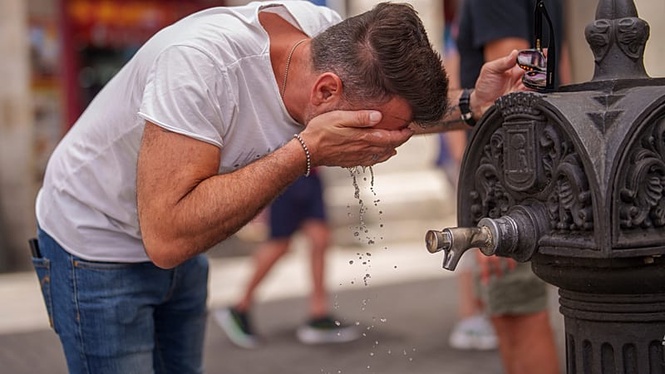
The heatwave affecting Spain and much of Europe is setting historic temperature records in different parts of the country. On Tuesday, Cantabria reached 43.7°C in the municipality of Tama, the highest temperature ever recorded in the region in any month of the year, while large areas of the north remain under the highest heat alerts, according to the State Meteorological Agency (Aemet).
The agency reported on Wednesday that this Monday and Tuesday (22 and 23 June) were the two hottest June days since at least 1950 in mainland Spain. The average daily temperature reached 28.08°C on Monday and 28.17°C on Tuesday, beating the previous record of 28.01°C set on 30 June 2025.
"During this heatwave, three days have ranked among the ten hottest in the historical record for the month of June," Aemet said.
Monday’s and Tuesday’s readings were also more than seven degrees above normal for this time of year, in an episode that has arrived unusually early and is affecting regions traditionally less exposed to extreme heat.
Night-time temperatures have also broken records. The average minimum reached 20.14°C on Monday and 19.81°C on Tuesday, the highest values for June since records began in Spain. These so-called "tropical nights" make it harder to sleep and can pose a threat to public health.
RelatedThe situation has prompted the highest heat alerts to be issued in parts of Cantabria and the Basque Country, something unusual in northern regions of the peninsula that normally escape the most severe episodes of high temperatures.
The current heatwave is bringing temperatures to between five and 10°C above normal across much of the country.
The heatwave has already left a historic mark in Aemet’s records. According to data from its network of 828 weather stations, 13 records for maximum daytime temperatures for this time of year and 16 for night-time minimums have been broken, spread across 18 provinces throughout Spain.
This text was translated with the help of artificial intelligence. Report a problem : [feedback-articles-en@euronews.com].