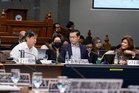
THE House of Representatives’ Committee on Agriculture and Food continued its inquiry on Wednesday into government preparations and responses to El Niño, including the distribution of the P6.2 billion in aid to 310,000 farmers and fisherfolk.
”We must verify whether field disbursements in hit regions are reaching intended beneficiaries,” the panel’s head, Quezon Rep. Mark Enverga, said, pertaining to the assistance under the Unified Package for Livelihoods, Industry, Food and Transport program.
The committee is examining the P371-million shortfall for interventions such as cloud seeding and measures to combat pests threatening sugarcane production.
The Department of Agriculture (DA) has proposed a consolidated P61.99-billion action plan, which lawmakers are assessing for its capacity to protect agricultural communities.
Enverga emphasized the immediacy of the need.
”Our farmers and fisherfolk can no longer afford to wait. We are asking all agencies attending today to provide clear and honest answers so we can immediately deliver swift and targeted assistance to the agricultural sector,” he said.
Sultan Kudarat Rep. Bella Vanessa Suansing, who introduced House Resolution 967, said Wednesday’s hearing should establish what has been accomplished since the issue was discussed in June.
She sought updates on Republic Act 12287, or the Declaration of State of Imminent Disaster Act, particularly whether disaster declarations had led to the release of funds for preventive measures.
”We hope to hear from the DA on updates to its commitments from last June, as well as its plans and mandate to provide alternative sources of income and livelihood for our farmers and fisherfolk,” Suansing said.
At the Senate, Sen. Francis Pangilinan urged President Ferdinand Marcos Jr. on Wednesday to establish an online public accountability dashboard to track government spending and the delivery of interventions on El Niño.
”I call on the President to direct the NDRRMC (National Disaster Risk Reduction and Management Council), through OCD (Office of Civil Defense) and the concerned agencies, to maintain a single, coordinated El Niño action plan with named leads, measurable targets, and regular public reporting,” Pangilinan said.
”The backbone of all these efforts is the proper use of taxpayers’ money. The public must know clearly where the funds are going, what the government is doing, and what results these measures are achieving,” he added.
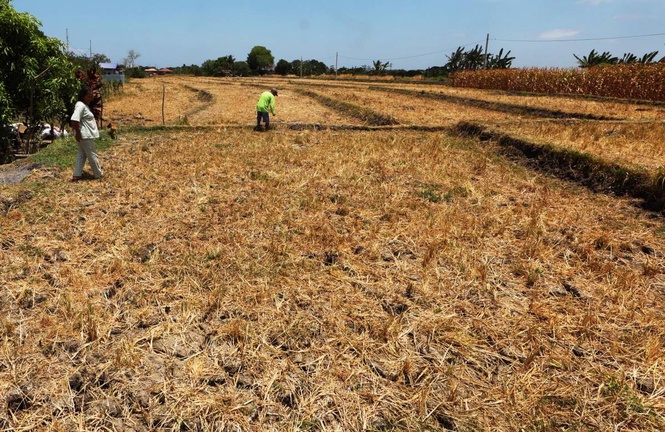
Meanwhile, Malacañang said it has ordered the pre-positioning of irrigation pipes and solar-powered water pumps for farmers expected to be affected by the super El Niño.
This comes after the Philippine Atmospheric, Geophysical and Astronomical Services Administration said that 12 areas may experience drought by the end of November, particularly Nueva Vizcaya and other parts of Region 2 (Cagayan Valley).
”Our fellow citizens in Nueva Vizcaya need not worry, as preparations are indeed being made for the effects of El Niño — especially here in Cagayan Valley, in Region 2,” Palace Press Officer Claire Castro said in Filipino.
Castro said the government began implementing preventive measures as early as June.
On Oct. 28, she said P20 million in funds were allocated to provide solar-powered water pumps and fuel assistance to farmers.
Castro said the DA has invested P17.9 million in farm inputs to help farmers mitigate the impacts of the drought.
The Department of Social Welfare and Development (DSWD) has allocated P702.62 million in financial assistance to benefit 68,905 individuals through a unified package for livelihood, industry, food and transport assistance.
”So, in all affected areas — especially those specifically targeted by the very strong El Niño — assistance from the National Irrigation Administration, the DSWD, and the DA is being provided to help alleviate any hardships that may arise from this very strong El Niño,” Castro said.