THE Department of Labor and Employment’s (DOLE) proposed P47.057 billion budget for 2027 was approved during plenary deliberations at the House of Representatives on Wednesday.
It will now proceed to the Senate for approval.
Labor Secretary Francis Tolentino said the proposed funding seeks to support the department's manpower, staff skills development, worker protection, and labor justice programs.
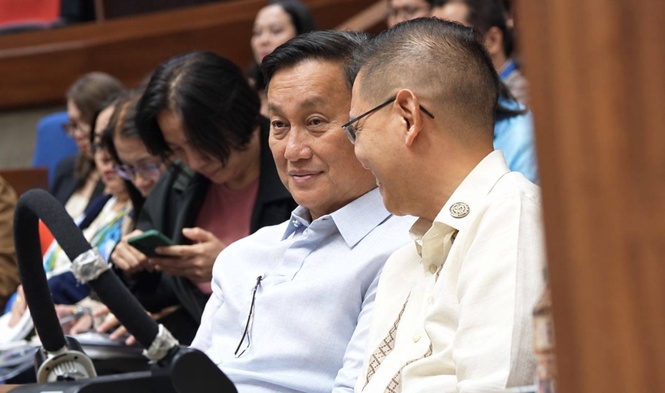
Lone District of Aurora Rep. Rommel Rico Angara, a DOLE budget sponsor, highlighted during the session that the department's proposed P47.1 billion allocation is roughly P14.1 billion lower than its P61.2 billion budget under the 2026 General Appropriations Act.
Angara called for the restoration of the funding cuts, emphasizing that the reduced budget could impact the delivery of essential labor and employment services, including workforce upskilling and future-ready job preparations. He also cited DOLE's request for an additional P75 million to bolster legal assistance for workers through the Labor Attorneys' Office and the National Academy for Labor Justice.
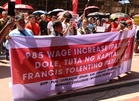
Regarding the wage dispute in NCR, Angara reaffirmed DOLE's stance, alongside the Office of the Solicitor General, to uphold Wage Order No. 27 pursuant to Article 126 of the Labor Code while respecting ongoing judicial proceedings.
He said that the P60 wage increase under both Wage Order No. 27 and Wage Order No. 28 is identical and does not diminish workers’ wages.
"DOLE is not giving up on Wage Order No. 27. Our Secretary and the OSG are fighting for it in court. Wage Order No. 28 aims to provide immediate relief to the economy while the process in the judiciary moves forward," he said.
The proposed P47.057 billion budget covers P20.954 billion for DOLE, P20.895 billion for the Technical Education and Skills Development Authority, P2.694 billion for the Professional Regulation Commission, P1.733 billion for the National Labor Relations Commission, P369.242 million for the National Wages and Productivity Commission, P332.463 million for the National Conciliation and Mediation Board, and P78.794 million for the Institute for Labor Studies.
Plenary discussions also tackled key labor concerns, including funding for the Tulong Panghanapbuhay sa Ating Disadvantaged/Displaced Workers program, the family living wage, the Social Amelioration Program for sugar workers, the Single Entry Approach program, and labor standard compliance in economic zones.
Lawmakers also raised upskilling initiatives against potential artificial intelligence (AI) displacements in the BPO sector, the welfare of commercial fishing vessel workers, and the need to augment labor inspectors to align with International Labor Organization Convention No. 81.