THE bamboo structure, usually confined to eco-lodges and social housing pilots, is becoming a selling point for homes and sanctuaries. Its versatility can be seen across the private market, from a wellness retreat in Sri Lanka to tropical modern homes in Negros Oriental. Developers, hospitality brands and homeowners are choosing bamboo because they want buildings that are resilient, cost-competitive and architecturally distinctive.
Behind this shift is Base Bahay Foundation (BASE), a Philippine-based non-profit initiated by the Hilti Foundation, which has spent over a decade creating engineering standards, structural testing, workforce training, and supply chain development for its flagship technology, the Cement-Bamboo Frame Technology (CBFT).
BASE General Manager Engr. Luis Felipe Lopez says, “We set out to prove that bamboo could meet rigorous engineering standards. Once that foundation existed, the market found its own way to bamboo.”
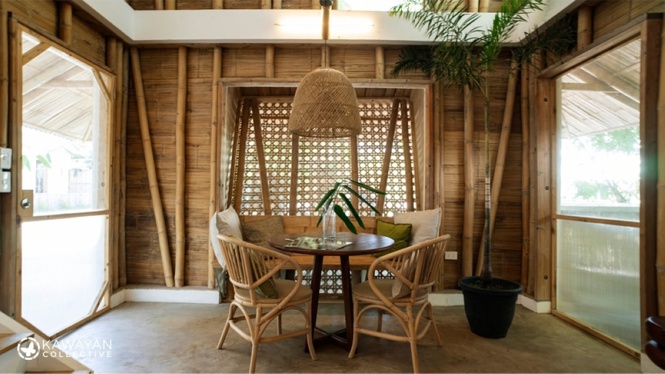
One example is the Kawayan Casitas in Dauin, Negros Oriental. Built by the Kawayan Collective Agriculture Development Cooperative, the 30 sqm to 140 sqm homes demonstrate what CBFT construction could look like when applied to contemporary residential design.
Five of the six have already sold, to a mix of local and foreign buyers, at prices ranging from P1 million to P8 million. Built at around P25,000 per square meter, the cooperative’s bamboo homes demonstrate that bamboo is a cost-competitive construction solution. With rising prices of imported building materials and increasing energy demand to cool conventional glass-and-steel homes, bamboo offers an increasingly attractive alternative without compromising on design or performance.
By the end of 2026, the cooperative will have completed 89 CBFT buildings, including 15 private residential homes built for owners who first encountered bamboo construction by walking through a Kawayan Casitas showcase home.
In 2025, DCCCO Multipurpose Cooperative became the first major financing partner for Kawayan Collective homeowners, offering members multipurpose loans of up to P200,000, or up to 70 percent of a home’s value, for cement-bamboo frame construction.
ExperimentationOn Sri Lanka’s south coast, the boutique wellness property Soul House needed to expand ahead of tourist season. The brief: three stand-alone garden chalets, comfortable for one to three guests, with maximum natural ventilation, sweeping views and shaded outdoor living.
The client, who wanted something environmentally sound and architecturally distinctive, was willing to experiment. Working with designer Lisa Jehle and construction partner Una Gama, the project team adapted the CBFT design in collaboration with BASE. The result was Sri Lanka’s first CBFT construction, fully integrated into the property’s expanding wellness tourism offering.
Una Gama Director Aoife O’Sullivan says, “Guests immediately experience naturally comfortable interiors, bright spaces filled with daylight, and an environment that feels warm, calm and connected to nature. These show how bamboo can deliver both performance and exceptional design.”
In the wilderness retreat of Belihuloya, that same partnership pushed the technology further. The brief was a restaurant meant to be the architectural centerpiece of a wellness property already known for its sauna, ice bath and Ayurvedic experiences.
Perched above rice paddies, overlooking a winding river, the new restaurant was built on two levels: an upper dining space constructed entirely from bamboo and a lower level housing kitchens, office space and guest amenities. The build followed the landscape itself, tucked into a rocky hillside and shaped around a single defining feature: a sweeping curved roof beam that was established first, with the rest of the structure built around it.
“This demonstrates how bamboo can create warm, architecturally distinctive spaces that bring guests closer to nature,” says Una Gama founder Julien Bailly. The project brought together an international team: original architectural concept by Jehle, structural design and technical development by Asali Bali, and construction by Una Gama.
Globally, BASE has supported the construction of more than 2,500 CBFT structures, resulting in over 40,000 tons of CO2 savings. Bamboo reaches structural maturity in three to five years, compared to the decades required for hardwoods. Its high strength-to-weight ratio means CBFT structures perform well under seismic stress, an important consideration in earthquake-prone regions.
“Financial and operational advantages are ultimately what move developers,” says Lopez. “Faster construction through prefabrication, lower embodied carbon, and resilient design aren’t abstract sustainability talking points anymore. They’re line items that affect a project’s bottom line.”
For BASE, the real milestone is ensuring that no developer has to build the ecosystem from scratch. The engineering has been validated. Standards and codes are in place. A trained workforce is available. Supply chains are expanding. Financing mechanisms are beginning to emerge. What began as a housing innovation for underserved communities has matured into a viable construction ecosystem.