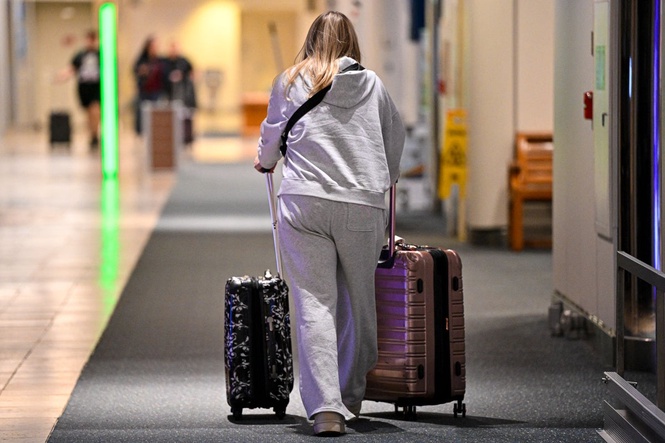
It’s a social media trend and warning - whatever you do, when you get home from vacation, don’t put your suitcase on your bed.
The thing is covered with bacteria and tossing it on a bed for easy unpacking can spread germs to where you will sleep, influencers caution. Some have shrugged off the warning, dismissing it as over-concerned hysteria. Turns out the influencers might be right.
“Between riding to the airport, cycling through the luggage carousel, and rolling through the cobblestone streets of Rome (or the asphalt of Chicago), your suitcase has touched a lot of unfamiliar hands and rubbed against a lot of new surfaces,” Ayesha Bryant, an associate professor at the University of Alabama at Birmingham, said.
Suitcases can bring funguses, viruses, creepy microscopic critters and bacteria into your home, with some bags carrying nearly 58 times more bacteria than a public toilet seat, a 2025 study from U.K. travel insurance broker InsureandGo found.
These threats are why travelers should always avoid placing luggage on or even near the bed, Bryant told The Independent.
The U.K. study on suitcase bacteria found toxic black mold and Staphylococcus bacteria on the wheels that can cause fatal infections. The study also found the fecal bacteria E. coli and yeasts such as Candida, which can cause organ failure and sepsis, on luggage, according to the Cleveland Clinic.
E. coli illnesses cause 3,000 deaths each year in the U.S. While the annual toll from Candida infections is not clear, Washington University School of Medicine in St. Louis says about 40-45 percent of people with Candida in their blood die of the infection.
Suitcases can pick up this bacteria anywhere, but the study also showed some models are at increased risk.
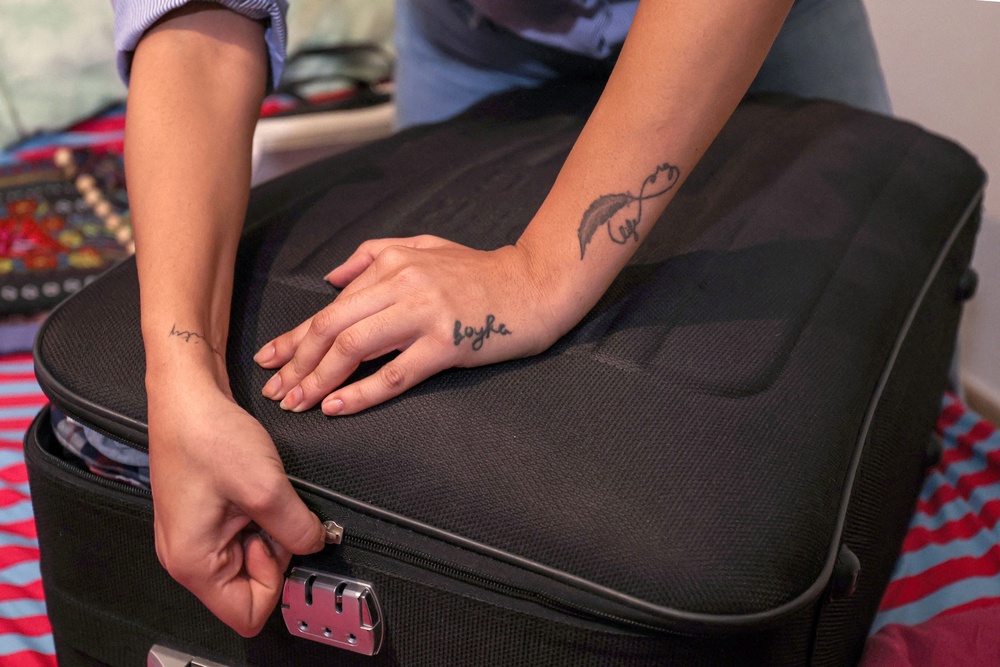
“Soft-shell cases tend to have a higher fungal growth compared to hard-shell cases, suggesting that the soft fabric is more likely to trap moisture and grime,” InsureandGo explained. This is because of the porous nature of fabric, allowing it to more easily trap germs.
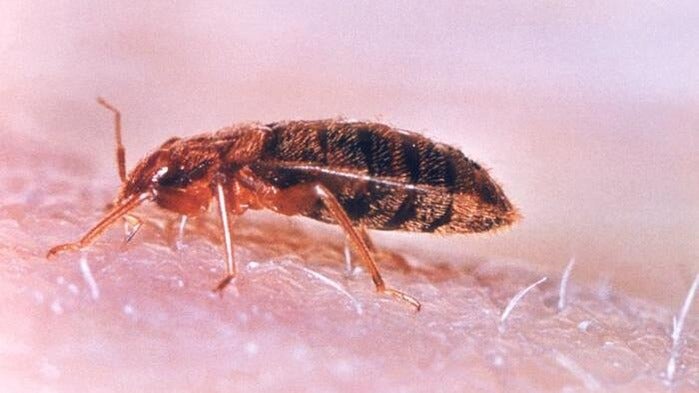
Fabric suitcases are also more susceptible to bed bugs, small reddish brown insects that feed on our blood and live in our mattresses and furniture.
The bugs don’t spread disease, but can cause itching or an allergic reaction and disrupt sleep, according to the Centers for Disease Control and Prevention.
“They are excellent hitchhikers,” Greg Baumann, Founding Partner of Pest Control Warrior, told The Independent.
Beyond bacteria and bugs, viruses that can linger on surfaces are a concern, too.
That includes cold and flu viruses and norovirus, Wesley Long, medical director of diagnostic microbiology at Houston Methodist Hospital, told The Washington Post.
These viruses can be life-threatening in rare cases. There are around 900 yearly deaths from norovirus in the U.S. and between 6,300-52,000 people die of flu in a given year, according to CDC estimates.
Unfortunately, the suitcase isn’t the only vehicle for these threats; there are similar threats lurking on your shoes.
Tens of thousands of species of bacteria and toxins may been found in shoes and these germs can stay there for days - even if you clean your shoes and the floor regularly, the University of Miami Health System says.
“The tread and cracks in shoes are ideal places for bacteria to linger,” Dr. Kyle Hoedebecke, the Clinical Advisor of Care Point Boston, told The Independent.
Fortunately, there are many steps people can take to stay safe from infection.
Adults generally have a low risk of infection from brief contact with items that have germs, but it’s never zero, Hoedebecke said. “Those with weakened immune systems are much more vulnerable,” he noted.
Examining and cleaning your shoes and suitcase is the best defense.
“Use a damp microfiber cleaning cloth and a suitable cleaning product to thoroughly wipe off any dirt from the wheels, making sure you fully rotate each wheel while cleaning,” Bryant instructs.
Consider switching shoes to house slippers or flips when you get home to reduce spread.
“You have to have different shoes for different settings,” Dr. Jason Edward Levine, a podiatrist with the University of Miami Health System, said. “Inside shoes for inside, outside shoes for outside.”
Keeping clothing that could have bed bugs inside the suitcase can also limit the spread to your bed. If you’re worried, washing the clothes in hot water at around 100-120 degrees Fahrenheit (37.7-48.8 degrees Celsius) and drying them on high heat can kill the bugs.
Any non-clothing items that may have been in contact with bed bugs should not be brought into the home at all, Michigan State University Extension says.
“The most important and simplest rule is to just be vigilant. Do not panic,” Baumann said.
Read MoreThe ideal work-week length has been found - and it’s not what you’ve been told
The eight-hour sleep rule is outdated. Here’s how much you really need
First-of-its-kind food pyramid released - and counters Trump advice
An expert guide to lifestyle changes men should make in their 40s, 50s, 60s and 70s
The ancient practice proven to shorten your cold symptoms by days
The simple change that can help over-60s stay fit and avoid falls as they age