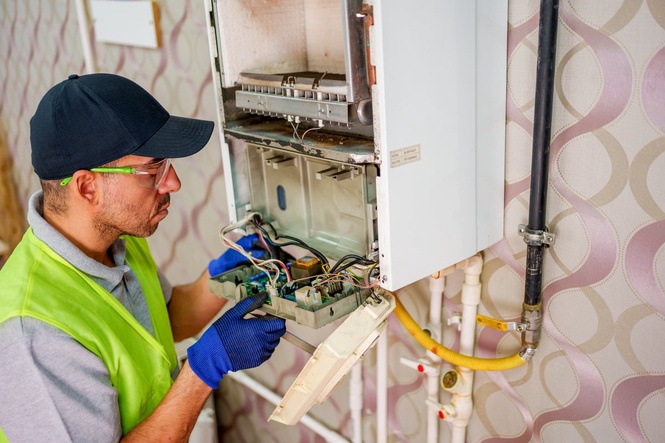
A new boiler in the UK will typically cost around £2,500 to £4,000, including installation for a straightforward like-for-like combi boiler replacement. However, the final bill can vary considerably depending on the type and size of boiler you need, the brand you choose and how much work is involved in fitting it.
The boiler itself is only part of the expense. Labour, new controls, system filters, pipework alterations, changes to the flue and any work needed to bring an older heating system up to current standards can all increase the price you pay to install a new boiler.
Moving the boiler to a new location or switching from one type of system to another can make the job substantially more expensive than a simple like-for-like replacement. Conversely, replacing an existing combi boiler with a similar model in the same location is usually at the cheaper end of the scale.
In this guide, we explain how much you should expect to pay for a new boiler in 2026, what installation typically costs, which factors can increase your quote and whether any grants or financial support are available.
Get a boiler installation quote for your home
Use our comparison tool to get a range of free quotes from leading boiler installers across the UK.
The good news is that boiler costs are actually more straightforward than they first appear. Once you understand what you’re buying (combi, system or regular), what’s included in the installation, and which upgrades are optional versus essential, you can compare like‑for‑like quotes and avoid paying for things you don’t need.
How much does a new boiler cost?
A boiler’s sticker price depends on three things: the type of boiler, its output (kW), and the brand/warranty level.
Most UK homes replacing a boiler in 2026 will be choosing between:
- Combi boilers (combination) delivering hot water on demand without a hot‑water cylinder – they’re common in smaller and mid‑size homes
- System boilers that work with a hot‑water cylinder and can be better for households using lots of hot water at once
- Regular (heat‑only) boilers: typically used in older systems with a hot‑water cylinder and a cold‑water tank
Typical boiler‑only price ranges in 2026
These are indicative ranges for the boiler unit itself (excluding installation):
- Budget models: around £600-£1,100
- Mid‑range models: around £1,100-£2,000
- Premium models: around £2,000-£3,500+
Combi boilers tend to sit in the middle of these ranges, while higher output units and premium brands push the price up.
What makes a boiler more expensive?
- Higher output (kW): larger homes or those with higher hot‑water demand often need a higher‑output boiler
- Longer warranties: some manufacturers offer extended warranties when installed by an approved engineer
- Controls and features: compatibility with smart controls, better modulation, and higher efficiency at part load can add cost
- Brand and parts availability: some brands command higher prices for perceived reliability, support networks and warranty packages
A quick note on boiler sizing
It’s tempting to go bigger just in case, but oversizing can be counterproductive. A larger boiler often costs more up front and can run less efficiently if it’s constantly cycling on and off. A good installer will size the boiler to your home’s heating load and hot water needs – and explain their recommendation.
How much does boiler installation cost?
Installation costs vary because some jobs are genuinely straightforward, and some quietly turn into small plumbing projects.
A like‑for‑like swap (replacing a combi with a combi in the same location, using existing pipework) is usually the simplest route. Costs rise when you change boiler type, move the boiler, or upgrade parts of the heating system.
Typical installation cost ranges in 2026
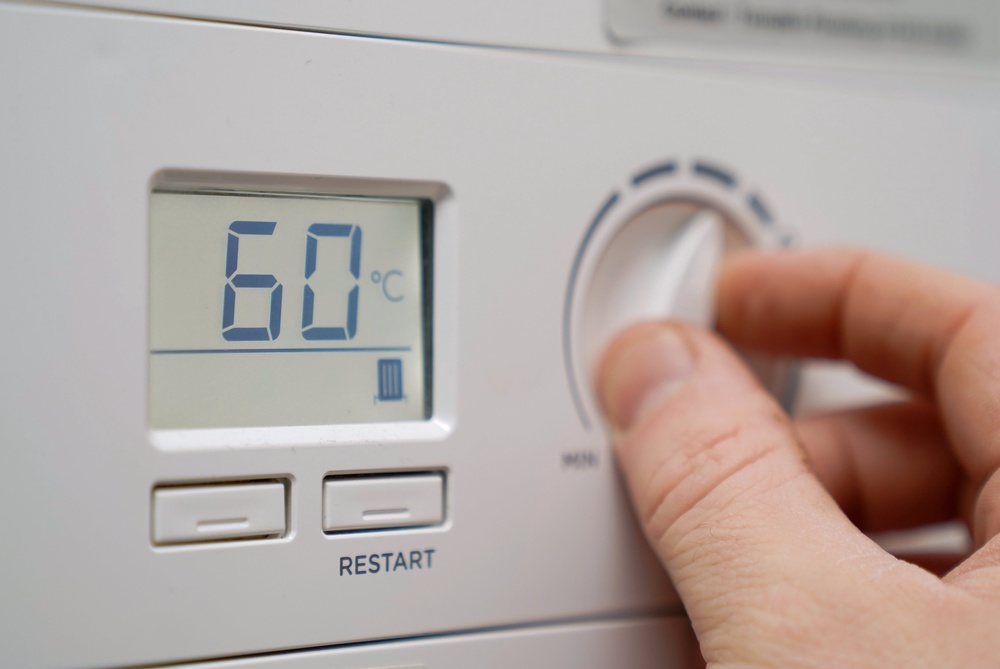
Installation typically costs around £1,000 to £2,000 for a straightforward boiler replacement, although more complicated jobs can cost considerably more.
As a broad guide:
- Straight swap, same location: around £1,000–£2,000 for installation labour and standard materials, where the existing pipework and flue arrangements need minimal changes
- More complex installations: around £2,000–£3,000 or more for jobs involving boiler relocation, system conversions or extensive pipework changes
These figures exclude the boiler itself. For a typical like-for-like gas combi boiler replacement, homeowners should budget around £2,500–£4,000 in total, including the boiler and installation. Additional upgrades or unexpected remedial work can increase the final bill.
What pushes boiler installation costs up?
- Moving the boiler (for example, from the kitchen to the loft)
- Changing boiler type (such as regular to combi), which may involve removing tanks/cylinders or adding new components
- Upgrading the flue or condensate route, especially if access is tricky
- System cleaning: a powerflush or chemical cleanse can be recommended when changing a boiler
- Controls upgrades: smart thermostats, thermostatic radiator valves (TRVs), or zoning
- Access issues: scaffolding, flue access or boxing in the boiler
What should a good boiler quote include?
Boiler quotes can be hard to compare because different installers include different defaults. When you’re gathering quotes, it’s worth checking:
- Boiler make/model and output (kW)
- Warranty length and what’s required to keep it valid
- What system cleaning is included (if any)
- Controls included (thermostat, TRVs, smart controls)
- Removal and disposal of the old boiler
- Any building work needed (boxing in, plastering, etc)
- Commissioning, paperwork and Building Regulations sign-off
UK 2026 prices guide
The fairest way to compare boiler prices is to look at boiler-only and installed costs side by side. As a general guide, a straightforward gas combi boiler replacement costs around £2,500–£4,000 in 2026, although prices vary by brand, model and installer.
The table below shows indicative price ranges for different manufacturers. Some budget models may be available for less than the typical replacement cost, while premium boilers and more complicated installations can push prices higher. Always check exactly what is included in an installed quote before comparing prices.
Typical UK boiler price ranges in 2026 (boiler‑only and installed)
Brand | Typical boiler‑only price range (combi) | Typical installed price range (straight swap) | Warranty (typical available) | Best for | Notes |
Worcester Bosch | £1,400-£3,000 | £2,300-£4,500 | 5-10 yrs | Premium, wide installer network | Often paired with extended warranties via accredited installers |
Vaillant | £1,300-£2,800 | £2,200-£4,300 | 5-10 yrs | Reliability, efficiency | Strong reputation; pricing tends to sit mid‑to‑premium |
Ideal | £900-£1,900 | £1,800-£3,400 | 2-10 yrs | Value, broad range | Often competitive on price for like‑for‑like swaps |
Viessmann | £1,200-£2,600 | £2,100-£4,100 | 5-10 yrs | Build quality, premium features | Popular on efficiency; quote variance can be wider |
Baxi | £800-£1,700 | £1,700-£3,200 | 2-7 yrs | Budget to mid‑range | Common in UK homes; often competitive installed pricing |
Alpha | £700-£1,500 | £1,600-£3,000 | 2-7 yrs | Budget replacements | Can be a cost‑effective route for smaller homes |
Glow‑worm | £700-£1,400 | £1,600-£2,900 | 2-7 yrs | Budget, simple swaps | Typically sits at the more affordable end of the market |
Potterton | £800-£1,600 | £1,700-£3,100 | 2-7 yrs | Budget to mid‑range | Part of the Baxi group; availability can vary by model |
Prices are indicative and may vary by model, supplier and installer. Installed prices assume a straightforward replacement in the same location. Budget around £2,500–£4,000 for a typical combi boiler replacement, including installation, and obtain several quotes before committing.
Why do installed prices vary so much?
Two homeowners can buy the same boiler model and end up with very different totals. The difference is usually the job around it – for example, pipework that needs updating, flue routing, access, whether the system needs cleaning, and what controls are included.
If a quote looks unusually cheap, check whether it excludes essentials like system treatment, a thermostat upgrade, or disposal. If it looks unusually expensive, ask what work is driving the cost. Sometimes it’s justified, sometimes it’s simply a more generous nice-to-haves list.
When should I replace my boiler?
There’s no set age. Plenty of systems run reliably well beyond a decade, and some can cause issues much earlier.
A useful way to think about it is this: replace the unit when your boiler is no longer reliable, economical to repair, or suitable for how you use your home.
Signs that boiler replacement is worth considering
- Repeat breakdowns or the same fault returning every winter
- Rising repair bills, especially if parts are becoming hard to source
- Poor performance: inconsistent hot water, radiators that won’t heat evenly, persistent pressure drops
- Efficiency and comfort issues: long warm‑up times, noisy operation, or struggling to meet demand
Replace vs repair: a simple rule of thumb
If your boiler is older and a repair is expensive, it’s worth asking your engineer two questions:
- Is this likely to be a one‑off fix, or the start of repeated faults?
- Are parts readily available for this model?
If you’re facing a major repair – or you’ve already paid for multiple call‑outs in a short period – boiler replacement often becomes the low‑stress option, even if it costs more up front.
Are there boiler grants in the UK?
This is where things can get confusing, because “boiler grants” is often used as a catch‑all phrase.
Some support schemes help eligible households improve heating efficiency and reduce bills, which can include upgrades to heating systems. But the most prominent national grant for heating upgrades is not for a new gas boiler.
The key distinction
- If you’re replacing a gas boiler with another gas boiler, you may find support depends on your circumstances and the scheme you’re eligible for
- If you’re replacing a fossil‑fuel system with a low‑carbon alternative (like a heat pump), the Boiler Upgrade Scheme may help with the upfront cost
Some lower-income, fuel-poor and vulnerable households in England, Scotland and Wales may also qualify for heating improvements through the Energy Company Obligation (ECO4) scheme. Depending on eligibility and the property's needs, this can include help with heating systems and insulation.
ECO4 has been extended until 31 December 2026, although support for new households may be limited as suppliers complete their existing obligations.
Other schemes may be available depending on where you live, so it's worth checking with your energy supplier, local authority or the relevant devolved government
How to apply for the Boiler Upgrade Scheme
If you’re looking at a heat pump rather than a new gas boiler, the Boiler Upgrade Scheme (BUS) is designed to reduce the upfront cost.
The practical process is usually simpler than people expect, but the key detail is that you typically don’t apply directly as a homeowner in the way you might for other grants. In most cases, it’s handled through your installer.
Step 1: Check if BUS is relevant for you
The Boiler Upgrade Scheme supports certain low‑carbon heating systems, such as air source or ground source heat pumps (and, in some cases, biomass boilers), rather than like‑for‑like gas boiler replacements.
As of October 2026, the available grants are:
- £7,500 towards an air-to-water or ground source heat pump
- £2,500 towards an air-to-air heat pump
- £5,000 towards an eligible biomass boiler
- £9,000 towards an air-to-water or ground source heat pump for eligible off-gas-grid properties, available until 31 March 2027
The scheme does not cover replacing an existing gas boiler with another gas boiler. Grants are deducted from the installation price through an MCS-certified installer.
Step 2: Confirm basic eligibility
The Boiler Upgrade Scheme is available to eligible homeowners and other property owners in England and Wales. Before proceeding, check:
- Your property: Most existing homes are eligible, while new-build properties generally aren't, apart from qualifying self-builds
- Your existing heating system: The scheme is primarily designed to replace fossil-fuel heating systems with eligible low-carbon alternatives
- Your chosen technology: The proposed heat pump or biomass boiler must meet the scheme's requirements and be installed by an MCS-certified installer.
Since April 2026, homeowners no longer need a valid Energy Performance Certificate (EPC) to apply, and there is no requirement to complete loft or cavity wall insulation before receiving the grant. However, improving your home's insulation can help a heat pump operate more efficiently and reduce running costs.
Step 3: Find an MCS‑certified installer
Choose an installer certified for heat pump installations and experienced in the grant process. This is also where you’ll start to see whether your home is a good candidate; not every property is an easy heat pump fit without wider upgrades.
Step 4: Get a survey and quote
A proper survey should cover heat loss, radiator sizing, hot‑water requirements and how the system will be controlled. It’s the difference between a heat pump that quietly saves money and one that leaves you disappointed.
Step 5: The installer applies and the grant is applied to your quote
In many cases, the installer applies for the BUS voucher and the grant is reflected in the quote you receive, reducing what you pay.
Step 6: Installation, commissioning and paperwork
After installation, you should receive commissioning documentation and guidance on how to run the system efficiently. Heat pumps are not ‘fit and forget’ in the same way as a boiler – settings matter.
FAQs
How long do boilers typically last?
Many boilers last 10-15 years, but lifespan depends heavily on maintenance, water quality, usage and the quality of the original installation. Regular servicing helps catch issues early, and keeping system pressure stable can prevent avoidable wear.
How much is a boiler for a three-bedroom house?
For a typical three-bedroom house in the UK, a new gas combi boiler generally costs around £2,500–£4,000, including installation. The boiler itself may cost around £900–£2,500, depending on the brand, model and heating output required. More complicated installations, such as moving the boiler or changing from a conventional system to a combi, can push the total above £4,000.
Can I get a new boiler for free?
Some households may qualify for support that covers heating upgrades, but “free boiler” offers usually depend on strict eligibility criteria and the scheme involved. If you’re seeing ads that promise a free boiler with very little detail, treat them cautiously and check the official scheme requirements.
Is it worth replacing a 10-year-old boiler?
Not automatically. If a 10‑year‑old boiler is reliable, serviced regularly and meeting demand, it may have years of life left. Replacement starts to look attractive if it’s becoming unreliable, parts are hard to source, or you’re spending significant amounts on repairs. If you’re planning wider home upgrades – better insulation, new controls, or a move to a low‑carbon system – that can also be a sensible moment to replace.
Read MoreHow draught-proofing your home can look stylish and save you money
Compare double glazing quotes from trusted UK installers
Budget tips for heating your home without the huge energy bills
The return of heavy curtains – and why they’re secretly energy efficient
Solar panel efficiency: how much power do panels really produce for your home?
How to earn money from solar panels: this little-known trick could make you £624 richer a year