Solar panels are a significant investment. But there has been a notable shift in the market. “During the energy crisis, solar panel costs spiked, but since then we’ve seen significant price drops as manufacturers recovered stock. Today, the pound-per-watt cost has stabilised, even as panels get physically larger and more powerful,” explains Lloyd Greenfield, founder of Glow Green.
In 2026, a typical system for a three-bedroom home will likely cost around £6,500 to £8,000, although larger installations, premium equipment or complicated roof access can push the price higher.
The Energy Saving Trust currently estimates that an average 4.5kWp domestic solar panel system costs around £7,600. Your final quote will depend on factors including the number and type of panels, your roof, scaffolding, the inverter and whether you add battery storage.
To help you decide whether solar panels are worth it for your home, here’s everything you need to know before buying solar, including what should be included in an installation quote and the factors that affect how quickly you could recover your investment.
Get a quote for solar panels for your home
Use our comparison tool to get a range of free quotes from leading solar panel installers across the UK.
What’s the typical install cost of solar panels?
The typical installed cost of solar panels by household size has been calculated based on panels + inverter + installation.
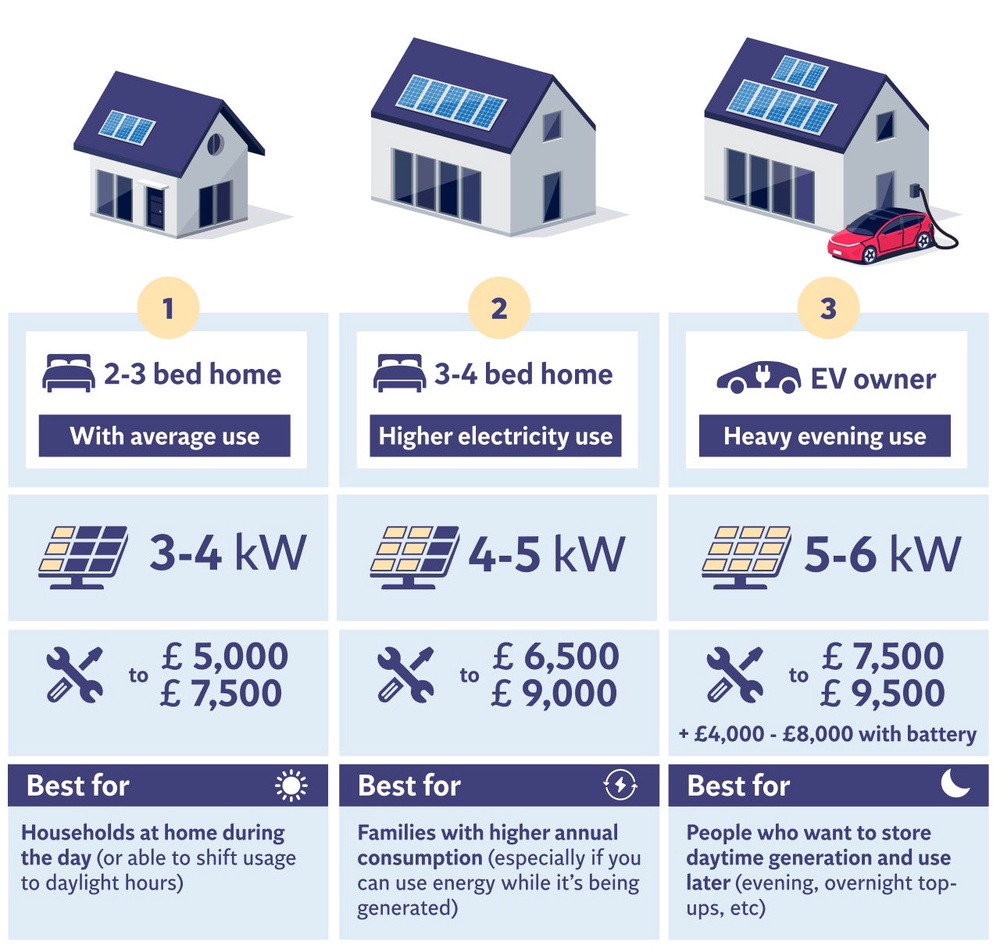
The figures in this guide are broad UK estimates based on current consumer guidance, industry estimates and installer pricing. They include the panels, inverter, mounting equipment, labour, standard scaffolding, electrical work and certification unless otherwise stated.
Quotes can vary significantly by property, location and installer. Homeowners should obtain at least three itemised quotes based on an in-person or detailed technical survey rather than comparing headline prices alone.
How much do solar panels cost in the UK?
Solar panels can range in price from about £100 to £500, so they make up a relatively small proportion of the overall cost, which includes fitting and connection. This is because the price of labour has surged over the same timeframe, and for domestic installations, fitting can be your highest cost.
When you pay for a solar installation, you’re not just buying panels. You’re paying for a whole system, and that system has a few big-ticket items that tend to show up on every quote.
What’s usually included in an “installed” solar panel price?
Most domestic quotes typically include:
- Solar panels and mounting system
- Inverter (to convert DC electricity into AC for your home)
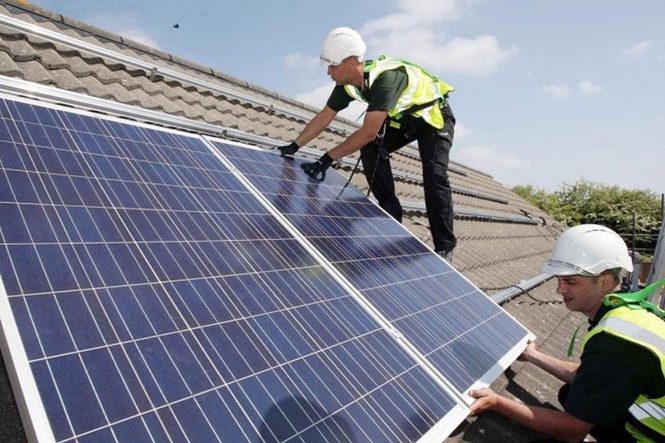
- Installation labour and electrical work
- Scaffolding (where needed)
- Testing, certification and commissioning
Some work may be excluded from the headline price or charged separately. Possible additional costs include:
- Complex or unusually extensive scaffolding
- Roof repairs or replacement tiles
- Bird-proofing
- Consumer unit or other electrical upgrades
- Optimisers or micro-inverters for a shaded roof
- Export-limitation equipment
- Cabling or trenching to a garage or outbuilding
- A hot-water diverter or EV charger
- Removing and reinstalling panels during future roof repairs
- Extended warranties or paid monitoring services
Ask each installer to identify exclusions and potential additional charges in writing before accepting a quote.
Read more: My honest review of DMEGC Infinity solar panels
What your solar panel quote is typically based on
System size (kW)
Bigger systems cost more up front, but they can offer better value per watt because fixed costs such as scaffolding, surveys and labour are spread across more panels. As a rough guide, domestic solar in the UK often works out at around £1.40 to £2 per watt installed, with larger systems usually landing towards the lower end of that range.
Type of solar panel
The panels are only one part of the total installation cost. Higher-efficiency monocrystalline panels generally cost more, but they can generate more electricity from a limited amount of roof space. The panel brand, wattage, efficiency, appearance, product warranty and expected rate of degradation can all affect the quote.
Although choosing cheaper panels may reduce the upfront cost, homeowners should compare the expected lifetime output and warranty rather than looking only at the price of each panel.
Installation costs
Labour, scaffolding, mounting equipment, wiring, certification and commissioning can represent a substantial proportion of the total quote. These costs vary according to the height and design of the property, ease of roof access, local labour rates and whether additional electrical work is required.
Scaffolding can be particularly expensive on tall, extended or unusually shaped properties. Ask installers to itemise it separately so you can compare quotes fairly and identify whether complex access is responsible for a higher price.
Inverter
Inverters are typically £600 to £1,000 and often need replacing once in a system’s lifetime (commonly after 10-15 years). Micro-inverters can improve performance on shaded roofs, but can add an extra £500 to £1,000 to the upfront price.
Adding a solar battery
A battery is often the largest optional add-on. A solar battery will typically add around £5,000 to £8,000 to the cost of a system, depending on its capacity and specification.
Roof repairs
If your roof is in poor condition, you may need repairs first. That’s not usually part of a standard solar quote, but it matters because panels are designed to sit there for decades.
What affects the cost of solar panels?
A quote can be £5,500 for one home and £11,000 for another, even if both are three-bedroom houses. Here’s why.
Panel type and wattage
Higher-wattage panels may cost more, but can generate more electricity from the same roof space. As Greenfield points out, focusing only on the lowest price can mean being quoted lower-wattage panels.
Roof suitability
Orientation, shading, pitch and usable area affect both how much you can fit and how much it will generate. Webb stresses the importance of a quote that reflects your property’s specifics, not just satellite estimates.
Installation complexity and scaffolding
Access issues, roof height, tricky layouts, and the amount of scaffolding needed can materially change the price.
Installer rates and aftercare
Local installers can be competitive, while larger national firms may charge more but offer more extensive customer service and aftercare. Whatever type of company you choose, check its accreditations, warranties and arrangements for resolving problems after installation.
Most households will need an MCS certificate, or evidence of equivalent certification accepted by their electricity supplier, to receive Smart Export Guarantee payments. Using an MCS-certified installer also gives you confidence that the company is working to recognised technical and consumer standards.
Look for membership of a consumer protection scheme such as the Renewable Energy Consumer Code or the Home Insulation and Energy Systems Quality Assured Contractors Scheme. You should also tell your home insurer about the installation and check whether it has any specific requirements.
How you pay
Cash usually delivers the best ROI. Financing spreads the cost but can erode savings if the APR is high.
Solar panel savings and payback explained
Payback on your solar panels is driven by three things:
- Bill savings: how much of your solar electricity you use at home instead of buying from the grid (households with more daytime use tend to do best)
- Export earnings (SEG): how much surplus you send back to the grid and the rate you’re paid per kWh
- Energy prices: when prices are high, as they have been in recent years, your return on investment accelerates the more energy you can generate yourself and use
A few factors can shift the payback noticeably:
- System cost: a lower quote with the same performance shortens payback fastest
- Your usage pattern: shifting energy use into daylight hours increases savings
- Battery storage: can increase self-consumption (and cut grid imports), but adds upfront cost
- Roof and location: shading, orientation and region affect how much the system generates
- Tariffs and SEG rates: export rates vary by supplier, and energy prices change over time
It’s important to remember that these are ranges, not promises. Your roof, shading, electricity use (especially daytime vs evening), installer pricing, and your export rate can all swing the maths. Where you live in the UK also plays a role, as the south gets more annual sun than homes in the north.
Typical annual savings (rough guide)
Savings depend heavily on your usage patterns, tariff, and how much of your solar you consume on site. As a broad rule, households that can use solar electricity while it’s being generated tend to see the strongest savings.
Typical payback periods
Many UK households see payback in eight to 12 years, combining bill savings with SEG income. Larger systems can pay back faster on a per-watt basis, but only if you can actually use the energy they generate. On average, you can expect:
- Without a battery: often eight to 12 years
- With a battery: often similar or longer overall due to higher upfront costs, but potentially better for households with high evening electricity use or an EV
Solar panel ROI examples at a glance
System size | Typical installed cost | Typical annual output | Typical annual savings | Typical payback |
3kW | £5,000-£6,500 | 2,800kWh | £450-£500 | 11 years |
4-5kW | £6,500-£8,000 | 4,200kWh | £650-£750 | 9–10 years |
These are indicative examples to show how the maths changes with system size. Your own payback depends on your roof, location, tariff and (crucially) when you use electricity. For a more detailed look at how solar panels pay back and when you can see a return on your investment, see our guide to are solar panels worth it?
How can I reduce the cost of solar panels?
Although solar panels are a significant upfront investment, there are several ways to reduce the cost or quicken the payback period.
Grants and schemes
The UK government has introduced a number of measures to make solar more affordable. Most recently, in January 2026, it announced the Warm Homes Plan, which outlines a long-term approach to upgrading homes and reducing energy bills. While it does not introduce a universal solar grant, the plan includes fully funded home upgrades for some low-income households and new government-backed finance for other homeowners. The Warm Homes Loan Scheme will use £300m of government funding to help lenders reduce the cost of borrowing for improvements including solar panels and batteries.
Another financial incentive is the zero rate of VAT on qualifying domestic solar panel installations. This applies until 31 March 2027 and covers the installation of solar panels and essential equipment, including cabling, controls and inverters.
From 1 April 2027, qualifying installations are currently due to return to the reduced VAT rate of 5 per cent unless the government changes or extends the relief. Installing a £7,000 system while the zero rate applies could therefore save around £350 compared with the scheduled 5 per cent rate.
For low-income households, the Energy Company Obligation (ECO4) scheme can fund energy-efficiency improvements, including solar panels, at no cost to the homeowner. In Wales, the Nest warm homes programme also supports eligible households with free or subsidised installations.
What’s more, many local authorities partner with Solar Together, a group-buying initiative where councils negotiate bulk discounts on behalf of residents. Households sign up and installers compete for the contract, often driving down costs by up to 30 per cent.
For a full list of what’s available in the UK, see our guide on solar panel grants and funding.
Payback options
Once your system is installed, there are ways to shorten the payback period. The most important is signing up for the Smart Export Guarantee (SEG), which ensures you are paid for every kilowatt-hour of electricity you export to the grid. Rates vary significantly between suppliers and tariffs, and some of the highest-paying deals require you to buy your electricity or solar equipment from the same company, so it pays to compare the conditions as well as the headline export rate.
Financing options also affect payback. Traditional installer financing often comes with high APRs, lengthening the payback period. However, as Webb discovered, some mortgage lenders now offer green financing deals.
“Nationwide, my mortgage lender, will lend me at 0 per cent APR if I wanted to do the same again,” Webb says. “If I move, that would be a choice of mortgage provider I’d go with because I know I can put solar on and finance it interest-free.”
These green mortgages enable homeowners to spread the cost of solar without interest charges, significantly improving the overall return on investment.
Read more: Are Octopus solar panels worth it?
Read more: My honest Hive solar panels review
Our methodology for calculating solar panel costs
We compare current consumer guidance, installer pricing and real-world homeowner experiences to estimate typical solar installation costs. Our payback estimates also take account of factors including system output, household electricity use, Smart Export Guarantee payments and likely maintenance costs, although actual costs and savings will vary by property.
Read more: My honest review of SunPower Maxeon 7 solar panels
 Read More
 Best solar panels 2026: Expert buying advice for UK homes
Do solar panels work in winter and on cloudy days?
Perlight Black Grid solar panel review: best for efficiency
Best solar panel installers and fitters for UK homes, trusted by our experts in 2026
Are solar panels worth it in the UK? An expert guide on how they work for your home
Are Octopus solar panels really worth it? This is what homeowners should know
Best solar panels 2026: Expert buying advice for UK homes
Do solar panels work in winter and on cloudy days?
Is solar panel battery storage worth it? The pros and cons of batteries and how they work at home