
Swiss scientists are trying to identify pandemic health threats faster — by expanding the data they get from sifting through our sewage.
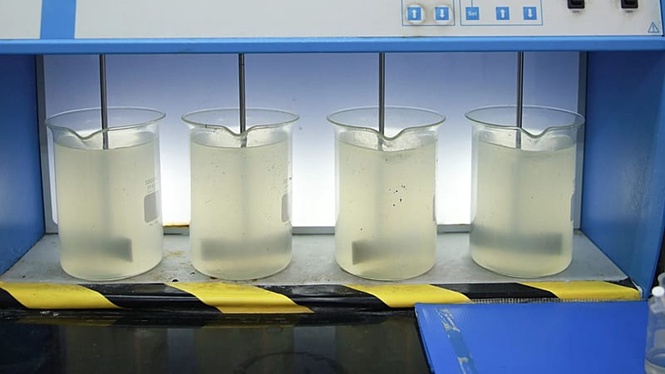
People shed traces of viruses when they use the bathroom, wash their hands, brush their teeth or take a shower. When that wastewater gets to treatment plants, scientists take small samples and test them for virus fragments.
Wastewater surveillance has long been used to detect how polioviruses, drug-resistant bacteria and illegal drugs are circulating in a community, serving as an early warning system for public health authorities.
During the COVID-19 pandemic, wastewater surveillance helped researchers identify which variants were spreading and when waves were at their peak, regardless of whether people had symptoms.
In Switzerland, researchers now routinely track coronaviruses, influenza and respiratory syncytial virus (RSV) using wastewater samples from 10 treatment plants, covering 22% of the population. That’s down from around 100 plants during the COVID-19 pandemic.
They use the data to warn hospitals about a coming uptick in illnesses, so they can decide about staffing, masking and other measures. By sequencing the virus fragments, researchers can also anticipate how severe Switzerland's flu season may be and identify how effective vaccines and monoclonal antibodies — which are used to prevent and treat certain infections, like RSV — are against a particular viral strain.
“Sequences can tell us, are monoclonals or vaccines working well, or do we anticipate there's a problem, so we should change that in some way?” Tanja Stadler, who heads the Department of Biosystems Science and Engineering at the Swiss Federal Institute of Technology (ETH Zürich), told Euronews.
“If we see such mutations, we can highlight that,” added Stadler, who also leads public health work for a scientific advisory group to the Swiss government.
Now, her team believes wastewater surveillance could help identify the next pandemic-level threat.
They are developing tools to detect all circulating viruses — not just a select few. If all goes well, they’ll even be able to detect Disease X, the placeholder name for an unknown pathogen with pandemic potential.
“Right now, we are going very specific to the pathogens at hand,” Stadler said. “We pretty much filter out everything SARS-CoV-2 (the virus that causes COVID-19), measure how often it is there and how it looks.”
With the broader approach, they would filter out and sequence every virus detected in wastewater, including unknown strains. “If there's then some pathogen X, a new pandemic strain, we would capture it as much as influenza or SARS-CoV-2,” she said.
RelatedStadler also wants to get information from wastewater samples about who actually shed the virus fragments they detect. If a bird sheds avian influenza, for example, it’s much less worrisome than if the virus fragment sticks to human cells, indicating the source was a human.
Bird flu has jumped from animals to people in recent years in Europe and North America, but there is no evidence of sustained person-to-person transmission. If the virus mutates to a point where it can easily spread between people, that would be a major global health threat.
“That’s a huge pandemic risk,” Stadler said.
Eventually, she said wastewater data could also give scientists clues about how well-protected the community is against a particular virus, by measuring the antibodies in sewage samples.
These developments could arrive within the next two to six years, Stadler said, but only if funding remains stable.
The group’s work is already in high demand. They publish a near-real time wastewater surveillance dashboard for hospitals, public health agencies and pharmaceutical companies — and if it goes down, they hear about it quickly.
“Occasionally, for whatever reasons, it may be down a couple hours, and we have both clinicians [and] industry then directly emailing: ‘What's wrong?’” Stadler said. It’s “a good thing that we know it's being used.”