
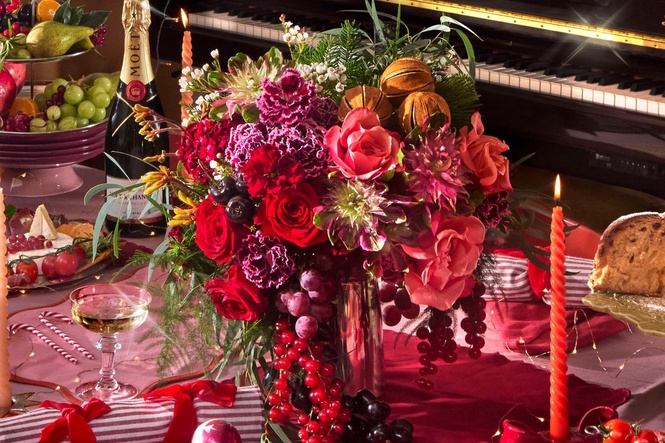
The Christmas table centrepiece often forms the highlight of festive dining décor, whether you’re adding foliage from the garden, or including a mixture of flowers, berries and baubles.
Here, Bloom & Wild flower expert Lucy Hook offers a guide to creating a showstopping centrepiece.
Choose your vessel
“For us, the vessel is the first thing you need to think about,” says Hook.
“Whether you’ve got a favourite vase that you’ve been using for generations or you’ve spotted something in a charity shop, that should be your starting point because that then dictates how many flowers you are going to need.
“Of, if you are wanting to go down the bud flowers approach where you have maybe one large vase in the middle and then more in bud vases, you can think about playing around with different shapes, heights and flow patterns.”
Consider the size of the table
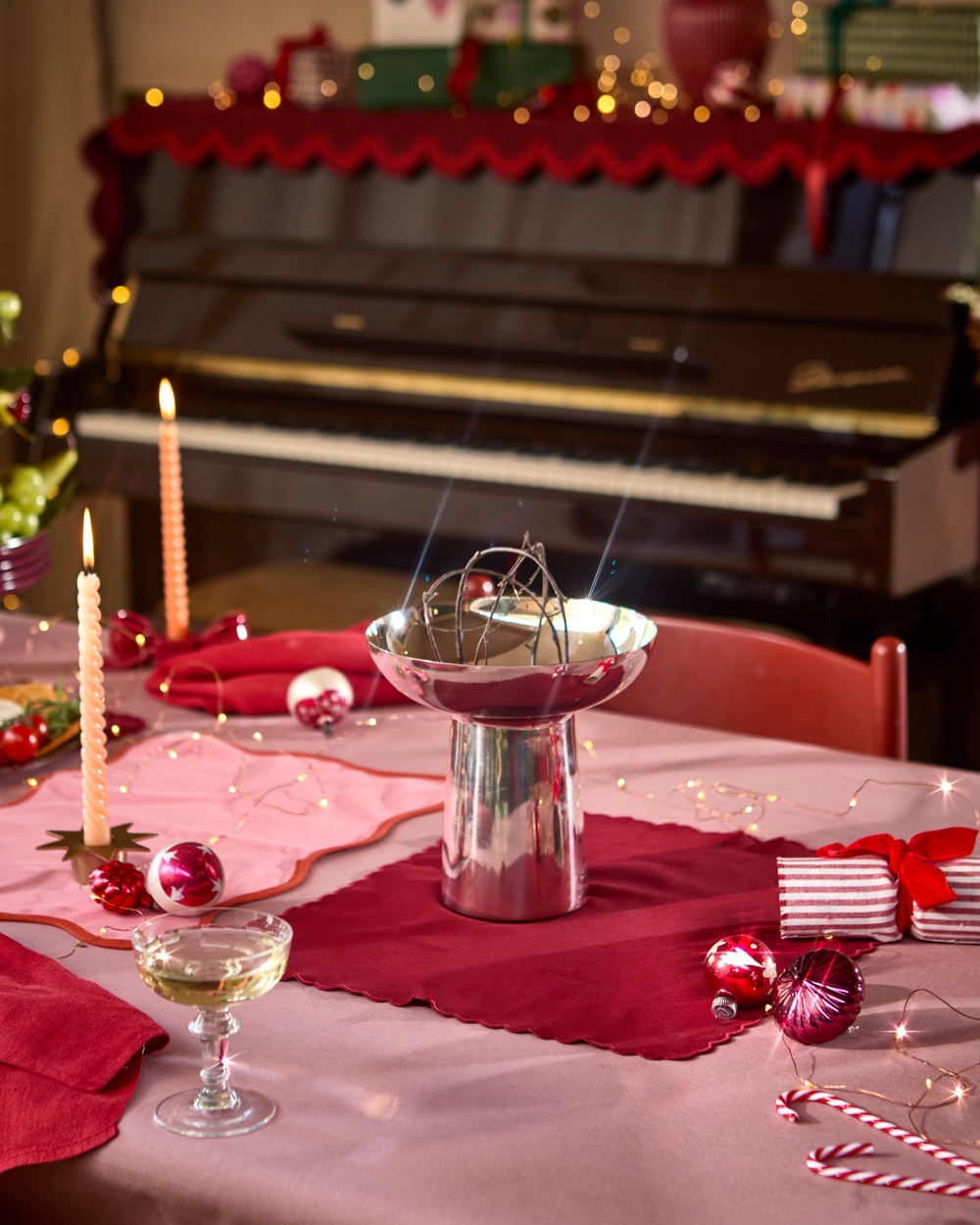
Bear in mind the size of your table and even the size of the room, Hook suggests.
“If you have a small space and a more intimate dinner, you won’t want a huge centrepiece because it will be distracting. The most important part of the Christmas experience is being able to talk to your loved ones.”
Hook says that with any table adornment you don’t really want to go higher than a wine bottle because otherwise your eye line will be blocked. If there are children at the table, the height may have to be further lowered so the party feels inclusive.
Select your flora and fauna
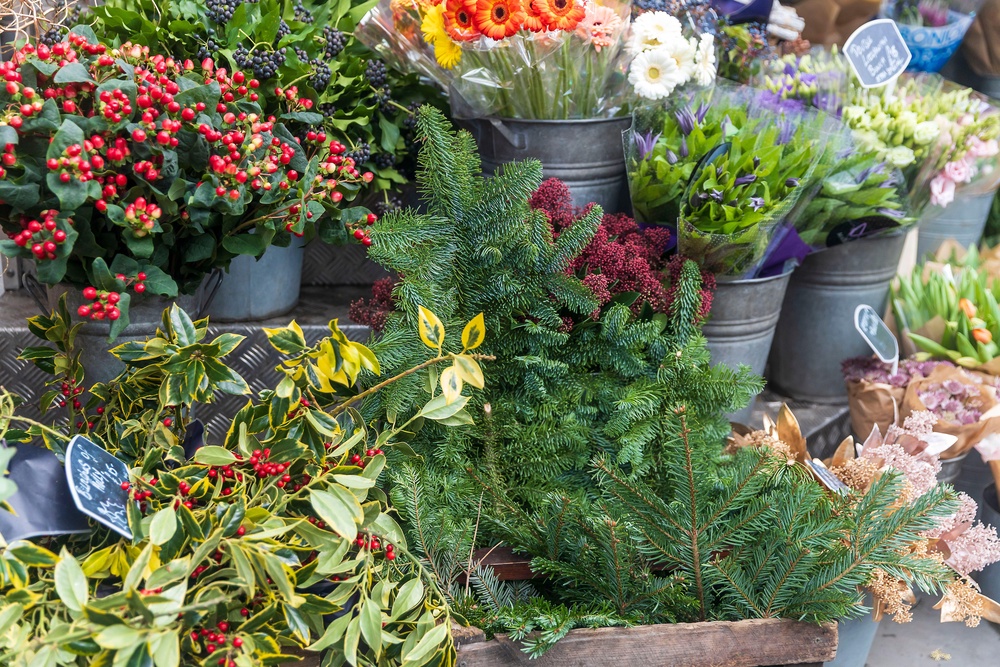
You may have to invest in some key flowers such as roses but you can also forage foliage and berries from your garden to add to the centrepiece.
“Pine and fir are great – that immediately says Christmas – and the scent once it’s cut is just amazing,” she says.
Holly can also be used (but wear gloves) and berries, although you must be vigilant that no one tries to eat them.
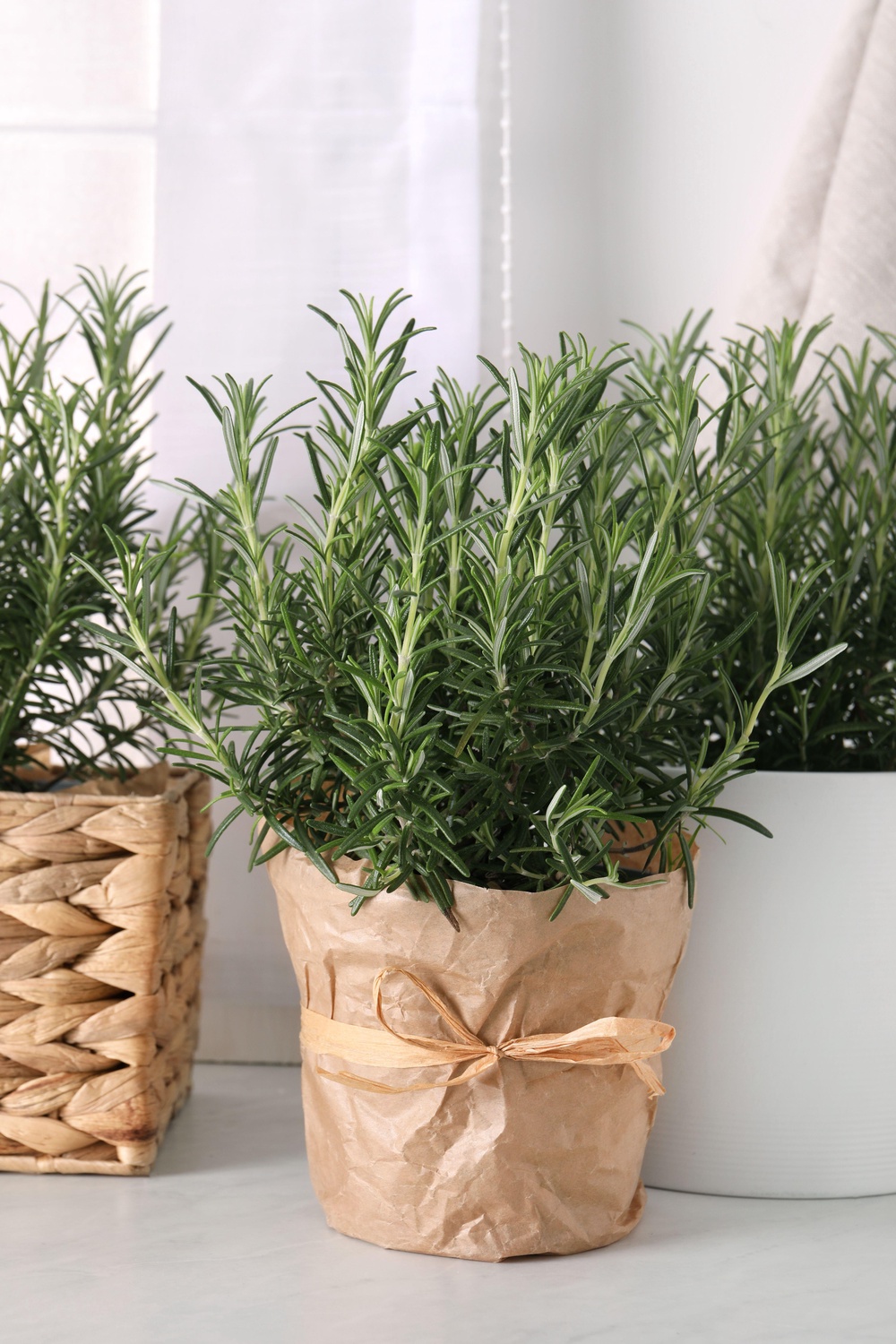
“One of my favourites is rosemary because it is super-flexible and doesn’t have a super-heavy stem and smells fantastic,” she adds. Winter jasmine may also be included.
As for key flowers to purchase from a florist, Hook suggests: “I love to start with roses and the wide choice of colours that you can get to build out your mood board.
“We love to bring in salmon or coral-coloured roses. They work so well with berry reds and it feels more modern to have different tones in there that aren’t just the classic reds and greens.
“We also love alstroemeria because it’s long-lasting and it opens beautifully. It would open throughout the day. But you would need to hydrate it well in advance.”
The waxflower (Chamelaucium) is a good seasonal filler stem with lots of flowerheads which are in contrast with the rounded heads of carnations and the large rose stems. It also has a citrussy scent to bring a different layer to the centrepiece.
Chrysanthemum Santini also offers a choice of rich colours, including deep red, and are long-lasting.
Lay out your plants
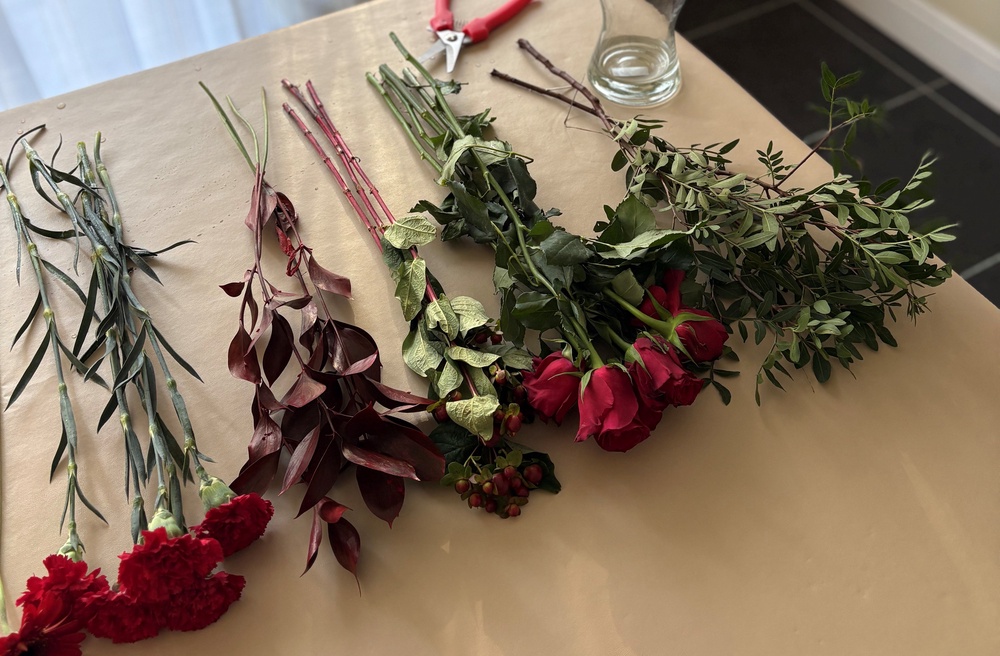
Lay everything out by group and double check that all the stems look okay. It will help to spread things out evenly and assess what you might need and what you might not, along with quantities.
Create a framework
Hook suggests creating a nest with pliable slender branches cut from the garden into your vessel before filling it with water and flower food. Tuck them into the base of the vase which should be enough to secure the starting foliage. You only need a few strategically locked branches, leaving plenty of breathing room for thick flower and foliage stems.
Alternatively you could use scrunched-up chicken wire, and if you are just using a jam jar as your vessel you could create a criss-cross grid using sticky tape, cutting it really thin.
Use bigger foliage first
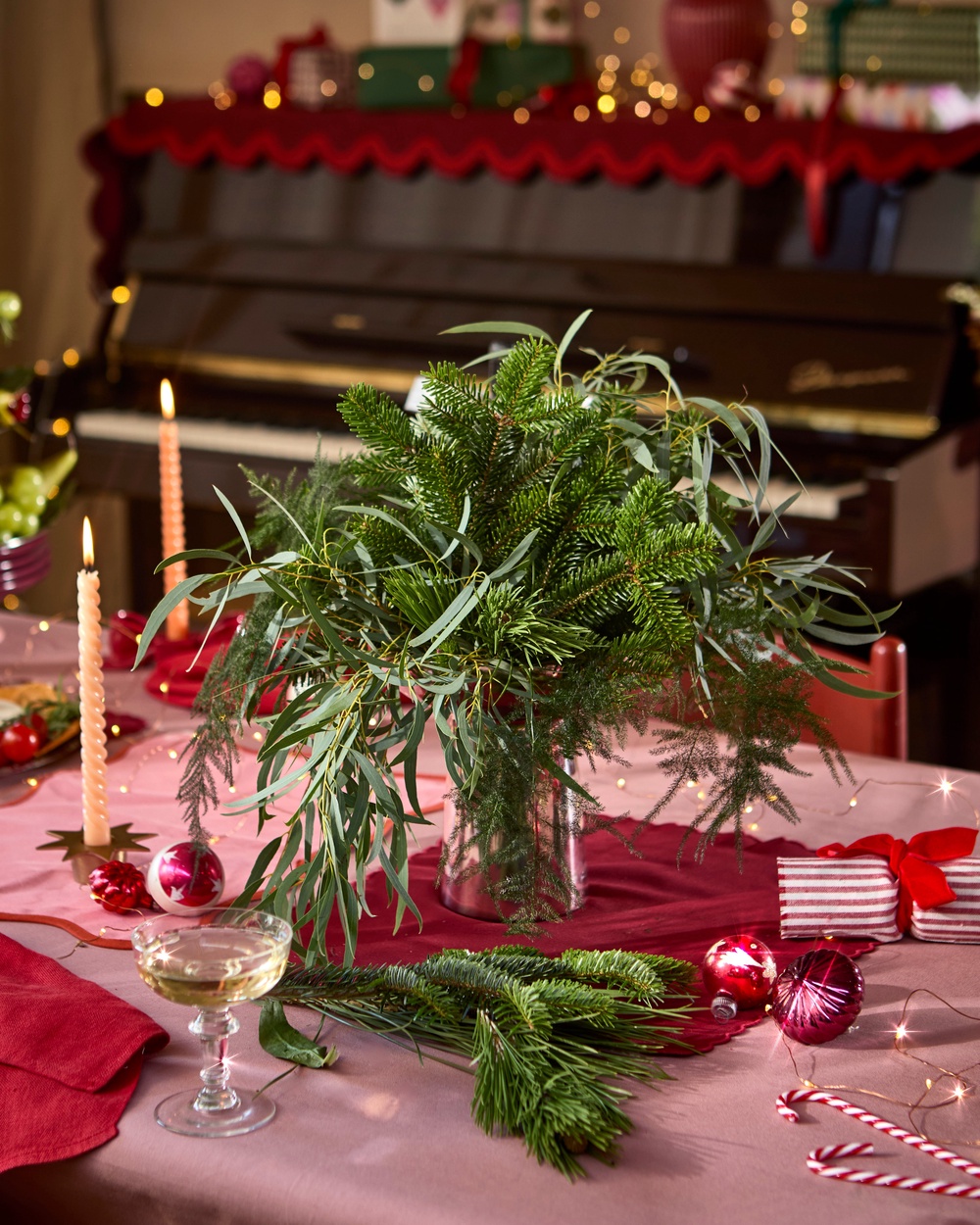
“Start with the biggest pieces of your festive foliage, like pine or fir, or anything else you are using with a sturdy stem.
“Do a criss-cross with your first couple of stems into your base which will be the structure around which you then build the rest of the arrangement,” she advises.
Play around with it, making sure the framework is evenly balanced and that just the stems go in the water, not the foliage, and the same with flowers.
Carefully build up your design, adding your colourful flower stems evenly, turning the vase to keep things balanced – working in configurations of three or five – and filling the gaps with plants such as gypsophila, waxflower or limonium.
“Hold things up to see how they look and make sure that when you are cutting stems, you cut less rather than more, because you can always cut more if it isn’t right.
“Cutting things to different lengths really helps to add drama,” she says. “Add herbs as well, which can make sure everything doesn’t look too overpowering. Things like sage or thyme can be really pretty.”
Add festive touches
“I do love pine cones and poppy seed heads and natural ways to add a festive touch – and you can get those sprayed gold or silver.”
Don’t forget to water
Add flower food to help flowers bloom and keep the water fresh for longer. Change the water regularly if you can, but if not, top it up and add more flower food. The key is not to have any foliage in the water.
Read MoreChristmas trees: How to choose the right one for your space
Eight simple ways you can boost your immune system this winter
This home remedy could help you recover from colds and flu more quickly
This GB News presenter is pregnant at 59, but who are we to judge?
I’m a pediatric nurse. Here’s how to tell if your child has COVID or a just cold
How to avoid catching a cold this winter – when everyone you know has one