
Decades ago, Uncle Suk emigrated to a Western country famous for environmental protection and civil order to further his career. He became successful and visited Malaysia during his retirement.
“Agree to disagree” was the only path to intellectual discussion with him. I could discuss almost any topic with him in Hakka, except for China’s historical past with the West and Japan. He firmly believed that China must overcome the “hundred years of shame” forged by Western imperialists and take revenge for Japanese atrocities during the Second World War. By his account, China is always right, and its people’s behaviors must be accepted by the rest of the world because they have suffered for so long.
Several years ago, I took him to KLCC on public transit. We were the first ones waiting in front of an elevator to go to another level. Uncle Suk, in his eighties, stood erect with the help of a walker.
Soon, a group of people gathered behind us, no one was queuing. In loud Mandarin, complaints about Malaysia were hurled about—signs not in Chinese, people not speaking Mandarin, slow elevators, no sidewalks like those in their home cities, and they couldn’t find the delicious foods from their home cities.
When the elevator doors opened, they rushed in, pushing us behind. A few of them didn’t make it in, so they stood directly in front of us, still complaining loudly.
The elevator doors opened again. They rushed in.
“Den yi den (Wait a while),” I called out before one of them could press the button to close the door.
We walked in. The atmosphere in the elevator was unfriendly. It felt like they did not SEE us. A man standing slightly behind Uncle Suk made a loud, throaty noise and spat out phlegm, which landed just next to his left shoe. I looked around, no one blinked an eye.
When the doors opened, the group shoved us aside and rushed out. Once we were clear of the elevator, Uncle Suk was already walking away, silently.
I caught up with him. As we were walking, a question slipped out of me, “Nyon ban how?” (Hakka: What should we do about this difficult situation? This question is asked when we have no answer to a situation or when a younger person refrain from offending an elderly's sensibility. )
His face was grim as we walked in silence for the rest of the afternoon. We never talked about the incident to any one.
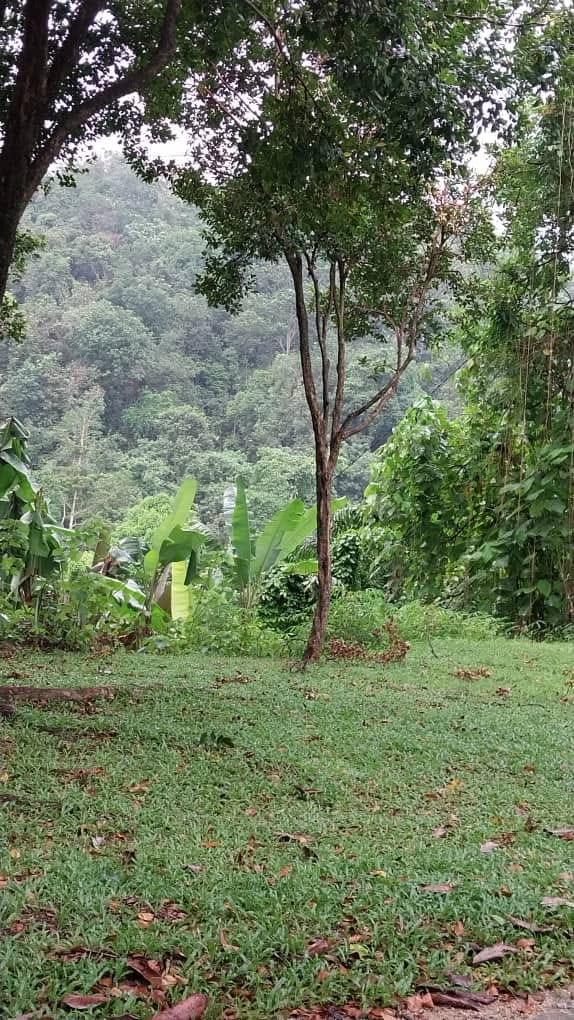
A few days ago, I was sitting on a stone bench at Gate C of Lembah Kiara after hiking in Bukit Kiara. It is my usual spot to appreciate life, quietly, in the most beautiful environment.
A group of people was walking toward me from the far right. I didn’t pay them any attention until loud commotions vibrated through my space.
A woman’s voice shouted in Mandarin, “Let me video it, don’t move so fast!”
Then another voice added, “It is a ‘tui pu’ (backward) ‘guójiā’ (country). They don't know how to cage the monkeys. In our country, we would have caged them for us to see.”
Two women were standing just a few feet to my right. One was filming a man and three children taunting a group of macaque monkeys several meters down the road. A boy threw a stone at a small monkey. The group of animals dispersed to the side of the pavement amidst a chorus of monkey noises.
A girl bent and tilted her buttocks toward the monkeys, swinging them and declaring, “Huài dàn (bad eggs)”. I recognized the swinging action as an insulting gesture from videos I’ve seen of Chinese tourists making similar gestures to wildlife in parks in foreign countries.
The monkeys were provoked by the aggression. One tried to approach the man, who jumped away. He picked up a stick, ready to hit any animal that came near. “Wo da shi ni! (I’ll beat you to death!)” he yelled.
Loud screeches burst from the disturbed monkeys.
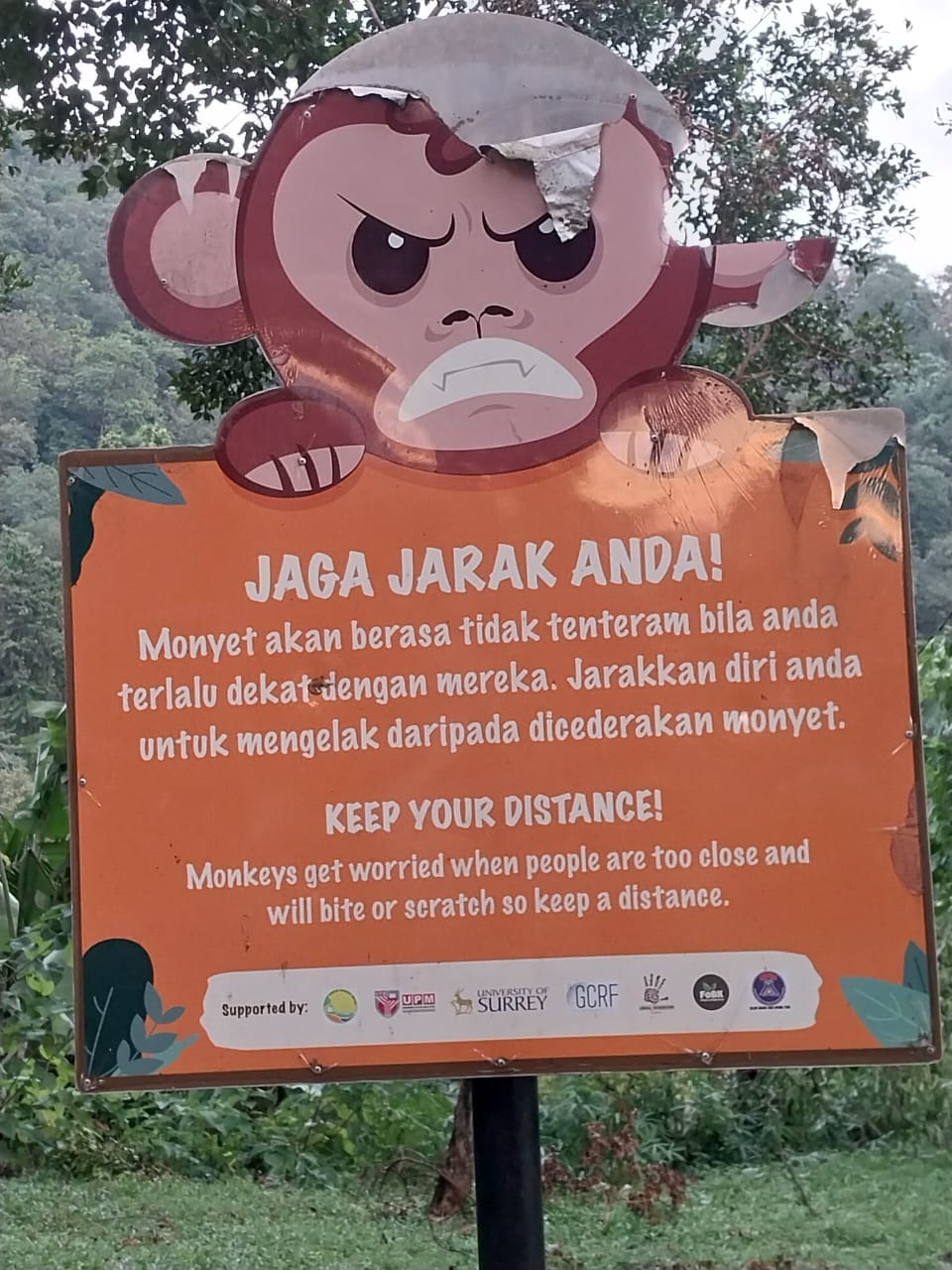
I stood up and yelled loudly in Mandarin, “Stop! Don’t beat the monkeys. They are macaques; they are endangered worldwide. They are out here because trees were cut to make big buildings nearby. They run free because they are part of the wildlife preservation in Bukit Kiara. Don't taunt them—the alpha monkey, the father of the family, will attack you. If you get scratched, you will need to go to the hospital. Just walk past them quickly and don’t look them in the face.”
This was the same advice I gave to all walkers in the park. Many were Japanese or other foreign nationals visiting for the first time; they were always polite and grateful for the advice. This residential area has been popular with Japanese families for the last 20 years.
One of the ladies then yelled back, “How do we know you are right ? We are from China!”
Pointing to the billboard next to the two ladies, I said firmly in Mandarin, “You see? The information is in English and Bahasa in the park.”
One of the ladies retorted, her lips pouting upwards, “They are not in Chinese! Of course we don’t know.”
As a Mandarin speaker, I have heard this comment many times—on high-speed trains from KLIA, on public transit, in lifts, and in food queues whenever visitors are asked to follow regulations.
“This is Malaysia. English and Bahasa are our national languages,” I replied. “Now that I am telling you, don’t attack the monkeys—and don’t send those videos to social media to complain about us!”
A sudden silence fell.
The children stopped their taunting. Sour faces looking at me. I sensed anger simmering like a pot of medicinal herbal tea—bubbling, but not yet overflowing.
“Wo men jo! (Let’s leave!)” one of the ladies huffed.
The man finally called to the children, “Wo men jo!”
They walked away to my left in silence. No acknowledgment. A few meters away, they started talking loudly again. I heard a faint uttering of “tui pu” as their path turned behind a thick curtain of trees.
Walking back to the bench, I took a few deep breaths. The green calmness slowly crept back. A slight breeze swept through, moving the leaves. A yellow butterfly danced playfully around me. Cherished silence returned. “I hope there is no social media storm about monkeys in Malaysia…” A slight chill swept along my spine.
Uncle Suk who passed away in his adopted country, came to my mind’s eye. I felt his grim stare- the same one as in the KLCC trip.
I asked softly, “Nyon ban how?”
Chong Sheau Ching (sheauchingc@gmail.com) is a content creator under the Newswav Creator programme, where you get to express yourself, be a citizen journalist, and at the same time monetize your content & reach millions of users on Newswav. Log in to creator.newswav.com and become a Newswav Creator now!
The User Content (as defined on Newswav Terms of Use) above including the views expressed and media (pictures, videos, citations etc) were submitted & posted by the author. Newswav is solely an aggregation platform that hosts the User Content. If you have any questions about the content, copyright or other issues of the work, please contact creator@newswav.com.



